Mediterranean Aquaculture Sustainable Development Project Delivers High-Potential Results
 AQUAMED was an EU Seventh Framework Programme (FP7)-funded project designed to support the sustainable development of aquaculture in the Mediterranean region. Following the completion of the project in May 2013, the Directorate-General for Maritime Affairs and Fisheries (DG MARE) invited Dr Jean-Paul Blancheton, AQUAMED project coordinator, to present the final results of the project at a meeting held in Brussels, Belgium, on 4 February 2014.
Based on three years of research, the AQUAMED project has identified the main research centres, stakeholders and research projects involved in the improvement of Mediterranean aquaculture. Stakeholders from 13 Mediterranean countries were invited to join the AQUAMED project's research partners in order to develop a common Action Plan to support the establishment of a Multi-Stakeholder Platform (MSHP). The purpose of the MSHP is to avoid duplication and fragmentation of research efforts, and to stimulate long-term cooperation and coordination between policy makers, the aquaculture industry, and RTD performers in the Mediterranean.
Dr Blancheton commented: “The AQUAMED project’s success was based on the engagement of the Mediterranean aquaculture stakeholders. The stakeholder events helped the partnership to show the importance of industry, researchers and policy makers working together to define the Strategic Research and Innovation Agenda for Mediterranean Aquaculture.”
The project also studied the predicted aquaculture trends the region could face by the year 2030 as well as the main constraints that are currently affecting the sector, in order to build a MSHP that will help to overcome the constraints identified. The MSHP will contribute to the development of a common transnational Mediterranean Strategic Research and Innovation Agenda (SRIA), which represents the shared objectives and synergies between the different participating countries.
Dr Blancheton’s presentation of the AQUAMED project in Brussels was followed by a question and answer session. The event’s attendees were particularly interested in the research priorities and communication challenges identified within the project, the possible continuation of the platform’s activities under the aegis of the General Fisheries Commission for the Mediterranean (GFCM), possible links with the European Aquaculture Technology and Innovation Platform (EATiP), and the AQUAMED plan of action.
At the end of the meeting the participants congratulated the coordinator and the AQUAMED partnership and observers on the excellent quality of the work carried out within the project.
For more information please check www.aquamedproject.net
STAGES MSFD Survey Results now Available on the Marine Knowledge Gate

The Marine Strategy Framework Directive (MSFD) outlines 11 key qualitative descriptors to guide European Member States with regard to achieving overall Good Environmental Status (GES) in their marine waters by 2020. Although significant advances are being made in marine research which can support environmental assessment, there is a significant knowledge deficit for certain descriptors which may influence implementation of the MSFD and the achievement of GES in European waters.
One of the main objectives of the FP7-funded STAGES (Science and Technology Advancing Governance on Good Environmental Status) project is to ensure that knowledge from marine research with relevance to MSFD implementation is gathered and made easily available to policy makers and the wider MSFD stakeholder community.
 The results of an extensive online survey conducted by STAGES to identify existing knowledge in relation to aspects of the MSFD are now available on the Marine Knowledge Gate (http://www.kg.eurocean.org/) – a major public online repository of marine research in Europe, which has been upgraded through the STAGES project.
The STAGES survey targeted marine research with European and national funding from 13 EU Programmes and 25 European coastal countries (please see Notes for Editors section for further details), which started in line with the inception of the Marine Strategy (from 2005 onwards). Around 4,000 projects were surveyed with a response rate of circa 32% (around 1,200 responses). Of these, almost 800 projects indicated relevance to the MSFD.
The Marine Knowledge Gate contains a profile of each surveyed project and, where available, it also offers information on the specific results or “Knowledge Outputs” from the research activities. Records can also be filtered by funding level and programme, start and end year, allocated funding, countries and institutions involved, type, potential end users, and sectors to benefit from corresponding Knowledge Outputs.
Several search options provide easy access to information from the projects which indicated relevance to the MSFD through the STAGES survey, including a homepage graph which groups them by GES Descriptor (http://www.kg.eurocean.org/?chart=ges_descriptors); the MSFD related projects can also be searched by relevance to specific marine regions (please see Notes for Editors section for further details). The update module allows project coordinators to include a profile and MSFD-related information about their projects at any time and will remain functional beyond the lifetime of the STAGES project.
For more information about the Marine Knowledge Gate, please contact EurOcean project officer for STAGES, Maica Garriga (Garriga.Maica@fct.pt).
For more information about STAGES please visit www.stagesproject.eu or contact Marisa Fernández Cañamero, STAGES Coordinator (mfernandez@cetmar.org), or Raquel Diez Arenas (rdiez@cetmar.org) from Centro Tecnológico del Mar - Fundación CETMAR (www.cetmar.org).
Notes for Editors
The STAGES project has received funding from the European Union Seventh Framework Programme (FP7/2007-2013) under grant agreement n° 308473. STAGES is directly responding to a request from DG Environment to put a support action in place to facilitate the implementation of the Marine Strategy Framework Directive (MSFD). The STAGES consortium involves eight partners in seven countries and is being coordinated by the Centro Tecnológico del Mar (CETMAR) in Spain.
The STAGES survey encompassed projects from 13 EU programmes: FP6; FP7; LIFE; Interreg III & IV; ENPI CBC; IPA CBC; ESPON; INTERACT; COST; EUROCORES; EFF grants; and IMP grants. It also included projects from regional organisations: HELCOM and Black Sea, and nationally-funded projects from 25 European coastal countries: Belgium, Bulgaria, Croatia, Cyprus, Denmark, Estonia, Finland, France, Georgia, Germany, Greece, Ireland, Italy, Latvia, Lithuania, Malta, Netherlands, Norway, Poland, Portugal, Romania, Slovenia, Spain, Sweden, and the UK.
The Marine Knowledge Gate is a major dynamic searchable web portal of marine research projects in Europe containing around 4,300 projects (2,000 with European funding and 2,300 with national funding) and 1,800 Knowledge Outputs. It includes the 4,000 projects surveyed by STAGES, of which almost 800 indicated relevance to the MSFD. MSFD-related research is presented either by relevance to the 11 Qualitative Descriptors of GES (D1. Biological diversity, D2. Non-indigenous species, D3. Commercial fish, D4. Food webs, D5. Eutrophication, D6. Sea-floor integrity, D7. Hydrographical conditions, D8. Contaminants and pollution effects, D9. Contaminants in fish and other seafood, D10. Marine litter, and D11. Underwater noise/energy), or by relevance to six marine regions including Baltic Sea, Black Sea, Mediterranean Sea, North-east Atlantic, All Marine Regions and Others.
STAGES Joint Stakeholder Consultation Workshop - Building a Science Policy Interface to support implementation of the EU Marine Strategy Framework Directive
One of the key tasks of the FP7-funded STAGES project is to develop a concrete proposal for a science policy interface (SPI) to support implementation of the EU Marine Strategy Framework Directive (MSFD) in the long-term. As part of this process, STAGES is conducting a stakeholder consultation to collect the views and assess the needs of a broad range of MSFD stakeholders from science, industry, civil society, NGOs, and the national MSFD competent authorities and implementing agencies. In 2013, 113 stakeholders responded to an extensive on-line questionnaire. Taking the consultation forward, STAGES has now invited stakeholders to a workshop entitled, Building a Science Policy Interface to support implementation of the EU Marine Strategy Framework Directive. This will take place in Brussels on 12th February at the Regus Centre, Rue des Colonies 11. The workshop is planned as a joint activity with the FP7 DEVOTES project (www.devotes-project.eu).
STAGES coordinator, Marisa Fernández explains the importance of the forthcoming workshop: "So far, STAGES has been successful in developing key outputs in terms of collection and synthesis of existing knowledge and identification of gaps and the need for further research. This workshop is a unique opportunity to get feedback from key MSFD stakeholders on how to develop an efficient and sustainable MSFD Science Policy Interface that channels knowledge from science to policy."
The workshop programme will include a blend of presentations and discussions, including two topic-focused breakout groups. The discussions and views collected will be used to directly inform the development of a STAGES proposal for a durable long-term European SPI to support implementation of the MSFD. Further information on the Joint Stakeholder Consultation workshop can be found at www.marineboard.eu/stagesworkshop.
For more information about STAGES please visit www.stagesproject.eu or contact Marisa Fernández Cañamero, STAGES Coordinator (mfernandez@cetmar.org) or Raquel Diez Arenas (rdiez@cetmar.org), Centro Tecnológico del Mar - Fundación (CETMAR) www.cetmar.org.
Aqua-tnet Workshop: ICT Skills for Teachers

 A two-day hands-on Information and Communications Technology (ICT) workshop aimed at teachers is being organised by Aqua-tnet, the European Thematic Network in the field of aquaculture, fisheries and aquatic resources management. The workshop will be held from 24-25 June 2014 in St Julian’s, Malta, in combination with the final Aqua-tnet III Annual Event.
The purpose of the workshop is to help teachers to create their own e-learning materials and raise their awareness of innovative e-learning tools. During the workshop, participants will learn how to handle basic ICTs such as podcasts, online polls and social media.
The deadline for registration for this workshop is 31 March 2014. To register, or if you have any questions or queries at this point, please contact the organiser of the workshop: B. Ueberschär (info@bioserve-deutschland.de). Please see workshop leaflet for more details.
For more information about Aqua-tnet, visit: www.aquatnet.com
AQUAEXCEL 7th Call for Access Now Open: FREE Access to Top-Class Aquaculture Research Infrastructures
 The 7th AQUAEXCEL (Aquaculture Infrastructures for Excellence in European Fish Research) Call for Access is now open, with a deadline of 14 March 2014.
On a regular basis, the AQUAEXCEL project invites proposals from European research groups for scientific research that utilises the facilities of any of the participating Aquaculture Research Infrastructures. The AQUAEXCEL project unites major aquaculture experimental facilities with capacity to undertake experimental trials on a selection of commercially important fish aquaculture species and system types. These facilities are made available to the research community for Transnational Access (TNA) with the support of the European Union Seventh Framework Programme (FP7) for Research and Technological Development (Infrastructures).
The facilities available cover the entire range of production systems (recirculation, flow?through, cage, hatchery and pond systems); environments (freshwater and marine, cold, temperate and warm water); scales (small, medium and industrial scale); fish species (salmon, trout, sea bass, sea bream, cod, common carp etc.); and fields of expertise (nutrition, physiology, health and welfare, genetics, engineering, monitoring and management technologies).
Interested researchers can propose projects that involve visits of one or in some cases two people to the chosen Research Infrastructure for periods of up to three months. The use of the facilities (excluding any additional costs) is covered through AQUAEXCEL partner funding and the associated travel and subsistence expenses for the visiting scientist(s) will be paid through the host institution, according to their internal rules for reimbursement.
For more information, download the AQUAEXCEL 7th Call for Access information leaflet or visit: www.aquaexcel.eu/call_for_access
Climate Change and Vector Borne Diseases Conference Announcement

The HEALTHY FUTURES project is coordinating a conference to bring together researchers at the cutting edge of efforts to understand relationships between climate change and vector-borne diseases. The conference will be held in Kigali, Rwanda, on 18-20 November 2014.
HEALTHY FUTURES is an EU Seventh Framework Programme (FP7)-funded project which aims to address the risk of outbreaks and transmission of three water-related vector-borne diseases (VBDs) in eastern Africa.
Climate and climate change information can be extremely useful to health planners, as it can help them to understand current distributions of some diseases, notably those involving a biological vector, and anticipate future outbreaks. An understanding of links between climate, societal changes and health can also help in modelling the health impacts of climate change. With this in mind, the sessions and presentations at the Climate Change and Vector Borne Diseases: Past, Present and Futures conference will be organised within three sub-themes: Environmental changes and vector-borne diseases; Statistical and dynamical disease modelling; Climate change related risk analysis and vulnerability assessment; and Adaptation to climate change related health impacts.
Further details about the conference and instructions for those interested in presenting their research and/or chairing a session are available on the conference website: www.climatechange-vbdconference2014.nur.ac.rw
The principal organisers of this conference are HEALTHY FUTURES partner institutions: the University of Rwanda, National University of Singapore and Trinity College Dublin.
Free FP7-Funded Training Course on Use of Advanced Monitoring and Communication Tools in Aquaculture Fish Experiments

Applications are now being accepted for the fourth training course organised by the FP7-funded AQUAEXCEL (Aquaculture Infrastructures for Excellence in European Fish Research) project. The course, Efficient Utilisation of New Monitoring and Control Systems in Fish Experiments, will be hosted by the Norwegian University of Science and Technology (NTNU) and The Foundation for Scientific and Industrial Research (SINTEF), in Trondheim, Norway, on 19-22 May 2014. Course attendance is free, thanks to EC Seventh Framework Programme (FP7) funding.
 AQUAEXCEL aims to integrate key aquaculture research infrastructures across Europe in order to promote their coordinated use and development. AQUAEXCEL has organised four pioneering new technical training courses in total, with each course focusing on different aspects of aquaculture experimentation. These courses are unique in putting emerging aquaculture infrastructure centres of excellence at the forefront. They also present a valuable opportunity for researchers and technicians in this field to further their experience.
The main focus of the Efficient Utilisation of New Monitoring and Control Systems in Fish Experiments course will be on the use of advanced monitoring and communication tools in aquaculture fish experiments. Experimental methods in first feeding experiments will be introduced, with emphasis on the possibilities offered by instrumentation and control systems. Participants will learn to handle and efficiently use the available cameras, sensors and control systems at the CodTech automated first feeding rig in different types of experiments. Opportunities for applying monitoring and control tools in different production systems will be evaluated. Another objective of the course will be demonstrating how to apply remote access tools in sea-based aquaculture at the Aquaculture Engineering (ACE) exposed farming site. Course participants will visit cornerstone aquaculture companies in the coastal region of Frøya, and will be given the opportunity to interact with Norwegian industry representatives.
The course is aimed at: master’s students in aquaculture, automation and process control, and Information and Communications Technology (ICT); facility operators and researchers in aquaculture research infrastructures; and aquaculture staff with development and operation responsibility (producers, suppliers).
Course attendance is free, thanks to EC FP7 funding. Participants are expected to pay for their own travel, subsistence and accommodation. Applicants are requested to submit their CV and a brief letter outlining their motivation for wanting to attend the course. For more information and online registration, please visit www.aquaexcel.eu/training_courses.
- Efficient Utilisation of New Monitoring and Control Systems in Fish Experiments Course Information Leaflet
- Efficient Utilisation of New Monitoring and Control Systems in Fish Experiments Course Application Form
Call for Abstracts and Session Chairs: Climate Change and Vector-Borne Diseases: Past, Present and Futures Conference
Climate Change and Vector-Borne Diseases: Past, Present and Futures
An international conference focusing on climate change & health
Kikukiro, Kigali, Rwanda, 18-20 November 2014
 |
University of Rwanda |
 |

 |
 |
 |
Conference website: climatechange-vbdconference2014.nur.ac.rw
Venue: Nobleza Hotel (www.noblezahotel.com)
Relationships between climate and health in many parts of the world are often overlooked and remain poorly studied, particularly in economically disadvantaged countries. This is despite the fact that climate and climate change information are becoming increasingly available, and such data can be extremely useful to health planners, as they can help understand current distributions of some diseases – notably those involving a biological vector - and are fundamental to the more certain anticipation of future outbreaks. Moreover, an understanding of links between climate, societal changes and health can help in modelling the health impacts of climate change. Improved adaptive capacity is one potential outcome: a second is a firmer basis for quantifying the health costs of climate change.
This conference, which takes place during the year in which the 5th Assessment Report on the causes and impacts of climate change is formally released by the Intergovernmental Panel on Climate Change (IPCC, www.ipcc.ch), intends to bring together researchers at the cutting edge of efforts to understand relationships between climate change and vector-borne diseases. Sessions and presentations at the conference will be situated within three sub-themes: Environmental changes and vector-borne diseases; Statistical and dynamical disease modeling; Climate change related-risk analysis and vulnerability assessment; Adaptation to climate change-related health impacts.
The conference is hosted by participants in the HEALTHY FUTURES research project (www.healthyfutures.eu), which has been generously funded by the European Commissions, through the Environment and Health component of the European Union’s Seventh Framework. The principal organisers of this international conference are institutions located in Africa, Asia and Europe: the University of Rwanda, National University of Singapore and Trinity College, University of Dublin.
Those interested in presenting their research and/or chairing a session at the conference, please complete one or both of the forms that follow and return via email to Theophile Niyonzima (tniyonzima@nur.ac.rw), copied to David Taylor (david.taylor@nus.edu.sg), before the stated relevant deadline.
CALL FOR ABSTRACTS & SESSION CHAIRS
Please email abstracts and offers to chair sessions to Theophile Niyonzima (tniyonzima@nur.ac.rw), copied to David Taylor (david.taylor@nus.edu.sg)
Please use this form when submitting abstracts and/or offers to chair sessions. Notifications of whether a submitted abstract/offer to chair a session has been accepted will be released within one month following the submission deadline
Submission deadlines:
- receipt of offers to chair sessions: 28 February 2014
- receipt of abstracts: 30 April 2014
Abstract Submission
Please complete this form and return via email to Theophile Niyonzima (tniyonzima@nur.ac.rw), copied to David Taylor (david.taylor@nus.edu.sg) on or before 30 April 2014. Please type the information in English. Please also enter “Abstract” into the subject field of your email.
Offer to chair a session
Session Chairs are responsible for facilitating the success of conference sessions. Their specific duties include:
- Opening their session at the scheduled time and orienting the audience to the context with a few brief introductory remarks.
- Introducing the speakers before their presentations.
- Managing the balance between the time devoted to presentations and the time allocated to discussion. The success of a session may depend on the ability of a Chair to limit the time of presentations and temper discussion from the floor to allow sufficient time for interaction.
- Facilitating audience engagement and moderating panel or floor discussions.
- Ensuring that the session keeps to time to allow the room to clear before the next session begins on schedule.
Please complete this form and return via email to Theophile Niyonzima (tniyonzima@nur.ac.rw), copied to David Taylor (david.taylor@nus.edu.sg) on or before 28 February 2014. Please type the information. Please also enter “Session chair” into the subject field of your email.
Project to Predict Disease Risk in Eastern Africa Enters Crucial Phase
HEALTHY FUTURES (Health, Environmental Change and Adaptive Capacity) is an FP7-funded project that aims to address the risk of outbreaks and transmission of three water-related vector-borne diseases (VBDs) in eastern Africa: malaria, schistosomiasis and Rift Valley fever (RVF). One key output of the project is the development of decision support tools (DSTs) designed to assist health planners in formulating, assessing and comparing strategies for managing human responses to risks posed by these diseases under conditions of global change (including environmental, climate and socioeconomic change).
As HEALTHY FUTURES enters its final phase in 2014, effective communication will be needed to provide a firm foundation for stakeholder uptake, ownership and further development of the DSTs, their dissemination, and their use beyond the project’s end. To ensure this occurs, HEALTHY FUTURES has conducted a stakeholder network mapping exercise to support engagement with stakeholders and to identify relevant entry points into the stakeholder network.
Building on this, representatives from HEALTHY FUTURES held a one-day meeting in October 2013 on ‘Malaria Seasonal Forecasting and Climate Change Adaptation’, which focused on malaria DSTs. This meeting, held in Kampala, Uganda, involved stakeholders from the health sector, academia, researchers, and representatives from malaria-focused institutions. At the meeting, HEALTHY FUTURES project coordinator, Professor David Taylor, emphasised the necessity that the project’s outputs enhance mobility, quantify disease impacts and, above all, facilitate decision-making. Reports on both the network mapping exercise and the stakeholder meeting are available to download from the project website (www.healthyfutures.eu).
The feedback received and the recommendations made at the Kampala meeting will contribute to the planning of the upcoming regional stakeholder engagement workshop to be held at the International Livestock Research Institute’s facilities in Nairobi, Kenya, from 24 – 25 February 2014. Through consultation with stakeholders, the workshop aims to better refine the DSTs in order for them to be of maximum value to the end-users once they are implemented.
The HEALTHY FUTURES project is also addressing the challenge of providing reliable climate change information to help account for the spatial and temporal distributions of malaria, schistosomiasis and RVF in order to support impact and adaptation efforts in the region. An ensemble of high-resolution climate simulations for eastern Africa has been produced with future climate projections from three different global climate models downscaled, in different combinations, from two regional climate models. All regional simulations are transient and the ensemble samples two Representative Concentration Pathways (RCP) scenarios. Such an ensemble of regional climate simulations for eastern Africa, at an unprecedentedly high resolution, is unique and will provide crucial information for disease modeling and adaptation planning. It is expected that these projections will be made available on the project website in early 2014.
These activities complement a major international workshop ‘Climate Change and Vector Borne Diseases: Past, Present and Futures’ that will bring together health experts in adaptation and policy, and will review climate change simulations relating to the three target VBDs in order to better understand how such dynamics may translate to other at-risk regions. The workshop will also discuss how other diseases may be addressed by the approach developed by HEALTHY FUTURES. Due to organisational delays this event is being rescheduled to later in 2014.
Details of the project events will be posted on the project website as they become available. Issue 5 (January 2014) of the HEALTHY FUTURES Newsletter is available to download from the project website: www.healthyfutures.eu
MaCuMBA Continues to Unlock the Mysteries of Marine Microorganisms
 The EC-funded MaCuMBA project is now in its second year as it works towards its objective of developing new methods for isolating and screening marine microorganisms using cultivation-dependent strategies. One of the most exciting developments for the project has been the discovery of the smallest aquatic bacterium ever described worldwide.
The discovery was made by the research group led by Prof Rodríguez-Valera (leader of MaCuMBA work package 6) at Universidad Miguel Hernandez, Spain, working in collaboration with researchers at the Cavanilles Institute of Biodiversity and Evolutionary Biology.
This living organism, measuring only 1/5000 mm probably represents the limit of what is possible in terms of containing all components that are necessary for life (such as DNA) within such a tiny package. This exciting discovery shows again how little we know of life in the sea and holds promise for many other discoveries and potential new avenues for biotechnology and pharmacy.
 The research results, which have been published in the journal Nature Scientific Reports, and acknowledge funding from MaCuMBA, are important in terms of the discovery of a whole new group of bacteria with different genetic characteristics, and the possible ecological significance of this group of bacteria.
In other news for the project, the MaCuMBA Steering Committee will meet from 13-14 February 2014 in Lisbon, Portugal, to undertake a critical review of the progress that has been made by the project so far. The committee will discuss the industry stakeholder meeting planned for November this year, which is being jointly organised with the Micro B3 and PharmaSea projects, and plans for the 2014 and 2015 General Assemblies.
MaCuMBA held its first General Assembly at the end of 2013 in Roscoff, France. The General Assembly was combined with separate progress meetings for the project’s work packages; a two-day local sampling event, including laboratory work; and a Steering Committee meeting. MaCuMBA’s coordinator, Prof Lucas Stal, said: “The 2013 General Assembly was exceptionally well attended. It was wonderful to see so many colleagues and friends again and to meet new ones. The presentations made by MaCuMBA researchers during the scientific meeting held by the Steering Committee were all of a very high level and quality and, considering the short time the project has been running, showed a remarkable set of new data and results.”
The MaCuMBA partners look forward to more exciting results as the project’s work continues in 2014. More information about MaCuMBA, including partner profiles, news updates, newsletters, and a project video can be found at www.macumbaproject.eu.
Implementing MSY: What Can the EU Learn from its Neighbours?
 Three case studies investigating various aspects of sound governance with regards to sustainable fisheries management from which the EU can potentially learn have recently been published by the Myfish project.
The Myfish project aims to provide an operational framework for the implementation of the Maximum Sustainable Yield (MSY) concept in European waters. As part of the project, a review of existing and proposed MSY variants, constraints and management measures outside EU borders was carried out by Myfish project partners from AquaMarine Advisers (Sweden) and Innovative Fisheries Management (Aalborg University, Denmark).
The case studies focused on three fisheries:
- The Fisheries Governance System for the Australian Northern Prawn Fishery under the Australian Fisheries Management Authority: Objective Setting and Implementation
- The Faroe Islands’ Fisheries Governance System: Objective Setting and Implementation
- The Fisheries Governance System for Alaska Pollock under the North Pacific Management Council: Objective Setting and Implementation
The case study summaries are also available to download from the Myfish website: www.myfishproject.eu
Maria Hadjimichael from Innovative Fisheries Management said: “We deemed it important to understand the governance of these fisheries and the trade-offs that were made in their management, particularly regarding the different constraints relevant to the Myfish project (ecosystem, economic and social). We identified decision-making structures which allow for wider stakeholder participation and policies that oblige that scientific advice is followed. We also identified measures which threaten the social fabric over individual economic performance. Such issues need to be fed back to the EU and should be kept in mind in fisheries management decisions.”
Chris Hopkins from AquaMarine Advisers said: “We wanted to discover best practices and lessons learned with respect to MSY variants, objective-setting and implementation processes, including strengths and weaknesses concerning the overall governance system. We believe that these case studies provide us with very worthwhile insights concerning governance which can be fed back to Myfish and its stakeholders.”
The partners first produced a desk-top study on each fishery’s management and overall governance from the available literature, and then interviewed involved stakeholders, including the fishing industry, NGOs, fishery managers and scientists.
MSY is the maximum yield that can be derived from a renewable resource over a prolonged period of time. The goal is to achieve MSY in the EU by 2015. However, there is currently a lack of common agreement on the interpretation of the "sustainability" and "yield" components of the MSY concept and on the effects that achieving MSY for one stock may have on other stocks and the broader ecosystem, economic system and social system. The Myfish project will address these ambiguities by evaluating different MSY objectives, conditional on different kinds of constraints (ecosystem, economic, social) and with different kinds of management measures to achieve the objectives.
More information about the Myfish project can be found, along with the detailed accessible summaries of the case studies, on the Myfish website (www.myfishproject.eu). Interested persons may request copies of the full reports from the lead author(s), subject to agreeing that the full report will not be posted publicly thereafter without the permission of the authors.
You can also keep up to date with the progress of Myfish by registering to receive regular updates on the "Influence Myfish!" page on the project website.
If you would like to arrange an interview with the Myfish project team, please contact the Project Coordinator, Anna Rindorf (email: ar@aqua.dtu.dk).
SEAFARE London Seminar Brings Together Scientists and Oyster Industry Representatives
 The SEAFARE (Sustainable and Environmentally Friendly Aquaculture for the Atlantic Region of Europe) project held a one-day seminar in London (UK) on the 3rd December 2013 as part of its dissemination activities to present the main outcomes of the project. The seminar, entitled “Supporting Sustainable Oyster Aquaculture for the Atlantic Region of Europe”, focused on the migration of the Pacific oyster (Crassostrea gigas) in the Atlantic Area of Europe and attracted more than 30 stakeholders from the United Kingdom, France, Ireland, Portugal and Germany.
In the morning session, the project partners explained their main findings relating to the new developments in genetic and hatchery technologies of the flat oyster (Ostrea edulis), the genetic dispersion, habitat specialisation and hybridisation of the Pacific oyster (Crassostrea gigas), the environmental effects of the Pacific oyster on native benthic communities, and a model to calculate the larval dispersal of Pacific oysters from Milford Haven, Wales.
Jon King, SEAFARE project coordinator, stated: “Currently many Pacific oyster farmers are finding it impossible to renew or obtain new orders within a realistic time frame, particularly when the farms are situated in Natura 2000 sites, due to the ongoing debate about possible effects the Pacific oyster may have on the environment and native oyster populations. The growth of the native oyster industry is hampered by mortality due to diseases such as Bonamia, and requires high quality, hatchery-produced disease-resistant stock. The SEAFARE project has studied the established wild populations of Pacific oysters, looking at their genetics, changes in associated ecological communities in areas where they are established, and a larval dispersal case study. The flat oyster studies have supported improved hatchery production of the European oyster. SEAFARE can offer baseline information to policy makers and environmental managers involved in regulation of the industry”.
 The afternoon session included an open discussion in which the attendees had the opportunity to express their opinions about the problems the oyster industry is facing in the UK. Mandy Pyke from Seafish said: “Oyster farms are producing food for human consumption. However, legislation is quite restrictive in the UK for oyster farms. The industry needs more scientific advice in order to talk to environmental managers. The data presented at this seminar is very useful for us. The industry would like to be involved in research and we would be happy to strength our collaboration with scientific institutions”.
The SEAFARE project aims to promote the diversification of the aquaculture industry by providing a greater range of species and alternative environmentally-friendly production systems. All the initiatives developed by the project are assessed for their commercial applicability through close collaboration with stakeholders and SMEs. The project involves 14 partners, bringing together applied R&D centres, aquaculture industry organisations and environmental agencies across the Atlantic maritime region to promote the sustainable expansion of European aquaculture.
For more information about SEAFARE, please visit www.seafareproject.eu.
Taking the COMMON SENSE Approach to Understanding the Marine Environment

COMMON SENSE is a new project that will support the implementation of European Union marine policies such as the Marine Strategy Framework Directive (MSFD) and the Common Fisheries Policy (CFP). The project, which was launched in Barcelona, Spain, in November 2013, is funded by the EC Seventh Framework Programme (FP7) and has been designed to directly respond to requests for integrated and effective data acquisition systems by developing innovative sensors that will contribute to our understanding of how the marine environment functions.
COMMON SENSE is coordinated by the Leitat Technological Centre, Spain, and its consortium brings together 15 partners from seven different countries, encompassing a wide range of technical expertise and know-how in the marine monitoring area.
“COMMON SENSE will develop a marine monitoring platform consisting of cost-effective sensors, designed for highly autonomous operation and suitable for large-scale production, and a data management platform to reduce data collection costs while increasing data availability compared to current solutions,”explained Jose Alberto Sáez, Scientific and Technical coordinator for the project.
Under the MSFD, EU Member States are expected to assess the overall status of their respective marine environments and to put in place the necessary measures to achieve Good Environmental Status (GES) by 2020, using the ecosystem approach. COMMON SENSE will contribute to the achievement of this goal by developing cost-effective sensors that are fully interoperable with existing observing systems and compatible with the Global Ocean Observing System (GOOS) and the Global Earth Observing System of Systems (GEOSS).
The project methodology will include a review of existing technologies and ocean observing systems as well as newer state of the art technologies. Current EU legislation will be examined to gain an understanding of the areas where COMMON SENSE can be most beneficial. The core project research will focus on increasing the availability of standardised data on: eutrophication; concentrations of heavy metals; microplastic fraction within marine litter; underwater noise; and other parameters such as temperature and pressure.
The COMMON SENSE consortium comprises six SMEs, five research development institutes, three universities and one foundation. The consortium’s expertise and geographical distribution will enable multidisciplinary marine environmental monitoring of key marine regions, including the Baltic Sea, the north-east Atlantic Ocean and the Mediterranean Sea.
A dedicated website for COMMON SENSE (www.commonsenseproject.eu) will go live in February 2014. It will provide project news and progress updates, as well as detailed information on the objectives of the project, its methodologies and expected results.
For further information about COMMON SENSE, please contact COMMON SENSE Coordinator Leitat Technological Centre www.leitat.org, by means of the Maritime Division (leimar@leitat.org).
SEAFARE Seville Seminar Highlights the Potential of Wetlands Aquaculture
 The SEAFARE (Sustainable and Environmentally Friendly Aquaculture for the Atlantic Region of Europe) project held a one-day seminar at Instituto de Investigación y Formación Agraria y Pesquera (IFAPA)’s headquarters in Seville (Spain) on the 30th October 2013 as part of the dissemination activities carried out to present the main outcomes of the project. The seminar, entitled “The potential for wetland aquaculture; balancing economic development and conservation benefits”, focused on the potential benefits of implementing wetland aquaculture in the Gulf of Cadiz region, and attracted more than 50 stakeholders from Spain, Portugal and the United States.
The morning session included two sets of presentations, where the project partners explained their main findings relating to wetlands aquaculture, including the benefits of integrated multitrophic aquaculture systems and the ecosystem services wetlands aquaculture can offer to society. The presentations are downloadable from the project website (www.seafareproject.eu). Following the morning session, a round table discussion took place in which environmental managers, aquaculture industry representatives and scientists had the opportunity to present their own views on the potential of wetlands aquaculture in the Gulf of Cadiz region.
Antonio Concepción, president of the Aquaculture Business Association in Andalucía, said: “There is no doubt wetlands aquaculture is beneficial for the region in terms of economic activity, employment generation, and also environmentally, as it is proven that wetlands aquaculture can contribute to the regeneration of abandoned landscapes. However, we should take into account that production costs are higher than off-shore aquaculture, but the fish produced in wetland systems are of better quality than those produced in offshore aquaculture. These factors make the product more expensive and it is more difficult to find our place in the market. It is not all about wetland aquaculture benefits, we must put an extra effort into the creation of a new brand and find new commercialisation channels”.
The afternoon session included a visit to the facilities of Veta la Palma, an aquaculture farm located on an island in the Guadalquivir River, 10 miles inland from the Atlantic Ocean. Veta la Palma provides a good example of how aquaculture can be used as a driver for wetland reconstruction. The attendees had the opportunity to see for themselves how beneficial the implementation of wetlands aquaculture in the region can be from both economic and ecological perspectives.
Dr. Pedro Cañavate, researcher at IFAPA El Toruño and one of the organisers of the seminar, said: “I hope this seminar will help to make stakeholders from the region aware of the real potential of wetlands aquaculture for the region. This meeting aimed to show stakeholders that we have the optimal conditions to develop wetlands aquaculture, and we also have the know-how to do it. Now it is up to policy makers and industry to take the initiative”.
The SEAFARE project aims to promote the diversification of the aquaculture industry by providing a greater range of species and alternative environmentally-friendly production systems. All the initiatives developed by the project are assessed for their commercial applicability through close collaboration with stakeholders and SMEs. The project involves 14 partners, bringing together applied R&D centres, aquaculture industry organisations and environmental agencies across the Atlantic maritime region to promote the sustainable expansion of European aquaculture.
For more information about SEAFARE, please visit www.seafareproject.eu
 |
 |
Discovering the Potential of Marine Microorganisms: MaCuMBA Project Video Now Available
 A short video providing an introduction to the MaCuMBA (Marine Microorganisms: Cultivation Methods for Improving their Biotechnological Applications) project is now online. MaCuMBA is a four-year EC FP7-funded project that aims to improve the isolation rate and growth efficiency of marine microorganisms from conventional and extreme habitats.
The video, which aims to raise awareness of the project, can be viewed by visiting the MaCuMBA project website: www.macumbaproject.eu or via vimeo.com/77120768
Access Top-Class Aquaculture Research Infrastructures for FREE with AQUAEXCEL
 On a regular basis, the AQUAEXCEL project invites proposals from European research groups for scientific research that utilises the facilities of any of the participating Aquaculture Research Infrastructures. The AQUAEXCEL project unites major aquaculture experimental facilities with capacity to undertake experimental trials on a selection of commercially important fish aquaculture species and system types. These facilities are made available to the research community for Transnational Access (TNA) with the support of the European Union 7th Framework Programme for Research and Technological Development (Infrastructures).
The facilities available cover the entire range of production systems (recirculation, flow?through, cage, hatchery and pond systems); environments (freshwater and marine, cold, temperate and warm water); scales (small, medium and industrial scale); fish species (salmon, trout, sea bass, sea bream, cod, common carp etc.); and fields of expertise (nutrition, physiology, health and welfare, genetics, engineering, monitoring and management technologies).
Interested researchers can propose projects that involve visits of one or in some cases two people to the chosen Research Infrastructure for periods of up to three months. The use of the facilities (excluding any additional costs) is covered through AQUAEXCEL partner funding and the associated travel and subsistence expenses for the visiting scientist(s) will be paid through the host institution, according to their internal rules for reimbursement.
For more information, visit: http://www.aquaexcel.eu/call_for_access
Seminar: Supporting Sustainable Oyster Aquaculture for the Atlantic Region of Europe
We are very pleased to invite you to the SEAFARE project’s Supporting Sustainable Oyster Aquaculture for the Atlantic Region of Europe seminar in London on 3 December 2013. SEAFARE is an EU INTERREG project that has been supporting the development of sustainable aquaculture in the Atlantic area of Europe, with partners in the UK, Ireland, France, Spain and Portugal. Part of the project’s remit has been to fill knowledge gaps and find solutions to challenges that are inhibiting sustainable growth of the oyster industry.
Currently many Pacific oyster farmers are finding it impossible to renew or obtain new orders within a realistic time frame, particularly when the farms are situated in Natura 2000 sites, due to the ongoing debate about possible effects on the environment. Recovery of the native oyster industry is hampered by mortality due to diseases such as Bonamia, and requires high quality, hatchery-produced, disease-resistant stock.
Oyster specific research carried out in the SEAFARE project has, for example, been focused on providing data and advice to support the management of Pacific oyster (C. gigas) aquaculture, aiming to minimise the ecological and economic impact of the naturalisation of Pacific oysters; new developments in genetic and hatchery technologies in European flat oyster (O. edulis); and modelling larval dispersal of Pacific oysters. The project can offer baseline information to policy makers and environmental managers involved in regulation of the industry.
The one-day seminar is free of charge, and will include presentations of the most relevant findings of the SEAFARE project during the last three years. Following the talks session, a round table discussion will offer participants the opportunity to exchange views on the development of the oyster aquaculture industry. The seminar will take place in Friends House, 173-177 Euston Road, London NW1 2BJ.
Places are limited, so please confirm your intention to attend by emailing federico@aquatt.ie by 26 November 2013 at the latest.
For more information, click HERE or visit the SEAFARE project website: www.seafareproject.eu
Significant Workshop on Research Needs with regard to Socio-Economic Analysis under the MSFD
The STAGES (Science and Technology Advancing Governance on Good Environmental Status) project will host its third workshop, Research Needs with Regard to the Socio-economic Analysis under the Marine Strategy Framework Directive (MSFD), on 9-11 October 2013 in Ispra, Italy.
STAGES is an EC FP7-funded project that is directly responding to a request from DG Environment to put a support action in place to facilitate the implementation of the Marine Strategy Framework Directive (MSFD). Under the MSFD, EU Member States are expected to assess the overall status of their respective marine environments and to put in place the necessary measures to achieve Good Environmental Status (GES) by 2020.
The workshop is jointly organised by the STAGES partners: the Joint Research Centre (JRC), the Institute of Marine Research (IMR), the International Council for the Exploration of the Seas (ICES), L’Institut français de recherche pour l'exploitation de la mer (IFREMER), and the European Marine Board.
The workshop report will form the basis of the STAGES science-policy report on needs for further research for the implementation of the MSFD. This report will be used to inform DG Environment, future research programme managers and decision makers.
The format of this upcoming workshop will mirror that of the two previous STAGES workshops: Identification of Research Needs with Regard to the Implementation of Monitoring Programmes (13-15 May 2013) and Research Needs with Regard to the Pressures and their Impacts on Marine Ecosystems (4-5 September 2013); in that a consultation process is underway prior to the workshop that will help to develop an understanding of the main knowledge gaps and identify the research needs with regard to socio-economic research on marine ecosystems under the MSFD.
Nic Hoepffner (JRC), organiser of the workshop, said: “This consultation will inform the focus of the workshop discussions of the five Thematic Groups, which will address the collection of socio-economic data and statistics, programmes of measures and their implications for the economic analysis, valuation studies and methodology. Results from the workshop will be presented as general considerations which will then be used to identify specific knowledge gaps and devise short-term, medium-term and long-term recommendations for further research on the GES descriptors per theme.”
For more information about STAGES and The Research Needs with Regard to the Socio-economic Analysis under the Marine Strategy Framework Directive (MSFD) workshop, please visit www.stagesproject.eu or contact Marisa Fernández Cañamero, STAGES Coordinator (mfernandez@cetmar.org) or Raquel Diez Arenas (rdiez@cetmar.org), Centro Tecnológico del Mar - Fundación (CETMAR) www.cetmar.org.
Major New Publication on Integration of Activities in the European Coastal Zone
 A significant new publication on integration of activities in the European coastal zone is now available. Guidance on a Better Integration of Aquaculture, Fisheries, and other Activities in the Coastal Zone: from tools to practical examples provides a comprehensive assessment of the conflicts and synergies between fisheries, aquaculture and other activities in the coastal zones of six case study areas: Hardangarfjord (Norway); Atlantic coast areas (Ireland and France); the Adriatic Sea coast (Italy); the Algarve coast (Portugal); the Coastal North Sea (Germany, Denmark and the Netherlands); and the Baltic Sea (Finland).
The publication arises from the FP7-funded COEXIST project, which aimed to provide a roadmap for achieving better integration, sustainability and cooperation across the diverse activities now taking place in the European coastal zone. The project has now finished and the results will provide a framework to assist with the resolution of the existing and future conflicts related to interactions between aquaculture, fisheries and other sectors, and will contribute to the sustainable development of coastal zones at local and regional levels.
Guidance on a Better Integration of Aquaculture, Fisheries, and other Activities in the Coastal Zone: from tools to practical examples is a major output of the project and will be of significant interest to stakeholders in aquaculture, fisheries, coastal zone management, spatial planning, tourism, and energy, as well as policy makers.
The publication accounts for the views and expectations of stakeholders and includes descriptions of methods and tools that have been applied and tested across the case studies in order to answer specific questions addressing economic, ecological and social dimensions in marine spatial planning.
To download an electronic copy of Guidance on a Better Integration of Aquaculture, Fisheries, and other Activities in the Coastal Zone: from tools to practical examples and to access further information about the COEXIST project, please visit www.coexistproject.eu.
For press queries, or to request a hard copy of the publication, please contact Niamh Dornan, Communications Officer, AquaTT (niamh@aquatt.ie Tel: +353 1 644 9008).
Reclaiming Wetlands for Aquaculture: Upcoming Stakeholder Event in Seville
The SEAFARE project will hold a one-day stakeholder event in the Instituto de Investigacion y Formacion Agraria y Pesquera (IFAPA) in Seville, Spain, on 30 October 2013. The event will focus on the potential benefits of implementing wetland aquaculture in the Gulf of Cadiz area and aims to address policy makers, environmental managers and fish producers from Spain and Portugal.
The morning session will include a series of presentations outlining the work carried out by the SEAFARE project and its main outputs relating to integrated multitrophic aquaculture (IMTA) systems, fish polyculture and the ecosystem services that this type of aquaculture can offer to society. The morning session will finish with a round table discussion during which policy makers and environmental managers will have the opportunity to ask more detailed questions about the specifics of wetlands aquaculture systems.
The event will include a visit to the facilities of Veta la Palma in the afternoon. Veta la Palma is an aquaculture farm located on an island in the Guadalquivir River, 10 miles inland from the Atlantic Ocean, and is a good example of how aquaculture can be used as a driver for wetland reconstruction. The attendees will have the opportunity to see for themselves how beneficial the implementation of wetlands aquaculture in the region can be from both economic and ecological perspectives.
For more information about this event or the SEAFARE project, please contact Federico Cardona Pons, AquaTT (email: federico@aquatt.ie Tel: +353 1 644 9008) or visit www.seafareproject.eu
Project Helping to Manage Human Response to Disease Risk in Eastern Africa
Important outputs are starting to arise from the HEALTHY FUTURES (Health, environmental change and adaptive capacity) project, which aims to address the risk of outbreaks and transmission of three water-related vector-borne diseases (VBDs) in eastern Africa. HEALTHY FUTURES is now past its halfway point, with less than eighteen months of the project remaining.
One of the key outcomes of HEALTHY FUTURES will be the introduction of decision support tools (DSTs) designed to assist health planners' formulation, assessment and comparison of strategies for managing human responses to disease risks for the three target diseases (malaria, schistosomiasis and Rift Valley fever) of the project.
The DSTs currently being developed through HEALTHY FUTURES will be introduced to stakeholders in preliminary form at a meeting on 24-25 February 2014 at the International Livestock Research Institute’s facilities in Nairobi, Kenya. The aim of the meeting is to refine the DSTs, with the end-users in mind, prior to their implementation, through consultation with stakeholders.
The development and application of DSTs aimed at facilitating adaptation to the health impacts of environmental changes present many challenges: the meeting involving stakeholders will be considered a success if progress is made towards achieving effective communication between decision makers and health researchers about the design and use of DSTs relating to the HEALTHY FUTURES project. Effective communication will provide a firm foundation for stakeholder uptake, ownership and further development of the DSTs, their dissemination and their use beyond the project end. Further details of the stakeholder meeting will be announced on the project website (www.healthyfutures.eu) as they become available.
HEALTHY FUTURES is also now in the process of organising a major international conference targeting climate change and health, scheduled for 2014. The meeting will be hosted by the National University of Rwanda and is scheduled to coincide with release of the next (fifth) Intergovernmental Panel for Climate Change (IPCC) Climate Change Assessment report. The conference will specifically target the wider implications of findings from research projects such as HEALTHY FUTURES, with a view to translating research results to other at-risk regions and/or applying them to other diseases that might benefit from the same generic approach. Details of the conference will be posted on the project website and emailed to stakeholders in HEALTHY FUTURES as they become available.
Finally, a promotional video that summarises the HEALTHY FUTURES project is now available. The video, which aims to raise awareness of the project, can be viewed via www.vimeo.com/70318624 or by visiting the HEALTHY FUTURES project website.
Notes for Editors
Detailed partner profiles are available on request.
Trinity College Dublin is the coordinator of this project, with AquaTT as the project administrator partner. Prof David Taylor, formerly of Trinity College Dublin and now based at the National University of Singapore, is the Scientific Coordinator of this project. The HEALTHY FUTURES project has received funding from the European Union Seventh Framework Programme (FP7/2007-2013) under grant agreement n° 266327.
Contact: Prof. David Taylor (Project Coordinator), Department of Geography, NUS (email: david.taylor@nus.edu.sg)
Contact: Paul Lowen (Project Officer), AquaTT (email: paul@aquatt.ie)
Major MSFD Workshop on Research Needs with regard to Pressures and Impacts on Marine Ecosystems
The STAGES (Science and Technology Advancing Governance on Good Environmental Status) project will host its second workshop, Research needs with regard to the pressures and their impacts on marine ecosystems, from 4-5 September 2013 in Rome, Italy.
STAGES is an EC FP7-funded project that is directly responding to a request from DG Environment to put a support action in place to facilitate the implementation of the Marine Strategy Framework Directive (MSFD). Under the MSFD, EU Member States are expected to assess the overall status of their respective marine environments and to put in place the necessary measures to achieve Good Environmental Status (GES) by 2020.
The workshop is organised by the International Council for the Exploration of the Seas (ICES) in collaboration with the Joint Research Centre (JRC), L’Institut français de recherche pour l'exploitation de la mer (IFREMER), and el Centro Tecnológico del Mar – Fundación CETMAR; all of which are partners in the STAGES project.
The workshop report will form the basis of the STAGES science-policy report on needs for further research for the implementation of the MSFD. This report will be used to inform future research, as well as programme managers and decision makers.
The format of the Pressures and Impacts workshop will mirror that of the first STAGES workshop, The Identification of Research Needs with Regard to the Implementation of Monitoring Programmes (held in Brussels, Belgium, in May 2013), in that a consultation process is underway prior to the workshop that will help to develop an understanding of the main knowledge gaps and identify the research needs with regards to the current pressures and their impacts on marine ecosystems under the MSFD. The compilation of information has been organised on the basis of the 11 descriptors of GES.
This consultation will inform the focus of the workshop discussions of the five Thematic Groups: the Biodiversity Group; the Contaminants & Nutrients Group; the Disturbances Group; the Commercially Exploited Fish Group; and the Hydrographical Conditions Group. Results from the workshop will be presented thematically as general considerations highlighting where specific knowledge gaps occur and providing short-term, medium-term and long-term recommendations for further research per theme.
“This second workshop will inform the state-of-the-art knowledge on pressure relations and the accumulation of their impacts in the marine environment. It will also allow the identification of knowledge gaps and research needs for the design of more efficient pressure control measures with the aim to progress towards GES,” explained Marisa Fernández, from CETMAR, the STAGES coordinator.
The final STAGES workshop, The Identification of Research Needs with Regard to Socio-Economic Analysis, will be held later this year (October 2013).
For more information about STAGES and The research needs with regard to the pressures and their impacts on marine ecosystems, please visit www.stagesproject.eu or contact Marisa Fernández Cañamero, STAGES Coordinator (mfernandez@cetmar.org) or Raquel Diez Arenas (rdiez@cetmar.org), Centro Tecnológico del Mar - Fundación (CETMAR) www.cetmar.org.
NUI Galway 5th Annual Social Marketing Conference: Leading Community Social Change

To date, most programs to promote sustainable behaviours have relied upon disseminating information. However, research demonstrates that simply providing information has little or no effect on what individuals or businesses do. But if not adverts, brochures or booklets, then what? A new approach, known as community-based social marketing, has emerged as an effective alternative for promoting active lifestyles, water and energy efficiency, waste reduction, alternative transportation and many other sustainable actions.
The founder of community-based social marketing, Dr Doug McKenzie-Mohr, will deliver a one-day introductory community-based social marketing workshop and a one-day advanced workshop on how to effectively foster sustainable behaviour.
The Workshops
The one-day Introductory Workshop introduces community-based social marketing and illustrates how it is being applied throughout the world to foster sustainable behaviour. Participants will learn the five steps of community-based social marketing (selecting behaviours, identifying barriers & benefits, developing strategies, conducting a pilot, and broad scale implementation) and will be exposed to numerous case studies showcasing its use.
The one-day Advanced Workshop explores in greater detail how community-based social marketing can be used to foster sustainable behaviour. This workshop introduces leading-edge material on selecting behaviours, identifying barriers and benefits, applying behaviour change tools, and piloting programs. More specifically, participants will learn how to select which behaviours to target by gaining experience in determining the impact, probability and penetration of current behaviours. Building on material covered in the introductory workshop, attendees will then learn how to select random samples in order to properly conduct barrier and benefit research regarding the behaviours selected in the first step of community-based social marketing. Attendees will also be coached in the development of the survey instruments that are often used for barrier and benefit research. Additionally, advanced topics on the use of social norms, commitments, and goal-setting will be covered to assist attendees to develop effective programs.
Note: to effectively participate in the advanced workshop, participants will need to have attended the introductory workshop on the 16th or have attended one of Dr McKenzie-Mohr’s previous introductory workshops on the subject.
Who Should Attend?
Those who design or fund programs to encourage individuals or businesses to engage in environmentally beneficial behaviours - such as those involved in waste reduction, water and energy efficiency, watershed protection, pollution prevention, conservation, or transportation changes - will find these workshops invaluable. The workshops will also be useful for environmental education professionals who work in settings such as zoos, aquariums and parks. Public health professionals who work to foster active lifestyles will also benefit from attending.
About the Presenter
For over two decades Dr McKenzie-Mohr, an environmental psychologist, has been incorporating scientific knowledge of behaviour change into the design and delivery of community environmental programs. His best-selling book, Fostering Sustainable Behaviour, has been recommended by Time magazine and his work featured in the New York Times. He has trained over 60,000 environmental program planners in the use of community-based social marketing - an approach that is now being utilised in thousands of programs worldwide. www.cbsm.com
Further Information
Registration:
Participant numbers are restricted so book early to avoid disappointment
Participants will be confirmed on a first-come basis
Participants are requested to complete an application form and submit it to ciara@aquatt.ie before 10th September 2013
Fees:
1 day: €190
2 days: €290
Once registered you will be issued with an invoice and payments can be made via cheque or online bank transfer to AquaTT
Maximum number of participants: 50
Enquires: Please direct enquires to Ciara Egan, AquaTT 01 6449008 or ciara@aquatt.ie
NUI Galway 5th Annual Social Marketing Conference Information Flyer
NUI Galway 5th Annual Social Marketing Conference Registration Form
Winner of 2013 Lindsay Laird Award Announced

AquaTT are pleased to announce that the winner of the 2013 Lindsay Laird Award for the best innovative aquaculture student poster at the 2013 Aquaculture Europe Conference is Giulia Micallef from the University of Aberdeen with her poster entitled “Proteomic Investigation on the Effect of Prebiotic Dietary Supplements on the Skin Mucus of Atlantic Salmon Salmo salar”.
The aim of Giulia’s study was to investigate the effect of prebiotic dietary supplements on the skin mucus proteome of Atlantic salmon in order to identify potential biomarkers for future studies. She receives an iPad, sponsored by AquaTT, and a book prize from Wiley-Blackwell.
In 2008, AquaTT and Aqualex Multimedia Consortium (AMC) Ltd established an award in honour of Lindsay Laird, Senior Teaching Fellow in the Zoology Department at the University of Aberdeen, for the most innovative poster (in English) submitted by a student at the Aquaculture Europe Conference. Past winners have come from Germany, Spain, Czech Republic and Portugal.
Click HERE to learn more about Linsday Laird, this award and past winners.
Project Announces Free FP7-funded Aquaculture Training Course on Chromosome Set Manipulation and Gamete Collection
 Applications are now being accepted for the third training course organised by the FP7-funded AQUAEXCEL (Aquaculture Infrastructures for Excellence in European Fish Research) project. The course, The Application of Chromosome Set Manipulations and the Importance of Gamete Collection and Management in Aquaculture, will be hosted by the Institute of Aquaculture (IoA) at University of Stirling, Scotland, on 18-22 November 2013. Additional inputs will be provided by scientists based at l’Institut National de la Recherche Agronomique (INRA), France, and the Institute of Marine Research (IMR), Norway. Course attendance is free, thanks to EC Seventh Framework Programme (FP7) funding.
AQUAEXCEL aims to integrate key aquaculture research infrastructures across Europe in order to promote their coordinated use and development. AQUAEXCEL is organising four pioneering new technical training courses in total, with each course focusing on different aspects of aquaculture experimentation. These courses are unique in putting emerging aquaculture infrastructure centres of excellence at the forefront. They also present a valuable opportunity for researchers and technicians in this field to further their experience.
Chromosome Set Manipulation (CSM) technology is used in fish and shellfish aquaculture and has important applications in the development of unique genotypes for basic research (haploid, meiotic and mitotic gynogenetic and androgenetic individuals) and direct commercial applications to the aquaculture industry (sterile triploids and investigation and manipulation of sex-determination systems e.g. YY males). The Application of Chromosome Set Manipulations and the Importance of Gamete Collection and Management in Aquaculture course will give practical training in the collection, handling and storage of gametes for these purposes, from a range of species, but with a focus on salmonids and tilapias as examples.
The course is aimed at participants who want to gain experience in gamete handling and management and the application of CSM techniques in the course of their work or research.
Course attendance is free, thanks to EC FP7 funding. Participants are expected to pay for their own travel, subsistence and accommodation. Participants are requested to submit their CV and a brief letter outlining their motivation for wanting to attend the course. For more information and online registration, please visit www.aquaexcel.eu/training_courses.
Applications are also currently being accepted for the second AQUAEXCEL training course: Contribution of Genomic Approaches to the Development of Sustainable Aquaculture for Temperate and Mediterranean Fish, which will be hosted by the Institut National de la Recherche Agronomique (INRA) in Rennes, France, on 16-18 October 2013.
The first AQUAEXCEL course, which focused on Recirculating Aquaculture System (RAS) Technology and was provided by Wageningen University (WU), the Netherlands, with expertise from the Norwegian Institute of Food, Fishery and Aquaculture (Nofima), l’Institut Francais de Recherche Pour l’Exploitation de la Mer (IFREMER) and the Institute for Marine Resources and Ecosystem Studies (IMARES), was very successful and oversubscribed. The final course, Efficient Utilisation of New Monitoring and Control Systems in Fish Experiments, will be provided by The Norwegian University of Science and Technology (NTNU) and SINTEF Sealab, on 19-22 May 2014. Registration for this course will open in January 2014.
Huge Potential Evident as SEAFARE Nears Completion
The SEAFARE (Sustainable and Environmentally Friendly Aquaculture for the Atlantic Region of Europe) project held a two-day project meeting at the Instituto Português do Mar e da Atmosfera (IPMA) aquaculture research station in Olhao, Portugal, from the 16-17 July 2013. The meeting provided an opportunity for the partners to present and discuss their progress and expected outputs as the project nears its expected endpoint in December 2013. From these interactions, the significant potential of the project's research to positively impact policy, industry and society became clear. The meeting was attended by representatives from Bangor University (UK), the Andalusian Institute of Agricultural Research and Training (IFAPA) (Spain), AquaTT (Ireland), and the meeting host IPMA.
Mr Daniel Lee, SEAFARE project coordinator, said: “We are facing a busy period between now and the end of the project. We have achieved very interesting results during the project's lifetime, such as the work related to wetlands aquaculture carried out in Veta la Palma in Spain or the earthen ponds here in South Portugal, and we will ensure the new knowledge generated goes to the right stakeholders to facilitate its uptake.”
 SEAFARE is planning to organise a workshop in October 2013 in Seville, Spain, in order to facilitate the transfer of knowledge generated from the project to interested parties. At this workshop, IPMA and IFAPA, along with Bangor University, will present the main results related to the benefits of environmentally friendly wetland aquaculture systems to a wide range of stakeholders, including environmental managers, policy makers, the aquaculture industry, and NGOs at local, regional and international level.
Dr Pedro Poussao, the manager of the IPMA aquaculture research station in Olhao, said: “It has been a pleasure to host this very productive meeting. We have proved that the integrated multitrophic aquaculture systems are workable and productive in earthen ponds and that they can also be implemented in wetlands aquaculture farms to increase their productivity. This could represent an opportunity to create employment in depressed rural areas. We are looking forward to attending the Seville workshop and presenting our results to policy makers and managers along with industry.”
The SEAFARE project aims to promote the diversification of the aquaculture industry by providing a greater range of species and alternative environmentally-friendly production systems. All the initiatives developed by the project are assessed for their commercial applicability through close collaboration with stakeholders and SMEs. The project involves 14 partners, bringing together applied R&D centres, aquaculture industry organisations and environmental agencies across the Atlantic maritime region to promote the sustainable expansion of European aquaculture.
For more information about SEAFARE, please visit www.seafareproject.eu
Project Announces Free Aquaculture Genomics Training Opportunities
Applications are now being accepted for the second training course organised by the FP7-funded AQUAEXCEL (Aquaculture Infrastructures for Excellence in European Fish Research) project. The course, Contribution of Genomic Approaches to the Development of Sustainable Aquaculture for Temperate and Mediterranean Fish, will be hosted by the Institut National de la Recherche Agronomique (INRA) in Rennes, France, on 16-18 October 2013. Course attendance is free, thanks to EC Seventh Framework Programme (FP7) funding.
AQUAEXCEL aims to integrate key aquaculture research infrastructures across Europe in order to promote their coordinated use and development. AQUAEXCEL also organises pioneering new technical training courses that focus on different aspects of aquaculture experimentation. These courses are unique in putting emerging aquaculture infrastructure centres of excellence at the forefront. They also present a valuable opportunity for researchers and technicians in this field to further their experience.
Contribution of Genomic Approaches to the Development of Sustainable Aquaculture for Temperate and Mediterranean Fish will focus on the recent developments in aquaculture genomics research which will support innovation in trout, bass, bream, turbot, and carp aquaculture. It will cover two major areas where genomic tools and studies can be of benefit for aquaculture: genomic research for developing new tools for refined phenotyping and genomic research for characterisation of genetic architecture of important traits which will be applied in selective breeding programmes.
The course is aimed at aquaculture researchers and technicians from continental European and Mediterranean countries involved in rainbow trout, sea bass, sea bream, and carp research. The courses are designed to be accessible for early stage researchers or senior researchers who have only basic knowledge in the field of genomics.
Course attendance is free, thanks to EC FP7 funding. Participants are expected to pay for their own travel, subsistence and accommodation. Participants are requested to submit their CV and a brief letter outlining their motivation for wanting to attend the course. For more information and online registration, please visit www.aquaexcel.eu/training_courses.
The previous AQUAEXCEL course, which focused on Recirculating Aquaculture System (RAS) Technology and was provided by Wageningen University (WU) with expertise from the Norwegian Institute of Food, Fishery and Aquaculture (Nofima), l’Institut Francais de Recherche Pour l’Exploitation de la Mer (IFREMER) and the Institute for Marine Resources and Ecosystem Studies (IMARES), was very successful and oversubscribed. Two further courses are scheduled to be organised by AQUAEXCEL: The Application of Chromosome Set Manipulations and the Importance of Gamete Collection and Management in Aquaculture, which will be provided by the Institute of Aquaculture, University of Stirling, on 18-22 November 2013, and Efficient Utilisation of New Monitoring and Control Systems in Fish Experiments, provided by The Norwegian University of Science and Technology (NTNU) and SINTEF Sealab, on 19-22 May 2014. Registration for both these courses is not yet open.
For more information, please visit: www.aquaexcel.eu
Safe Seafood Project is Raising Expectations

The FP7 ECsafeSEAFOOD project held its second coordinating meeting in Brussels, Belgium, on 18-19 June 2013. The project aims to assess food safety issues related to priority contaminants present in seafood as a result of environmental contamination and to evaluate their impact on public health. The meeting was attended by members of the ECsafeSEAFOOD consortium, comprising 18 partners from 10 countries.
Dr Antonio Marques, ECsafeSEAFOOD project coordinator, said: “I am very happy with the development of the project and particularly with this meeting. During the first day of the meeting, the work package leaders updated the partners on the work done in each specific work package during the first months of the project as well as outlining their goals for the following six months. On the second day we had very fruitful discussions regarding a series of technical workshops we organised among the partners.”
In the global seafood market, European added-value lies in offering safe, high-quality seafood to consumers. With this in mind, the ECsafeSEAFOOD project will provide scientific advice to serve as a basis for further development of common food safety, public health and environmental policies and measures.
 Isabelle Van Borm, EU desk and project Scientific Officer at DG RTD E3 (Food, Health & Well-being), who attended the partner meeting, said: “We are in an early stage of the project and it is too early to evaluate its results, but I have great expectations about this partnership. The coordination of the project is excellent and the partners have a very collaborative approach. I am looking forward to seeing the project's results as they will contribute to increasing consumer confidence in European seafood by actively seeking to reduce the public health risk in relation to contaminants that may be present in seafood.”
ECsafeSEAFOOD is an interdisciplinary project bringing together scientists from different food science disciplines, including: ecotoxicology; biochemistry; nutrition; risk assessment; seafood quality; and consumer behaviour and perceptions. The partnership also includes SMEs in order to facilitate the transfer and uptake of research to interested parties. The project is divided into scientific work packages that will address these issues. Additionally, there are work packages for project coordination and project dissemination.
For more information about the ECsafeSEAFOOD project, visit: www.ecsafeseafood.eu
SEAFARE Project Addresses the Future of European Smelt
The SEAFARE project held a two-day workshop on the status of the European smelt (Osmerus eperlanus) on 26 March 2013 in Bangor University, Wales. During the workshop, 25 attendees reviewed the status of the European smelt across its range, the current knowledge base relating to the species and newly developed rearing techniques that will contribute to its conservation.
Dr. Nicholas Jones, Bangor University, was one of the organisers of the workshop: “The workshop was well attended by academics, aquatic consultants and fishery managers alike. Speakers from Estonia, Sweden, Belgium, the Netherlands, Ireland and from across the UK gave some interesting presentations on the current status of the species, with subsequent discussions among attendees on the conservation and future of the European smelt.”
The European smelt, also known as the “cucumber smelt” due to its similar odour, is a small-to-medium sized fish typically ranging from 20-25cm in size. Smelt populations contribute to supporting small-scale commercial fisheries as they are fished for human consumption, animal feed and bait. The historical decline of the species, an estimated loss of 33% of known smelt populations in England and Wales and a loss of 80% of sites in Scotland, has resulted in the inclusion of the European smelt in the UK priority species list in the UK Biodiversity Action Plan (UK BAP).
One of the key outputs of the SEAFARE project is Conservation Aquaculture Rearing Techniques for the European Smelt, a manual which has been developed by Bangor University. Dr. Jones is a co-author of the manual: “The aim of this manual is to provide the end-user with all the necessary information required to successfully culture the European smelt for conservation aquaculture purposes. It will also be of benefit to those looking to culture this species commercially.”
The SEAFARE project aims to promote the diversification of the aquaculture industry by providing a greater range of species and alternative environmentally-friendly production systems. All the initiatives developed by the project are assessed for their commercial applicability through close collaboration with stakeholders and SMEs. The project involves 14 partners, bringing together applied R&D centres, aquaculture industry organisations and environmental agencies across the Atlantic maritime region to promote the sustainable expansion of European aquaculture.
For more information about SEAFARE and to download Conservation Aquaculture Rearing Techniques for the European Smelt, please visit www.seafareproject.eu.
New Project Will Assess Level of Contaminants in Our Seafood
ECsafeSEAFOOD is a new €5 million pioneering project that will address the challenge of assessing seafood safety issues relating to priority contaminants that may be present as a result of environmental contamination. The project will evaluate the impact the presence of these contaminants is having on public health, leading to improved seafood risk management and increased public awareness.
Pollution of the oceans and climate change are giving rise to concerns not just about the status of the marine environment, but also about their impact on seafood safety and public health. As there is rarely a well-defined quantitative links between levels of contaminants in the marine environment and levels in seafood, there is clearly a need for increased research on the transfer of contaminants from the marine environment to seafood. ECsafeSEAFOOD will tackle and redress this knowledge gap.
ECsafeSEAFOOD, or to give the project its official title, Priority environmental contaminants in seafood: safety assessment, impact and public perception, is funded by the Seventh Framework Programme (FP7) of the European Union (EU) and led by the Instituto Português do Mar e da Atmosfera (IPMA, I.P.), Portugal, and will run for four years. ECsafeSEAFOOD brings together a multidisciplinary consortium of 18 institutions from nine EU countries and Norway. The project officially kicked-off with a partnership meeting in February 2013 in Lisbon, Portugal.
Dr Antonio Marques is the project's coordinator. “The ECsafeSEAFOOD project will explore whether there is a relationship between the contamination of the marine environment and the quality of the seafood we consume. The health benefits of eating seafood have been proved in many different ways and ECsafeSEAFOOD aims to develop tools to ensure these benefits will be the same in the future,” he explains.
Dr Marques adds: “The ECsafeSEAFOOD project will provide scientific evidence to serve as a basis for the further development of common food safety as well as public health and environmental policies and measures”.
ECsafeSEAFOOD is an interdisciplinary project bringing together scientists from different food science disciplines, including: ecotoxicology; biochemistry; nutrition; risk assessment; seafood quality; and consumer behaviour and perceptions. The partnership also includes SMEs in order to facilitate the transfer and uptake of research to interested parties.
MyFish Project Presents Its First Year Results and Plans for the Future
The second Myfish project meeting took place in Charlottenlund, Copenhagen, Denmark from the 5 - 8 March 2013. The aim of the meeting was to present the first year project results and to focus on the challenges to be addressed in the next three years of the project. This meeting also highlighted the crucial role of stakeholders in the process of defining the objectives for fisheries management strategies. It was the first step toward the outline of an effective stakeholder engagement strategy.
Myfish is an EU Seventh Framework Programme (FP7) involving 31 project partners from 12 EU countries. Myfish aims at defining an operational framework for the implementation of the Maximum Sustainable Yield (MSY) concept in European waters. This should result in multi-species fisheries management plans for the project's five regional case study areas (Baltic Sea, North Sea, Western Waters, Widely Ranging Stock and Mediterranean Sea), taking into account the environmental, economic and social constraints that are embedded within the different European and national policies.
This second meeting of the Myfish partnership built on the 2012 Myfish meeting in Vigo, Spain where the project partners together with over 20 stakeholders defined the variants of MSY, the constraints and the preferred management measures. The Charlottenlund meeting outlined the potential form and content of the Decision Support Tables, which will become important tools for stakeholders and fishery managers in making the trade-off between different objectives.
Dr. Cathy Dichmont, pan-regional expert in fisheries modelling from Australia's Commonwealth Scientific and Industrial Research Organisation (CSIRO) and member of the Myfish Scientific Advisory Board, found that “the Myfish project is developing ground-breaking tools using several case studies to bring ecosystem concepts into mainstream fisheries management”.
In order to optimise lessons learned from non-EU fishery governance experiences, the Myfish project is also investigating and reviewing non-EU case studies that illustrate various aspects of sound governance in achieving biological, social and economic objectives. To support this effort, Myfish scientists are carrying out interviews with fishery managers, community leaders, stakeholders and representatives from fishing industries, NGOs and retail businesses in Australia, Alaska and the Faroe Islands.
Myfish's progress can be followed by registering on the "Influence Myfish!" project website page to receive regular updates.
More information and materials relating to the project are available on the Myfish website: www.myfishproject.eu. The report of the Charlottenlund meeting will soon be available on the website as well.
If you would like to arrange an interview with the Myfish project team, please contact the Project Coordinator Anna Rindorf email ar@aqua.dtu.dk
Multi-Stakeholder Platform for Ensuring the Future of Research on Aquaculture in the Mediterranean Region is One Step Closer
The AQUAMED project, which supports the sustainable development of aquaculture in the Mediterranean region, has made significant progress towards its goal of establishing a Multi-Stakeholder Platform (MSHP) in the Mediterranean.
On the 21-22 February 2013, an AQUAMED Partnership Meeting took place in Larnaca, Cyprus. All partners from the 13 Mediterranean countries involved in the project participated in the meeting (Algeria, Croatia, Cyprus, Egypt, France, Greece, Israel, Italy, Lebanon, Morocco, Spain, Tunisia, and Turkey).
The aim of the meeting was to analyse the results from the AQUAMED 1st Open Multi-Stakeholder Meeting which took place in Rome in November 2012. The Larnaca meeting also focused on the presentation of the main results of the stakeholder survey carried out in the Mediterranean countries involved in the project. The purpose of the survey was to identify the main constraints for developing sustainable aquaculture in the region and to identify the key steps to organise the next Multi-Stakeholder Platform Meeting which will be held on the 20-21 May in Istanbul, Turkey.
“We are very positive about the survey results. More than 100 stakeholders from the majority of the partner countries provided their input and the first analysis of the results has provided information for how we should move forward in terms of research needs and recommendations for aquaculture research in the Mediterranean region,” said Giovanna Marino from the Istituto Superiore per la Protezione e la Ricerca Ambientale (ISPRA), one of the partners in the AQUAMED project.
AQUAMED's coordinator, Jean-Paul Blancheton, speaking at the Larnaca meeting, said that the results from the meeting in Rome are crucial for developing the platform: “The feedback provided by the stakeholders during the 1st Open Multi-Stakeholder Meeting will be taken into account to develop the contents for the next Multi-Stakeholder Platform Meeting. The aim is to build a platform that will serve as a tool to help all the Mediterranean stakeholders involved in aquaculture to improve the sector by enhancing collaboration and synergies in the main research topics for the area.”
The AQUAMED 1st Open Multi-Stakeholder Meeting focused on the identification of the research priorities in the Mediterranean aquaculture sector and to explore the potential benefits of setting up a Multi-Stakeholder Platform (MSHP). Around 60 stakeholders from the industry, government and research sectors from 13 Mediterranean countries participated in the meeting. The results of the meeting will soon be available on the project website: www.aquamedproject.net.
STAGES: Connecting Science to Policy for Healthy Seas
A new project is underway to connect scientific knowledge with policy in order to achieve good environmental status (GES) in EU marine territories and ultimately to ensure European maritime waters remain healthy and productive by 2020 and beyond.
STAGES (Science and Technology Advancing Governance on Good Environmental Status) is an EC FP7-funded project that is directly responding to a request from DG Environment to put a support action in place to facilitate the implementation of the Marine Strategy Framework Directive (MSFD).
The total maritime area under the jurisdiction of European Union Member States is larger than the total land area of the EU itself. Almost half of Europe’s population live within 50 kilometres of the sea and only five of the 27 Member States do not have coastlines. Under the MSFD, EU Member States are expected to assess the overall status of their respective marine environments and to put in place the necessary measures to achieve Good Environmental Status (GES) by 2020, using the ecosystem approach.
However, Member States face a significant challenge in achieving this goal. There is a critical lack of a necessary scientific knowledge base of the environmental descriptors that define the state of the marine environment. Moreover, bridges should be established between MSFD relevant marine science and maritime policy and stakeholders. Acknowledging this issue, the EU has prioritised the increase and efficient transfer of scientific knowledge of the marine environment and its processes as a fundamental requirement to adequately achieve the Directive's goal.
The STAGES project will directly address this scientific knowledge gap and channel science, technology and expertise to best inform policy-making. “Member States are facing an important challenge in the implementation of the Marine Strategy Framework Directive. There are a number of technical and scientific gaps that may jeopardise the full implementation of the MSFD and the achievement of GES. Given this challenging scenario, there is a strong need to develop a knowledge base for assessing GES in a coherent and holistic manner. Moreover, relevant research results should be translated and transferred to policy makers to bridge the science-policy gap. It is this need that will be directly addressed by the STAGES project,” explains Marisa Fernández, STAGES coordinator.
The STAGES project will develop an inventory of relevant EU and national research projects and results relating to the MSFD, and make this information widely accessible to policy-makers and MSFD stakeholders through the Marine Knowledge Gate, a dynamic, searchable online portal. The STAGES consortium are in the process of surveying researchers of EU and national projects with relevance to MSFD for any new knowledge that can support the achievement of GES. Areas with a need for further research will be identified in consultation with stakeholders. STAGES will also consult with MSFD Stakeholders to put forward a proposal for a long-term European science-policy platform to bridge the MSFD science-policy gap.
A dedicated website for STAGES (www.stagesproject.eu) will go live in February. It will provide detailed information on the objectives of the project, its methodologies and expected results. It will also be a source of project news and progress updates.
For further information about STAGES, please contact Marisa Fernández Cañamero, STAGES Coordinator (mfernandez@cetmar.org) or Raquel Diez Arenas (rdiez@cetmar.org), Centro Tecnológico del Mar - Fundación (CETMAR) www.cetmar.org
Glossary
Marine Strategy Framework Directive (MSFD): The MSFD was the first legislative instrument in relation to marine policy in the EU. The MSFD lists 11 descriptors to guide evaluation of GES.
Good Environmental Status (GES): GES means that the overall state of the environment in marine waters provides ecologically diverse and dynamic oceans and seas which are clean, healthy and productive. The use of the marine environment must be kept at a sustainable level that safeguards potential uses and activities by current and future generations. This means the structure, functions and processes of marine ecosystems have to be fully considered, marine species and habitats must be protected and human-induced decline of biodiversity prevented.
11 qualitative descriptors for determining GES:
- Biological diversity
- Non-indigenous species
- Population of commercial fish/shellfish
- Elements of marine food webs
- Eutrophication
- Sea floor integrity
- Alteration of hydrographical conditions
- Contaminants
- Contaminants in fish and seafood for human consumption
- Marine litter, and
- Introduction of energy, including underwater noise
The Ecosystem Approach: The ecosystem approach is a way of making decisions in order to manage our activities sustainably. It recognises that humans are part of the ecosystem and that our activities both affect the ecosystem and depend on it. Any decisions in managing the marine environment must take into consideration all ecosystem functions and services.
The official STAGES project factsheet is attached.
Experts Gather in Dublin to Promote Dialogue on Sustainable Use of the Seas

Educators, trainers, European Commission members, and marine and social scientists from 11 countries across Europe met in Dublin in January for an important meeting of the Sea For Society project which aims to develop a sustainable relationship between humankind and the oceans.
The Sea For Society project is funded through the European Commission’s Seventh Framework Programme (FP7). The project's 28 partners represent universities, funding agencies, government marine research organisations, NGOs, business networks, science museums and aquaria, and the media.
For the first time, the project aims to bring together a wide range of participants (stakeholders, citizens and youth) across Europe to examine the issues surrounding the development of a new concept for sustainable use of the seas called “the Blue Society”. This concept explores how humankind can coexist with, and benefit from, the oceans without harming them.
Sea For Society Project Manager, Ludovic Frère Escoffier, of the Nausicaá aquarium in Boulogne-sur-Mer, France, said that the Blue Society was founded on "an unprecedented economic, technological and social approach which involves taking advantage of new resources, innovative solutions and positive experiences that the oceans offer”.
The aims of the Sea For Society project will be accomplished through a series of forums held in nine European countries and will involve key stakeholders, youth and citizens. Each forum meeting will be based on a mutual learning, open-dialogue process, bringing together researchers, the general public and other actors to consider one of six allocated themes regarding what the sea provides to human beings in their daily lives: food supply, human health, a place to live, transport, energy, and leisure and tourism. The results of these consultations will be the basis of a European mobilisation towards a “Blue Society”.
"As a result of this process, citizens, including young people, stakeholders, marine experts and scientists will all learn from each other and, in turn, the Sea For Society project will learn from these groups," said Dr. Christine Domegan, Senior Lecturer in Marketing at NUI Galway, who has been working on the methodology of the consultation process alongside Dublin-based project partner AquaTT.
The forums will use a facilitation process called Collective Intelligence, an idea and value structuring methodology that helps groups to deal with complex issues. To instruct project partners on how the Collective Intelligence consultations could be effectively carried out, Professor Benjamin Broome of the Arizona State University and Dr. Michael Hogan of NUI Galway conducted a two-day practical workshop as part of the Dublin meeting.
The workshop was followed by a day-long partnership meeting of all participating groups, and a half-day workshop on communications for the project.
Further information on Sea For Society can be obtained from the project's dedicated web site at www.seaforsociety.eu or from Karine Marié, Sea For Society Communications Officer, Nausicaá: seaforsociety@nausicaa.fr.
Key Coastal Zone Management Project Enters Final Phase

The COEXIST project, which evaluates competing activities and interactions in European coastal areas, is now in its final phase of development and its project partners will meet in Rome, Italy on the 13 - 14 March 2013 to discuss its results.
COEXIST is an EU Seventh Framework Programme (FP7) multidisciplinary project which aims to provide a roadmap for achieving better integration, sustainability and synergies across the diverse activities now taking place in the European coastal zone. At this stage in the project, six geographically diverse case studies, representing the various conditions and combinations of activities in European coastal areas, have been analysed and the main conflicts and synergies among these activities have been identified.
“The aim of this meeting is to present the main outcomes of the project, such as the implementation of the different models and tools in the six case study areas included in the project, the review of the legal, policy and institutional frameworks that cover the current approaches to interactions between aquaculture, fisheries and other sectors, and the identification of barriers to, and opportunities for, more efficient management. The meeting will also identify how the project's results will be incorporated into the Guideline for Best Practice in Spatial Planning to integrate Fisheries, Aquaculture and further Demands in the Coastal Zone, which will be a key deliverable of the project,” said Øivind Bergh, COEXIST's coordinator.
In order to achieve the main goals of the project, close cooperation with relevant stakeholders in the case study areas has been required. To ensure constant input from the stakeholders, a joint ICES/COEXIST workshop was successfully organised in Bergen, Norway on the 19th September 2012. Over 30 stakeholders from different sectors (aquaculture, fisheries, coastal zone management, tourism, energy, etc.), along with 20 members from the COEXIST project partnership and ICES representatives, participated in the workshop and its report is currently available on the COEXIST project website.
For further information on the COEXIST project, please visit www.coexistproject.eu, or contact Emma Bello Gomez, Project Officer, AquaTT (emma@aquatt.ie Tel: +353 1 6449008).
STAGES Project to Host its First MSFD Workshop
The STAGES (Science and Technology Advancing Governance on Good Environmental Status) project will host a Workshop on Needs for Further Research to Support Improved and More Efficient Monitoring Programmes Under the MSFD, from 13-15 May 2013 in Brussels, Belgium.
STAGES is an EC FP7-funded project that is directly responding to a request from DG Environment to put a support action in place to facilitate the implementation of the Marine Strategy Framework Directive (MSFD). Under the MSFD, EU Member States are expected to assess the overall status of their respective marine environments and to put in place the necessary measures to achieve Good Environmental Status (GES) by 2020.
The workshop is organised by the STAGES partner the Institute of Marine Research (IMR) in close collaboration with the International Council for the Exploration of the Seas (ICES ); l’Institut français de recherche pour l'exploitation de la mer (IFREMER); the European Marine Board; the Joint Research Centre (JRC); and the Centro Tecnológico del Mar (CETMAR).
The workshop report will form the basis of the STAGES science-policy reports on needs for further research for the implementation of the MSFD. Participants have been invited from a wide range of interested parties: Regional Seas Commissions (OSPAR, HELCOM and BALTIC); DG RTD; DG Environment; related MSFD projects and initiatives; ICES; JRC-ICES task groups; and relevant Member State competent authorities.
A consultation process is underway prior to the workshop that will help to identify research needs regarding monitoring programmes for the 11 Good Environmental Status (GES) descriptors. This consultation will inform the workshop focus of the five Thematic Group discussions: the Biodiversity Group; the Contaminants & Nutrients Group; the Disturbances Group; the Commercially Exploited Fish Group; and the Hydrographical Conditions Group. [See Additional Details for more detailed information about the workshop's objectives and how the Thematic Groups address the GES descriptors.]
"This is the first in a series of three STAGES workshops that will investigate the needs for further research to support the implementation of the MSFD. We expect that it will lead to greater understanding of current knowledge gaps and associated uncertainties in relation to monitoring programmes. The outputs from the workshop will help us to assess what is required to adapt and upgrade monitoring programmes, and to produce a list of needs for further research and methodological development to inform future research programmes, as well as managers and decision makers," explained Marisa Fernández of CETMAR, the STAGES coordinating partner.
Two more STAGES workshops, The Identification of Research Needs with Regard to the Pressures and their Impacts on Marine Ecosystems and The Identification of Research Needs with Regard to Socio-Economic Analysis will be held later this year (provisionally scheduled for September and October).
In other STAGES-related news, a Steering Committee meeting was held on 13 March at CETMAR's headquarters in Vigo, Spain. The committee reviewed the project's first period of activity and planned for the next phase. Several significant milestones have already been achieved across the project's work packages, including:
- The development of a MFSD-related stakeholder database containing more than 400 organisations and 550 contact persons across Europe.
- Identification (through a desktop study) of more than 1,500 European-funded projects and 2,000 Member State projects that might have a potential relevance to the MSFD which are currently being asked to complete a survey to elaborate on their objectives and expected results.
- Engagement with more than 100 institutions across Member States to request assistance in identifying nationally-funded projects with a relevance to the MSFD.
- The launch of a project website, brochure and factsheet to introduce the project to marine stakeholders and wider society.
- The preparation for an expert workshop on research gaps related to the MSFD monitoring programmes.
For more information about STAGES and the Workshop on Needs for Further Research to Support Improved and More Efficient Monitoring Programmes under the MSFD , please visit www.stagesproject.eu or contact Marisa Fernández Cañamero, STAGES Coordinator (mfernandez@cetmar.org) or Raquel Diez Arenas (rdiez@cetmar.org), Centro Tecnológico del Mar - Fundación (CETMAR) www.cetmar.org.
Additional Details
Workshop on Needs for Further Research to Support Improved and More Efficient Monitoring Programmes under the MSFD objectives:
- Sharing state-of-the-art knowledge on monitoring programmes for the MSFD
- Identifying knowledge gaps and associated uncertainties of monitoring programmes
- Assessing what is required to adapt/upgrade monitoring programmes so that they align with emerging knowledge and new technologies
- Producing a list of needs for further research and methodological development to inform future research programmes
The workshop will focus on five Thematic Group discussions:
- Biodiversity Group - Biodiversity, Non-indigenous species, Elements of marine food webs and Sea floor integrity (Descriptors 1, 2, 4, and 6 respectively)
- Contaminants & Nutrients Group - Eutrophication, Concentration of contaminants and Contaminants in fish and seafood for human consumption (Descriptors 5, 8 and 9)
- Disturbances Group - Marine litter and Underwater energy, including noise (Descriptors 10 and 11)
- Commercially Exploited fish Group - Population of commercial fish/shellfish (Descriptor 3)
- Hydrographical Conditions Group - Alteration of hydrographical conditions (Descriptor 7)
Europe's Leading Aquaculture Researchers Gather in Brussels for AQUAEXCEL Meeting
Many of Europe’s leading aquaculture researchers gathered in Brussels on 9 - 11 April 2013 for the second annual meeting of the AQUAEXCEL (Aquaculture Infrastructures for Excellence in European Fish Research) project. Launched in March 2011, AQUAEXCEL aims to integrate key aquaculture research infrastructures across Europe in order to promote their coordinated use and development.
The project’s focus is on further improving the efficiency of aquaculture production and the many activities to support this. The meeting, which was attended by EC representatives, provided the project's partners with the opportunity to analyse the achievements and results of AQUAEXCEL to date, which include: conducting a comprehensive mapping of aquaculture research infrastructure capacity across Europe; developing and sharing unique methodologies; and facilitating transnational access to aquaculture research facilities throughout Europe.
 Marc Vandeputte is the coordinator of AQUAEXCEL: "This meeting presents us with a platform to discuss and analyse the work achieved so far. It's important that we take this opportunity to assess the level of progress we have made. It also affords us the opportunity to identify how we can improve as we continue to deliver on our targets for the remainder of the project."
The project has published the first in a series of booklets aimed at a general public audience, which will outline AQUAEXCEL's key achievements. The first booklet, AQUAEXCEL Key Achievements 2011 - 2013, is available in hard copy format and is downloadable from www.aquaexcel.eu.
"As consumers become more concerned about where their food comes from, the European aquaculture sector faces complex challenges. AQUAEXCEL is actively working to address these challenges through our transnational access activities, which enable scientists and researchers to freely access aquaculture research not available in their own countries; through our networking activities, which foster a culture of cooperation between AQUAEXCEL and other scientific communities; and through our joint research activities, which aim to improve the quality and quantity of services provided by aquaculture research infrastructures," explained Marc Vandeputte.
For press queries, please contact: Marieke Reuver, Programme Manager, AquaTT, Dublin, Ireland. Email: marieke@aquatt.ie,
For more information, please visit: www.aquaexcel.eu
Massive Survey of MSFD-Relevant Projects Underway
The STAGES project (Science and Technology Advancing Governance on Good Environmental Status) is an EC FP7-funded project that is directly responding to a request from DG Environment to put a support action in place to facilitate the implementation of the Marine Strategy Framework Directive (MSFD). Under the MSFD, EU Member States are expected to assess the overall status of their respective marine environments and to put in place the necessary measures to achieve Good Environmental Status (GES) by 2020.
From January 2013 to date, STAGES has undertaken a significant survey and analysis of MSFD-relevant projects at EU and Member State level. The knowledge outputs collected will be made available in a user-friendly format through the EurOcean Knowledge Gate and will be used to develop state-of-the-art reports on each of the five Thematic Groups relating to the 11 GES descriptors:
-
- Biodiversity Group - Biodiversity, Non-indigenous species, Elements of marine food webs and sea floor integrity (Descriptors 1, 2, 4, and 6 respectively)
- Contaminants & Nutrients Group - Eutrophication, Contaminants and Contaminants in fish and other seafood (Descriptors 5, 8 and 9)
- Disturbances Group - Marine litter and Underwater energy, including noise (Descriptors 10 and 11)
- Commercially Exploited fish Group - Population of commercial fish/shellfish (Descriptor 3)
- Hydrographical Conditions Group - Alteration of hydrographical conditions (Descriptor 7)
So far, the European knowledge collection survey has identified and contacted 1,500 projects (dating from 2005 until the present day) from 13 funding programmes. These projects' relevance to the MSFD is being currently assessed.
To date, the survey of Member State projects has identified more than 2,000 projects that have marine relevance.
If you are a coordinator of an EU or Member State project of relevance to the MSFD and have not yet been contacted about the STAGES project, please contact EurOcean as soon as possible:
Maica Garriga, Science Officer, EurOcean, E: Maica.Garriga@fct.mctes.pt T: +351 21 392 4495
If you wish to learn more about the STAGES project visit: www.stagesproject.eu
Final Issue of MaCuMBA Project News Now Available
The 16th and final issue of the MaCuMBA (Marine Microorganisms: Cultivation Methods for Improving their Biotechnological Applications) project newsletter is now available to download from the project’s website: www.macumbaproject.eu. MaCuMBA was a four-year EC FP7-funded project that focused on uncovering the untold diversity of marine microbes using cultivation-dependent strategies.
Following a final farewell from MaCuMBA project coordinator Prof Lucas Stal, this issue provides an insight into the MaCuMBA final conference, which was very much the culmination of all MaCuMBA efforts. “The Marine Microbiome – Discovery & Innovation” took place in Berlin-Adlershof, Germany, from 27-30 June 2016.
This Marine Microbiome event report special presents highlights from both the one-day industry conference as well as the two-day open science conference which were organised face-to-face to bring together the worlds of science and industry. The industry conference included several interesting guest speakers presenting on the latest trends and issues, two intense and thought-provoking panel discussions, the official presentation of the MaCuMBA book “The Marine Microbiome” and the first official viewing of the MaCuMBA movie “Revealing the Secrets of Marine Microbes”. Another industry conference element was the four different round table discussions on important questions relating to the field of marine biotechnology. Each chair reports on these timely discussions in this newsletter. A snapshot from each of the four sessions of the busy two-day Open Science conference is also provided, as well as a sample of some of the fascinating MaCuMBA project outputs which were on display in the industry exhibition hall throughout the event. An overview of MaCuMBA deliverables and where to find them is given, including the many newsletters, the book, the movie, and the soon to be released legacy brochure.
For more information about MaCuMBA or its final conference, please visit: www.macumbaproject.eu, or contact Marieke Reuver, email: marieke@aquatt.ie.
For all the latest updates from the project please follow MaCuMBA on Twitter (@MaCuMBAProject) and like it on Facebook (www.facebook.com/MaCuMBAProject).

Final Outputs of the Myfish Project Now Available

The final results and outputs of the four-year EU funded Myfish (Maximising yield of fisheries while balancing ecosystem, economic and social concerns) project are now available on the project’s website: www.myfishproject.eu
Myfish was an EU Seventh Framework Programme (FP7) funded project which aimed to define an operational framework for the implementation of the Maximum Sustainable Yield (MSY) concept in European waters. MSY refers to the largest long term average catch that can be taken from a fish stock under existing environmental conditions.
The European Common Fisheries Policy (CFP) has made a commitment to direct management of fish stocks towards achieving MSY. However, managing fisheries to obtain MSY in practice is challenging because achieving MSY for an individual stock can hamper the achievement of MSY for other stocks and compromise ecological, environmental, economic, or social aims.
The objective of the Myfish project was to address these difficulties. The project concentrated on the five main areas for European fisheries: the North Sea, the Baltic Sea, the Mediterranean Sea, western waters (Celtic Sea, Irish Sea, Bay of Biscay and Iberian Sea) and widely ranging fish (encompassing the pan-regional pelagic stocks such as tuna and herring). Social aspects were integrated throughout the project by active involvement of stakeholders in the definition and evaluation of MSY variants.
The final outputs of the project, including the Myfish Legacy booklet, the third Myfish Newsletter and a Policy Brief are now available to download.
The third Myfish project newsletter was intended to inform fisheries managers and stakeholders of the advantages and disadvantages of different options for fisheries management within the framework of MSY. The newsletter summarises updates and project outcomes for the five regional Myfish case-studies. Simplified versions of the Myfish “Decision Support Tables”, which are user-friendly guides to help fisheries stakeholders with making decisions on how much fish can be caught considering economic, ecosystem and social aspects, are also included.
The Myfish Policy Brief outlines how the results of the project are relevant to fisheries management, which challenges have been solved and which challenges still remain. This document was presented to fisheries policy stakeholders at the Myfish Policy Information Meeting on 25 February 2016, where the use of the results obtained in the project were discussed.
The Myfish Legacy booklet highlights the key outcomes of the project, recommendations made for fisheries management and reflections from stakeholders regarding their experience engaging with the project.
Myfish Project Coordinator, Anna Rindorf said: “The Myfish project has been a journey into the unknown, attempting to satisfy the broad range of ecosystem, economic, social and governance objectives while the new CFP was only just entering into force. We have challenged ourselves and the NGO, industry and management stakeholders joining us in the process with high aspirations to provide the scientific advice needed to make relevant, effective and informed policy decisions.”
More information about the Myfish project can be found on its website: www.myfishproject.eu.
For press queries please contact the Project Coordinator, Anna Rindorf (email: ar@aqua.dtu.dk).

Galway’s Young Coders use their Digital Skills to Raise Awareness of Marine Issues

Thirteen young Irish people were honoured for their work in creating innovative digital games and stories based on the health of the ocean at the Sea Change CoderDojo Challenge, which was held in the National University of Ireland Galway (NUI Galway), in Ireland in summer 2016.
The Sea Change game design challenge was launched on 27 February 2016 and invited entrants between the ages of 7 – 18 from Galway, Ireland, to use their coding skills to highlight issues facing our ocean. The challenge was organised by NUI Galway as part the EU-funded Sea Change project which aims to change the way European citizens view their relationship with the sea, by empowering them to take sustainable action towards a healthy ocean and ultimately a healthy planet.
Dr Anthony Grehan, Senior Researcher, NUI Galway and co-organiser of the event said: “The challenge was to use the fun and popularity of designing and playing tech games to raise awareness of marine issues like the need to protect cold-water coral reefs, ways to address the scourge of microplastics, and how we can maintain a healthy ocean, for ourselves, for marine life, and for the planet.”
Ciara Heanue from Ballyconneely, Co Galway, won the Irish Junior Award for her ‘Wildlife Awareness’ game. Ciara received a prize of €300 which was donated by Irish Sea Change partners AquaTT and NUI Galway. Her game will be included in an iBook about cold-water corals that will be presented to secondary schools as a teaching resource.
The joint winners of the Irish Senior Award were Conor Salmon and Liam Forde for ‘Gully’s Clean-up’, and Adam Gallagher, Evan Thornton and Daniel Bradley Coyne for ‘Flappy Fish’. The senior winners shared a cash prize of €500.
Due to the high standard at Junior level, three Junior Merit Awards were presented to: Sean Connolly, Ruan O’Dowd and Diarmuid O’Donoghue for their ‘Save My Sea’ game; Paul Schuler, Michael Salmon and Liam Ferrie for ‘SOS - Save Our Seas!’; and Sean Kerr for ‘Animal Saver’.
Dr Veronica McCauley from the School of Education at NUI Galway and co-organiser of the event said: “The surge of interest, with 32 entrants from Galway alone, revealed a strong and enthusiastic coding community, which is particularly relevant considering the 2015-2020 Digital Strategy for Schools and its promotion of coding and programming at both primary and secondary levels of education in Ireland.”
The game design was reviewed by a panel of experts: Alan Duggan (Tribalcity.com), Gavin Duffy (RealSim Ltd.) and Triona Mac Giolla Rí (Aro Digital Strategy) and judged on ‘best concept’ and ‘ease of use’. The judges sponsored €50 vouchers for the three merit awards.
“The aesthetic and technical merit of the project submissions has been highly commended by the judges,” said Brendan Smith, Education Outreach Officer at INSIGHT, NUI Galway and Co-Founder of CoderDojo Galway.
The marine-themed games are now available at www.seachangeproject.eu/futureocean. Other marine related resources are available on the Sea Change project website: www.seachangeproject.eu

Winner of the Irish Junior Entrant Award, Ciara Heanue, being presented with her prize by Gavin Duffy, RealSim Ltd. and Dr Veronica McCauley, Science Education Lecturer, School of Education, NUI Galway, for her game 'Wildlife Awareness'.
Third Issue of ECsafeSEAFOOD Project News Now Available

The third and final issue of the ECsafeSEAFOOD project newsletter is now available to download from the project’s website: www.ecsafeseafood.eu. ECsafeSEAFOOD is a four-year EC FP7-funded project that assesses food safety issues related to priority contaminants present in seafood as a result of environmental contamination, including those originating from harmful algal blooms and those associated with marine litter, and evaluates their impact on public health.
This issue of ECsafeSEAFOOD project news includes: an update on the ECsafeSEAFOOD project from ECsafeSEAFOOD project coordinator Dr António Marques, details of the upcoming ECsafeSEAFOOD final event (see more at www.ecsafeseafoodconference.com), and several interviews with project partners: Dr Michiel Kotterman, leader of ECsafeSEAFOOD Work Package (WP) 2, which focuses on monitoring environmental contaminants in seafood and the effect of processing/cooking; Dr Tomaz Langerholc, leader of ECsafeSEAFOOD WP 5, which investigates toxicological impacts of chemical contaminants in public health; and Tanja Calis, leader of ECsafeSEAFOOD WP 7, which involves dissemination, Knowledge Transfer and intellectual property rights management.
This newsletter also contains information on the ECsafeSEAFOOD Contaminants Database, a unique tool which can be used to improve contaminant diagnostics and seafood risk assessment. Details are given on the upcoming FISHCHOICE tool which will help stakeholders to balance the risks and benefits associated with seafood consumption. Finally, the newsletter has a selection of stories about seafood safety that have been making the news, as well as details about ECsafeSEAFOOD research published in special issues of scientific peer-reviewed journals and key dates for your diary.
First Issue of ParaFishControl Project News Now Available

The first issue of the ParaFishControl (Advanced Tools and Research Strategies for Parasite Control in European farmed fish) project newsletter is now available to download from the project’s website: www.parafishcontrol.eu/parafishcontrol-media/media-centre
ParaFishControl is an EU Horizon 2020-funded research project that aims to improve our understanding of fish-parasite interactions and develop innovative solutions and tools to prevent, control and mitigate harmful parasites which affect the main fish species farmed in Europe (Atlantic salmon, rainbow trout, common carp, turbot, European sea bass, and gilthead sea bream).
Aquaculture is the fastest growing food producing sector worldwide, currently providing half of all fish for human consumption. Fish disease prevention and management are essential for the sustainability of the aquaculture industry. ParaFishControl aims to improve the productivity, economic performance and image of European aquaculture through improved biosecurity, health and welfare of farmed fish.
In this first ParaFishControl newsletter Dr Ariadna Sitjà-Bobadilla, ParaFishControl Project Coordinator, welcomes everyone: “This has been an exciting year for ParaFishControl! Extensive coordination and management was necessary to organise the work ahead and kick off the various activities from each of the project’s different work packages. We have already made significant progress in achieving the aims of various tasks in the project.”
The newsletter introduces the ParaFishControl project, providing an overview of the parasite-related challenges the aquaculture industry is facing and how the ParaFishControl project will address them. The expected outcomes of the project and their potential uses are also discussed. Highlights of activities which have taken place within the ParaFishControl consortium are given, including exchanges between partners and the project kick-off meeting. One of the main features of this and future ParaFishControl newsletters are the “parasite portraits” which introduce different parasite species studied in ParaFishControl. This first edition also contains further information on the projects publications so far and relevant events.
The project’s work is going full steam ahead. To stay informed about the progress and results of ParaFishControl, visit the project’s website: www.parafishcontrol.eu
For more information and press queries, contact Dr Claudia Junge, AquaTT Project Officer, email: claudia@aquatt.ie

To download the first ParaFishControl newsletter, visit: www.parafishcontrol.eu/parafishcontrol-media/media-centre
Third AQUAEXCEL2020 Call for Access Now Open: Fully EC-Funded Access to Top-Class Aquaculture Research Infrastructures

The third AQUAEXCEL2020 (AQUAculture infrastructures for EXCELlence in European fish research towards 2020) Call for Access is now open, with a deadline of 14 October 2016.
On a regular basis, the AQUAEXCEL2020 project invites proposals from European research groups for scientific research that utilises the facilities of any of the participating aquaculture research infrastructures. The AQUAEXCEL2020 project unites major aquaculture experimental facilities who have the capacity to undertake experimental trials on a selection of commercially important fish aquaculture species and system types. These installations are made available to the research community for Transnational Access (TNA) with the support of the European Union’s Horizon 2020 Research and Innovation Programme.
Transnational Access involves a research group in one country collaborating with one or more AQUAEXCEL2020 Infrastructures that are located in a different country to the applicant, and which offer facilities and expertise not available in their own country.
The available facilities cover the entire range of production systems (cage, pond, recirculation, flowthrough, hatchery and disease challenge); environments (freshwater, marine and cold, temperate and warm water); production scales (small, medium and industrial); fish species (salmonids, cold and warm water marine fish, freshwater fish and artemia); and fields of expertise (nutrition, physiology, health and welfare, genetics, engineering and monitoring and management technologies).
Interested researchers can propose projects that involve visits of one or two people to the chosen research infrastructure for a period of up to three months. Access to the research infrastructures and associated travel and subsistence expenses will be covered by the project. The establishment of new transnational collaborations is strongly encouraged, as well as the participation of SMEs.
For more information on Transnational Access and how to apply please visit: www.aquaexcel.eu

35 Aquaculture Research Infrastructures located in 11 countries are available for access through the 3rd AQUAEXCEL2020 call
Final Outputs of the MaCuMBA Project Available in its Legacy Brochure

The final key outcomes of the MaCuMBA (Marine Microorganisms: Cultivation Methods for Improving their Biotechnological Applications) project have been released in the project’s Legacy Brochure, available to download from: www.macumbaproject.eu
MaCuMBA was a 4 year EC FP7-funded project that focused on uncovering the untold diversity of marine microbes using cultivation-dependent strategies. To face those challenges, microbiologists from various European research centres and pharmaceutical and biotech companies joined hands to develop revolutionary new methods to isolate and cultivate marine microorganisms that up until that point had been considered “ungrowable”, and at a much faster rate than previously possible. In joining science and industry, MaCuMBA strove to bridge the gap from discovery to the market, to generate a more direct impact on research and development and to provide new products and services to the benefit of human society.
The MaCuMBA Legacy Brochure covers the key outcomes of the project including the innovative approaches for isolating microorganisms, improvements of culture efficiency and the development of high throughput techniques and tools. Other highlights included innovative findings on cell-to-cell communication in community cultures, investigations into extreme habitats, advances in genetic and industrial screening and the dissemination and long-term preservation of the strains in culture collections.
MaCuMBA offered opportunities in terms of microbial systems and isolates, novel methods and technical platforms for seeking novel marine active compounds. Thanks to the particular methods, approaches, techniques, apparatus and tools that were developed by MaCuMBA, many more spectacular results are expected to emerge in the coming years.
For more information about MaCuMBA or its Legacy Brochure, please visit: www.macumbaproject.eu, or contact Marieke Reuver, email: marieke@aquatt.ie.
For all the latest updates from the project please follow MaCuMBA on Twitter (@MaCuMBAProject) and like it on Facebook (www.facebook.com/MaCuMBAProject).

New Online Course Offers Educators Innovative Ways to Teach Ocean Literacy
A free online course entitled “From ABC to ABSeas: Ocean Literacy for all”, led by Sea Change partner UNESCO and its Intergovernmental Oceanographic Commission of UNESCO (IOC-UNESCO), will empower second-level teachers and marine educators to give students a greater understanding of the importance of the ocean. The course will be available on the European Multiple MOOC Aggregator (EMMA) from 7 November 2016 in the following languages: English, French, Spanish, Italian and Catalan.
Many European citizens are not aware of the ocean’s influence on us and our influence on the ocean. In other words, many of us lack a sense of “Ocean Literacy”. This clearly presents a barrier for citizens to engage in ocean-responsible behaviour or consider ocean-related careers. Experienced educators, tutors, professors and researchers from the EU Horizon 2020-funded Sea Change project have developed this novel Massive Open Online Course (MOOC) with the aim to create a deeper understanding amongst European citizens of how their health depends on the health of our seas and ocean.
Course developer and instructor Dr Francesca Santoro from IOC-UNESCO said: “The ocean plays a fundamental role in the health of our planet and of human beings. We need to become aware of its importance to be able to act as responsible citizens. This Ocean Literacy MOOC will take you on a journey to understand the ocean and how we can behave responsibly to enjoy its full potential.”
The course will provide support and advice for teachers and educators to incorporate the Ocean Literacy into educational programmes, sharing activities and lesson plans developed by experts in the field of Marine Education. Upon successful completion of the course, participants will be able to take the Ocean Literacy principles and concepts into the classroom using a range of innovative educational approaches. They will be able to suggest engagement and exploratory learning to their students, as well as develop enquiry-based activities with an interdisciplinary context.
“This MOOC will allow you to be part of a dynamic group of teachers, marine scientists and educators from all around Europe, and beyond. You will have the chance to learn about Ocean Literacy and innovative teaching methods, and share your experiences and approaches with colleagues”, said Dr Santoro.
The ultimate goal of this educational resource is to equip teachers with the tools to encourage their students to make informed and responsible decisions regarding the ocean and its resources. It will be available for four weeks, from 7 November - 5 December 2016. A certificate of participation will be issued to all those that complete at least 70% of the course activities.
For more information on the MOOC or to register see: https://platform.europeanmoocs.eu/course_from_abc_to_abseas_ocean_liter
Download the course flyer: http://seachangeproject.eu/images/SEACHANGE/Media_Centre/SeaChange-Ocean-Literacy-Course-Flyer.pdf
For more information on the Sea Change project, see: www.seachangeproject.eu

Innovative Public Engagement Activities to Increase Awareness of the Ocean across Europe
The Sea Change project is holding a series of innovative public engagement activities across Europe in 2016 and 2017 to change the way European citizens view their relationship with the ocean. These outreach activities, which will be announced on the Sea Change calendar (seachangeproject.eu/events), are being co-created with citizens based on public consultations.
Many people are not aware of the ocean’s influence on us and our influence on the ocean, thus lacking a sense of “Ocean Literacy”. The EU-funded Sea Change project aims to raise European citizens’ awareness of the intrinsic links between ocean and human health and to empower us to take direct and sustainable action towards a healthy ocean.
Early in 2016, citizens from across Europe produced videos on innovative concepts or events that would increase people’s awareness and appreciation for the ocean. The winning ideas, including an educational activity box about coastal safety, a board game about ocean acidification and a contest to develop ocean-friendly clothes, have inspired public engagement activities which will be organised in seven European countries over the next year.
Aquaria and science centres across Europe will hold events to bring people together to share experiences and broaden their minds about the ocean. In an inter-generational exchange, senior citizens will share their knowledge and experiences from living or working on the coast with young people. Other events will engage water users, for example water sports enthusiasts, who will act as ambassadors for the ocean by spreading their passion for protecting this important resource.
Dr Jan Seys, Head of Communication at the Flanders Marine Institute (VLIZ) and lead on this Sea Change mobilisation element, said: “By ‘injecting’ Ocean Literacy into science centres which have vast experience in science outreach and education, we hope to expand the levels of Ocean Literacy amongst the public. Science centres and aquaria are very strong ambassadors when it comes to sharing scientific knowledge with the public."
The public engagement events kicked off with an ocean weekend at the children’s museum Muzeiko in Bulgaria from 7-9 October 2016. The festival featured activities designed to increase Ocean Literacy among children and their families, including: fun sports and activities related to water resources; movies dedicated to water sports and marine adventures; and meeting real ocean adventurers. Participants even had the opportunity to collect stamps from each activity and win an award as part of a Sea Change game.
All Sea Change outreach events seek to bring about real actions to increase Ocean Literacy using behavioural, systems and social change methodologies recommended by lead methodologists and social innovation experts Dr Christine Domegan and Dr Patricia McHugh from NUI Galway, Ireland. The activities will adhere to the five principles of behaviour change, which state that in order to influence behaviour, it is important to: get to know your target group(s)(Client Principle); help individuals pay attention to alternative choices (Competition Principle); look at the system you want to influence as a whole (Collective Principle); seek imaginative and innovative solutions (Creative Principle); and identify any discrepancies between what people value and how they behave (Change Principle).
Tomas Rehacek, project manager from Ecsite who is leading the task on public engagement through innovation said: “We hope that these creative formats of public engagement will educate people about the indispensable role of the ocean and make them think about the changes they can make in their lives to help the Ocean become healthier.”
Discover more about past, current and upcoming Sea Change events and initiatives at: www.seachangeproject.eu, follow Sea Change on Twitter (@SeaChange_EU) or like us on Facebook (@SeaChangeProjectEU).


(Left) Alexander Kirilov, a Bulgarian diver, speaking at the Muzeiko’s Adventure Kids Day diving workshop, and (right) Nataly Petrova, director of Bansko Film Fest discusses her selection of films at Muzeiko’s Adventure Kids Day movie workshop.Source: Julian Hristov
Seafood Safety: New Findings & Innovation Challenges – Discover the Conference Programme Online Now
The ‘Seafood Safety: New Findings & Innovation Challenges’ conference, which will be held 25-26 January 2017 in Brussels, Belgium, is a unique event dedicated to seafood safety in Europe. The event marks the end of the European Union-funded ECsafeSEAFOOD research project which assessed food safety issues related to non-regulated contaminants present in seafood as a result of environmental contamination. Its outcomes will play an important role in ensuring consumer confidence and addressing public concern in relation to the availability of safe and high-quality seafood.
The preliminary programme is now available to download from the conference website: www.ecsafeseafoodconference.com. Event topics include the latest research on marine toxins in seafood and the environment, state-of-the-art rapid detection tools for environmental contaminants and the future of seafood safety.
ECsafeSEAFOOD’s results are of particular interest to national and international policy makers in the fields of food safety, environment and public health, as well as food safety authorities, the seafood industry and consumer organisations. The event therefore includes a dedicated half-day International Stakeholder Event addressing these stakeholder groups. Following the International Stakeholder Event, a one-and-a-half-day Open Science Conference will focus on presenting the latest scientific knowledge on ECsafeSEAFOOD topics to a broad audience.
Conference participants will have the opportunity to exchange the latest knowledge on seafood safety, identify the key issues associated with seafood safety in Europe and discuss strategies to mitigate these risks, present the latest developments in toxin detection tools and network with food safety experts and other stakeholders from the field.
• The full programme can be downloaded now: http://www.ecsafeseafood.eu/images/ECsafeSEAFOOD/News/ECsafeSEAFOOD-Programme_Final.pdf
• Abstract submission is open until 29 October 2016
• The registration deadline is 13 January 2017 (early bird available until 25 November 2016)
For more information about this event and to submit an abstract or register, please visit www.ecsafeseafoodconference.com, or contact ecsafeseafoodconference@ipma.pt. Follow us on Twitter (@ECsafeSEAFOOD) for further updates.
Fourth AQUAEXCEL2020 Call for Access Now Open: Fully EC-Funded Access to Top-Class Aquaculture Research Infrastructures Across Europe

The fourth AQUAEXCEL2020 (AQUAculture infrastructures for EXCELlence in European fish research towards 2020) Call for Access is now open, with a deadline of 30 December 2016.
On a regular basis, the AQUAEXCEL2020 project invites proposals from European research groups for scientific research that utilises the facilities of any of the participating aquaculture research infrastructures. The AQUAEXCEL2020 project unites major aquaculture experimental facilities who have the capacity to undertake experimental trials on a selection of commercially important aquaculture fish species and system types. These installations are made available to the research community for Transnational Access (TNA) with the support of the European Union’s Horizon 2020 Research and Innovation Programme.
Transnational Access involves a research group in one country collaborating with one or more AQUAEXCEL2020 Infrastructures that are located in a different country to the applicant, and which offer facilities and expertise not available in their own country.
The available facilities cover the entire range of aquaculture production systems (cage, pond, recirculation, flowthrough, hatchery and disease challenge); environments (freshwater, marine and cold, temperate and warm water); production scales (small, medium and large industrial); fish species (salmonids, cold and warm water marine fish, freshwater fish and artemia); and fields of expertise (nutrition, physiology, health and welfare, genetics, engineering and monitoring and management technologies).
Interested researchers can propose projects that involve visits of one or two people to the chosen research infrastructure for a period of up to three months. Access to the research infrastructures and associated travel and subsistence expenses will be covered by AQUAEXCEL2020. The establishment of new transnational collaborations is strongly encouraged, as well as the participation of SMEs.
For more information on Transnational Access and how to apply please visit: www.aquaexcel2020.eu.

All 39 Aquaculture Research Infrastructures located in 11 countries across Europe are available for access through the 4th AQUAEXCEL2020 call.
European researchers tackle parasitic diseases in Europe’s farmed fish

Parasitic diseases which affect fish species can significantly hamper aquaculture production and economic performance. ParaFishControl is a European Union funded research project addressing the challenges of disease prevention and management to protect the sustainability and competitiveness of the European aquaculture industry. In September, over 70 researchers involved in ParaFishControl, from 13 European countries as well as Canada, came together in Copenhagen, Denmark, to discuss their latest research findings and to map out their future research strategies. Their task - to improve understanding of fish-parasite interactions and to develop respective management tools. For example: diagnostic tests, vaccines, risk maps, and best practice handbooks and management manuals for the prevention, control and mitigation of the most harmful parasitic species affecting key European farmed fish species.
ParaFishControl Project Coordinator Dr Ariadna Sitjà-Bobadilla, from Agencia Estatal Consejo Superior de Investigaciones Cientificas (CSIC), Spain explained: “This has been an exciting time for ParaFishControl! The project is only in its initial stages, but we have already made significant progress and published 11 scientific papers. The ParaFishControl published research includes: the effects of nematode worms on fish and consumer health, the role of fungal communities as suppressors of other fungi, and the decrease in intensity of infection of a gill parasite of gilthead sea bream after feeding infected fish with a mixture of compounds. We have also described, for the first time in Europe, a two-host life cycle of a parasitic myxozoan species and we have comprehensively reviewed the 'macrophages first' hypothesis for polarized immune responses.”
“Another partner, the University of Santiago de Compostela (USC), has been working on turbot scuticociliatosis, a disease caused by protozoans, which has been recognized as an emerging problem, inflicting significant economic loss in the global aquaculture industry, by affecting different fish species. Researchers at USC have discovered that the antimalarial drugs chloroquine and artemisinin as well as the chemical substance curcumin which is produced by some plants inhibit some enzymes of this parasite. These findings highlight potential for treating this disease in aquaculture” Dr Sitjà-Bobadilla added.
For a list of all publications, please visit: www.parafishcontrol.eu/parafishcontrol-results/parafishcontrol-publications2
ParaFishControl, funded by the European Union’s Horizon 2020 funding programme, has been going on since April 2015 and will continue until 2020. In that time, ParaFishControl will carry out a variety of activities to ensure the research findings are shared with a variety of stakeholders such as scientists working in academia or industry, fish farmers/growers, fish health professionals, agricultural advisors, breeders, consumers and policy makers as well as the general public.
For more information, please visit www.parafishcontrol.eu or follow us on Twitter: @parafishcontrol
Contact us:
ParaFishControl Coordination and Management: parafishcontrol.coordination@csic.es, supported by: enric.belles-boix@inra.fr
ParaFishControl Communication and Press: claudia@aquatt.ie
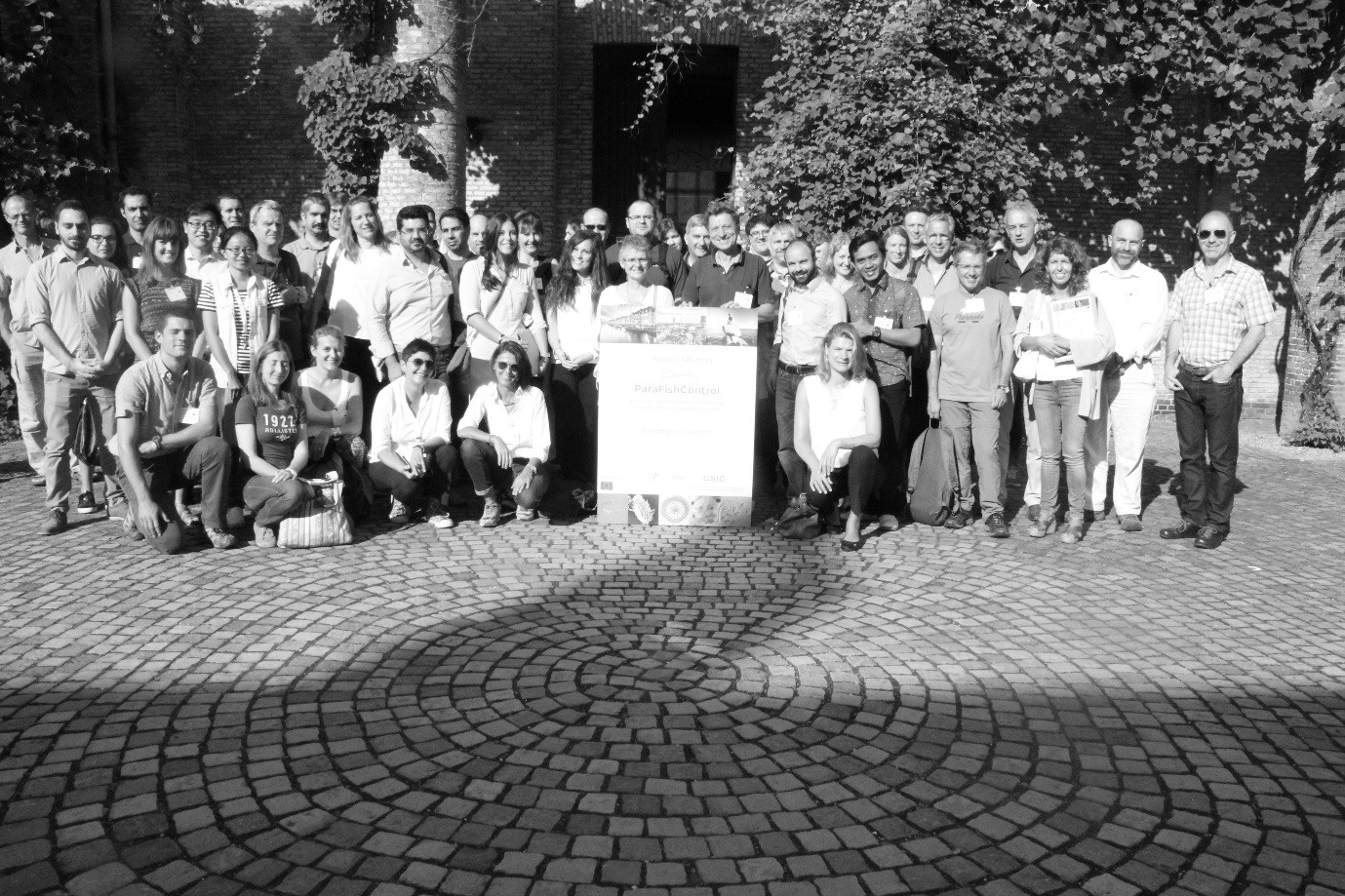
Members of the ParaFishControl consortium at the project’s Annual Meeting in Copenhagen in September 2016.
In memoriam: Richard FitzGerald

All of us at AquaTT were very sad to hear about the passing of one of our founding fathers, ex-Director and dear friend Richard FitzGerald on the 5th of December 2016, after a very brief battle with lung cancer.
Richard was a much loved colleague and wonderful friend and he will be a great loss to AquaTT, and the larger community.
We would like to offer our condolences to his wife, Frances (nee Lucy), his family and his many friends.
He will be sorely missed by all who knew him.

COMMON SENSE Final Event: Demonstration of next generation sensors for advanced real-time ocean observation

The EU-funded COMMON SENSE project will host a demonstration event and final partner meeting in Barcelona, Spain on the 27 January 2017. The conference, entitled ‘Demonstration of Next Generation Sensors for Advanced Real-Time Ocean Observation’, is a unique event that marks the end of the COMMON SENSE project which was launched in November 2013. The project was funded to directly respond to the requirement for integrated and effective data acquisition systems by developing innovative sensors that will contribute to our understanding of how the marine environment functions.
Conference participants will have the opportunity to learn more about the COMMON SENSE prototypes of next generation in-situ marine sensors to deliver vital information about the ocean. In doing so, COMMON SENSE results can support the implementation of European Union marine policies such as the Marine Strategy Framework Directive (MSFD) and the Common Fisheries Policy (CFP).
The COMMON SENSE sensors need less human operation and intervention than current technologies and create standardised data on eutrophication, underwater noise, heavy metals, and marine litter, with a focus on microplastics. Other important parameters considered are temperature, pressure, pH and pCO2. This information is essential for EU Member States to achieve and maintain a Good Environmental Status (GES) within MSFD, thus ensuring the long-term health of EU marine waters.
As the COMMON SENSE project comes to a successful conclusion, the results will be presented at this final workshop, along with a demonstration of the novel sensors developed and tested during the COMMON SENSE project.
For more information about this event, including programme, registration and logistics, please visit www.commonsenseproject.eu.
For all the latest updates as the event approaches please visit our website and follow us on Twitter (@commonsense_eu).

New ARRAINA Publication: Understanding Biomarkers in Fish Nutrition

The EU-funded ARRAINA (Advanced Research Initiatives for Nutrition & Aquaculture) project has published a new resource for aquaculture feed producers, entitled “Understanding Biomarkers in Fish Nutrition”.
The objective of this booklet is to provide a reliable set of biomarkers and associated methodologies to assess the nutritionally mediated effects on growth performance, metabolic homeostasis, stress responsiveness and health condition of fish which are fed new diet formulations from early life stages to completion of production cycle and sexual maturation. Of particular value are predictive and non-invasive biomarkers available at a relatively low cost, although the combination of conventional and omics approaches is emerging as a user-friendly option.
This booklet is specifically aimed at scientists and feed producers, but it also targets other industrial segments (e.g. fish farmers, feed additives companies, retailers) and individuals interested in gaining further knowledge of the physiological consequences of the raw materials that are currently used in the feeds of farmed fish. The species focussed on by the ARRAINA project are: Atlantic salmon, rainbow trout, common carp, European sea bass and gilthead sea bream.
This booklet is the final in a series of three technical booklets on the nutrition and feeding of fish farmed in Europe, and has been produced under the framework of the European Union FP7 funded ARRAINA project. The aim is to make these booklets widely available both to targeted stakeholders and society in general, in order to raise awareness of the science-based knowledge supporting the development of high quality, safe, and environmentally sustainable aquaculture feeds.
The first two ARRAINA technical booklets were focused on feed ingredients and nutrient requirements, and are available at www.arraina.ie and can also be requested from the dissemination task leader Cliona Ní Cheallacháin, AquaTT (cliona@aquatt.ie).
The website also provides further information on all other aspects of the ARRAINA project including specific research methods and available results. For more information, contact the ARRAINA Project Coordinator, Sadasivam Kaushik (sadasivam.kaushik@inra.fr).
The booklet can be downloaded by clicking on the image below.

Knowledge Transfer and Impact Officer (12-month contract)
Are you interested in increasing impact from publicly funded scientific research? Are you enthusiastic about exploring different methods and approaches for knowledge transfer and exploitation? Are you passionate about working with researchers to accelerate the transfer of state-of-the-art knowledge to industry, policy and society? If so, then AquaTT is looking for you!
ORGANISATION BACKGROUND
With 24 years of experience, AquaTT has proven itself as an expert at participating in European scientific projects, with a strategic focus on knowledge management and transfer, communication, dissemination and training. Over the years, AquaTT has successfully pursued, acquired and managed more than 35 European Commission (EC) funded projects (across Horizon 2020, the 6th and 7th Framework Programme, Interreg and Lifelong Learning Programmes), enabling it to build a knowledge-based organisation with key networks among national and European stakeholders. As a result, AquaTT has become one of the most successful organisations in Ireland in securing EC funding.
Across its vast network, AquaTT collaborates with more than 250 institutions in more than 40 countries. Main research domains in which it currently operates include: Marine, Environment, Water, Health, Climate Change, Energy and Food. Through numerous projects, AquaTT works with Europe’s top researchers for the entirety of each project’s life cycle, from project conception right through to delivery, to ensure positive societal impact.
AquaTT has built an experienced and multidisciplinary team of experts from different backgrounds. AquaTT's Knowledge Transfer team is growing and we have an opening for an individual who is passionate about science and able to broker knowledge to a range of stakeholders. The successful candidate should have a keen interest and sound experience in impact creation and knowledge exchange/transfer; strong investigative and analytical skills; networking and project management experience; and, the confidence and ability to generate new innovative ideas working in an individual and team setting.
JOB DESCRIPTION
Position: Knowledge Transfer and Impact (KTI) Officer
Type: Full-time 12-month contract (initial 6-month probation period) with potential for renewal. Position available immediately.
Location: Dublin, Ireland
Primary Responsibilities
AquaTT operates using a practical approach to knowledge transfer in all its project work, at both a national and European level. The KTI Officer will assist in the implementation and optimisation of Knowledge Management and Knowledge Transfer strategies at AquaTT, full training will be provided.
The successful applicant will be responsible for applying this methodology to a number of projects and collect, analyse and transfer research results to a diverse range of audiences and partners. As well as providing support across the AquaTT team to ensure that timely
Knowledge Transfer is carried out, the KTI Officer will play an integral role in creating impact from EC- and nationally-funded scientific research. Measuring the impact of Knowledge Transfer activities will be an important aspect of the job role.
Specific Responsibilities
- Contribute to the optimisation of AquaTT's internal and external knowledge management and knowledge transfer systems, including the development of a tangible impact measurement metric system
- Work with and support AquaTT’s Project Officers, providing advice and support in all knowledge transfer activities
- Help to develop training material and carry out internal and external training on Knowledge Transfer and impact measurement techniques
- Fulfil administrative requirements and other appropriate activities as requested by the Management team
Internal and External Relationships
- Interact with a range of stakeholders to be able to understand and analyse research Knowledge Outputs and determine their applicability to different target users in the themes concerned
- Ensure regular contact with the project team and senior staff to maintain a cooperative, motivated and successful team
- Represent the interests of AquaTT at public engagements, stakeholder meetings, conferences etc.
- Demonstrate optimistic, self-motivated and responsible work ethic and can-do attitude towards all responsibilities to support gratifying team work and job satisfaction
- Willingness to take on additional tasks outside of the described role to contribute to the success of the organisation as a whole
ESSENTIAL CRITERIA
- EEA work authorisation
- Educated to degree level in a relevant area or equivalent experience, e.g. knowledge/technology transfer, science communication and public relations
- At least two years’ previous experience in a comparable role
- Fluent written and spoken English
- Strong active interest in science, science communication, research impact and Knowledge Transfer
- Excellent attention to detail with a pro-active, diligent, willing to learn, dedicated and responsible work ethic
- Must be professional, highly organised and able to work on several projects simultaneously
- Outstanding and proven presentation and writing skills
- Ability to work to strict deadlines in a fast-paced environment
- Excellent interpersonal skills, ability to collaborate and work in a team in a multicultural environment
DESIRED CRITERIA
- Experience in providing training to external audiences
- Experience in the management of Intellectual Property in the framework of licensing activities and collaborative R&D
- Experience in a Technology Transfer Office or commercialisation setting
- Some knowledge of marine sciences and environmental issues or an interest in learning about these
WORK CONDITIONS
Some national and international travel may be required for meeting with project partners and stakeholders, etc.
SALARY SCALE
Starting salary scale will depend on experience and qualifications and will be discussed at interview stage.
APPLICATION PROCEDURE
Application Deadline: 30th January 2017 at 17.00. The position is available immediately. Applications will be reviewed as they are received and short listed candidates may be invited to interview before the application closing date.
Application Requirements: A customised cover letter and CV should be addressed to David Murphy, General Manager and sent electronically to: jobs@aquatt.ie quoting “Knowledge Transfer and Impact Officer” in the subject line.
Success for COMMON SENSE - Marine Sensor Demonstration a Significant Achievement
 The EC-funded COMMON SENSE project held its final event in Barcelona on the 27 January 2017, attended by project partners and important stakeholders involved in European marine monitoring. The Meeting was held in the facilities of Fundació Navegació Oceànica Barcelona (FNOB), partner in the COMMON SENSE project. The full day meeting provided in-depth context on the challenges and importance of improving methods and available technology to monitor and protect our marine waters. Presentations on the specific results generated by the COMMON SENSE project preceded a live demonstration of the marine monitoring sensors generated by the project.
Sensors developed by the COMMON SENSE project can contribute towards increasing the availability of standardised data on: eutrophication; concentrations of heavy metals; micro plastic fraction within marine litter; underwater noise; and other parameters such as temperature, pH, pCO2 and pressure. These cost-effective sensors directly respond to current marine monitoring challenges and will be a key tool for EU Member States in meeting their Marine Strategy Framework Directive (MSFD) requirements and achieving Good Environmental Status (GES) of their marine territories.

Sergio Martinez, COMMON SENSE Scientific Coordinator, said: “Being able to validate what the COMMON SENSE project has achieved through a live demonstration was a momentous occasion for me as coordinator, but also for all the partners. Not only has COMMON SENSE shown that marine sensors can be developed which are cheaper, smaller and more user friendly than currently available sensors; they are also interoperable using the COMMON SENSE smart sensor unit and common web platform. This means the date provided by the sensors can be made available online in real-time regardless of the platform used to host the sensors; buoy, pier, even racing yachts.”
The COMMON SENSE partners have input significant effort over the past forty months to develop prototypes for innovative, next generation sensing technologies that will contribute to the implementation of the MSFD and therefore support the protection of the marine environment in Europe.
Prior to the COMMON SENSE final event, partners involved in sensor development spent the week in Barcelona testing and deploying their sensors in preparation for the demonstration. Within the COMMON SENSE project considerable focus was on deployment and testing, with partners rigorously testing all hardware developed to ensure that sensors’ performance is not inhibited by even the most changeable and challenging conditions. COMMON SENSE sensors underwent field testing in the Mediterranean, North, Norwegian, Baltic and Arctic seas.
For further information about COMMON SENSE, please contact the COMMON SENSE Scientific Coordinator Sergio Martinez (smartineznavas@leitat.org) or visit the project website at: www.commonsenseproject.eu
Super Additive Leading the Way To More Sustainable Aquaculture Feed
Fish farmers are always looking for sustainable feed that can make fish strong and healthy. A new study led by the CSIC in Spain concludes that marine feed ingredients in aquaculture can potentially be replaced by plant ingredients without detrimental effects, when appropriate feed additives are added.
 The team of researchers of the Nutrigenomics and Pathology Groups of the Institute of Aquaculture Torre de la Sal (IATS-CSIC), in collaboration with scientific (Norwegian University of Life Sciences, Centro de Ciências do Mar) and industrial (BIOMAR, NOREL) partners, found that butyrate supplementation helps to preserve intestinal function in gilthead sea bream that are fed plant-based diets. The research was conducted within the European Union funded projects AQUAEXCEL, AQUAEXCEL2020 and ARRAINA.
Plant-based fish food is seen as more sustainable than that containing other marine products, such as fish meal. Research shows that some farmed fish species can survive without any or with a very limited supply (< 7%) of marine feed ingredients but they can then suffer from decreased efficiency to digest food and increased susceptibility to diseases and stress.
Sodium butyrate is one of the most promising feed additives to be used in aquaculture to prevent these adverse effects. It is a salt of short-chain fatty acid produced by bacterial fermentation of undigested carbohydrates.
Two Transnational Access (TNA) studies, which allow scientists to use research infrastructures in different locations, were conducted to define the most effective butyrate dose for gilthead sea bream based on growth performance and measures of intestinal function, architecture and permeability.
Fish given the butyrate supplement showed fewer intestinal problems normally associated with a plant-based diet. This finding was supported by several different approaches by the research team.
“For example, looking at 80 intestinal genetic markers we could show changes in the expression of genes involved in antioxidant defence, epithelial permeability and mucus production when fish were fed with plant-based diets alone. Most of these were returned to normal when adding sodium butyrate to the diet,” said senior author, Dr Jaume Pérez-Sánchez (CSIC).
 Co-author of the publication, Dr Ariadna Sitjà-Bobadilla (CSIC) said the Transnational Access programme was vital in completing the studies: “It would have not been possible to finalise this research and publish the current paper without the programme. Thanks to the two TNA projects we collaborated with two European research groups with complementary expertise to ours.”
Dr Pérez-Sanchez said the facilities the team had access to were an excellent asset: “One of the most difficult steps was to maintain the fish for such a long feeding trial - up to 38 months- without having any technical problems, or mortalities in the experimental fish, thanks to the good conditions of IATS installations. We achieved a record for key performance indicators at the end of the trial.”. The research was published in the scientific journal PlosOne, dx.doi.org/10.1371/journal.pone.0166564.
The current TNA programme is part of the AQUAEXCEL2020 project, a continuation of AQUAEXCEL, enabling access to top facilities of participating aquaculture research infrastructures (More information under: www.aquaexcel2020.eu).
The team’s next steps will be to investigate if the benefits of the butyrate supplement can also be found in the protein and bacteria composition found in the digestive system: “It is a big challenge to understand how these functional features are modified by genetic and epigenetic factors and an important step towards establishing gilthead sea bream as a powerful model for the development of sustainable and heathy fish feeds,” says Dr Pérez-Sanchez.
Images ©Jaume Pérez-Sánchez (IATS-CSIC)
Science Inspiration Leads to Innovation for Blue Growth

Over 120 stakeholders, comprising of marine scientists, industry members, policymakers, and students, convened at the European Parliament on 8 February 2017 to contribute to the EuroMarine event “Blue Science for Blue Growth, EuroMarine: connecting ideas and people”. EuroMarine, a marine science network with 73 member institutions from 23 countries, intended to create a forum on the importance of marine science, and how its members are collaborating to advance marine science with innovative and responsive ideas.
MEP Ricardo Serrão Santos opened the session with a rousing call to action, “The balance between encouraging economic growth in the ocean and nurturing the health of ocean ecosystems will be a complex mission. Without good science, blue growth can turn on wrong pathways."

Photo caption: MEP Ricardo Serrão Santos introduces the event to the audience. Panellists from left to right: Simone Libralato (OGS), Michael Steinke (University of Essex), Frédérique le Roux (CNRS UPMC), Patrizio Mariani (DTU Aqua), MEP Ricardo Serrão Santos, Philippe Cury (IRD), Catherine Boyen (CNRS), and Laura Airoldi (University of Bologna), 8 February 2017, European Parliament, Brussels.
A short introductory film followed (http://www.euromarinenetwork.eu/BSBG) on the significance of the ocean in our lives and how EuroMarine works to enhance our knowledge on the marine world, both to increase our capacity to use the oceans wisely, and to contribute to its protection.
EuroMarine Chairs Catherine Boyen (Centre national de la recherche scientifique, CNRS) and Philippe Cury (L'Institut de recherche pour le développement, IRD) introduced the network and its role in assisting scientists to collaborate, innovate and advocate for marine science. Its successes can be seen through the remarkable work of over 800 scientists who participated in over 37 EuroMarine supported events in the last two years alone.
Four EuroMarine activities were presented, highlighting the potential to achieve big results with incentive funding. The talks covered the wide marine spectrum, from pathogens to chemical ecology of marine interactions, marine trophodynamic models and even ecosystem based solutions for resilient urban harbours. These showcased the EuroMarine vision, its achievements and perspectives, while simultaneously presenting an engaging narrative on marine issues.
In the discussion that followed on innovation for global challenges and the role of marine science, moderator Jean-Marc Châtaigner (IRD Managing Director) emphasised the value of interactions and interdisciplinarity to face global challenges, and the need to progress toward a forum which empowers scientific communities worldwide.
As co-moderator of the discussion on the added value of EuroMarine to the European marine landscape, MEP José Inácio Faria noted the need for concerted collective action to secure the valuable resources of the Oceans. The Executive Secretary of the European Marine Board, Niall McDonough, as well as Kathrine Angell-Hansen, JPI Oceans Director, and Iliaria Nardello, EMBRC Executive Director, each presented their visions of how these different initiatives can work together to complement each other in the complex European Marine landscape, stressing the need for the different approaches but also unified action. Sigi Gruber, Head of marine unit, DG research, provided some positive insights into how EuroMarine, as a group of core researchers, can provide responsive science to topical issues and meet the needs for capacity building in marine sciences.
Proving to be a resounding success, the event turned out to be a thought-provoking and illuminating dialogue on our oceans, and introduced the work and aims of EuroMarine to a wider audience.
Reporting on the success of the meeting, Catherine Boyen said “EuroMarine is a unique initiative bringing together the best European expertise in marine sciences. We now have to capitalize on these promising achievements, to make more progress for the future of our blue planet.”
The video can also be found online at: https://vimeo.com/203426012.
The full list of talks and presentations will be made available on: www.euromarinenetwork.eu/BSBG.
For more information on EuroMarine and its work, please see: www.euromarinenetwork.eu.
AquaTT now hiring Project Officer for immediate start
Position Title: Project Officer

| Type | Full-time 36 month contract with potential for renewal. Initial six-month probation period. Position available immediately. |
| Location | Dublin city centre, Ireland |
| Application deadline | 12 May 2017, 17:30 CET |
| Application documents | A well-motivated application letter outlining why you are the perfect candidate and a CV addressing our essential criteria, including 3 references, should be addressed to David Murphy, AquaTT Manager and sent electronically to: jobs@aquatt.ie |
ABOUT AQUATT
With 25 years of experience, AquaTT has proven itself as an expert at managing European projects, with a strategic focus on knowledge management and transfer, dissemination and training. AquaTT operates extensively within the European scientific research arena and has demonstrated a track record in successfully pursuing, acquiring and managing a significant number of grants (across the FP7, H2020, Interreg and Lifelong Learning Programmes), enabling it to build a knowledge-based organisation with key networks among national and European stakeholders in the marine and other sectors.
AquaTT works with Europe’s top researchers for the entirety of each project’s life cycle, from project conception through to delivery, designing and carrying out projects that will have positive societal impact. AquaTT collaborates with over 250 institutions in more than 40 countries, operating in research domains such as Marine Science, Environment, Water, Health, Climate Change, Energy and Food. AquaTT’s policy has been to build an experienced and multidisciplinary team of experts from different backgrounds. Our team uses their collective expertise in scientific research, business, communications, training, teaching and industry to design and manage innovative activities tailored to the needs of each specific project. The company has an inventive and collaborative nature, where employees are valued and inspired as well as rewarded for their ideas and contributions. AquaTT’s people demonstrate personal behaviour that integrates and promotes strong values of trust, respect, transparency and fairness into the organisation’s practices.
We believe that scientific research can enrich our lives and deliver a sustainable future for humanity. We use our skills to make a difference and help research benefit society.
DESCRIPTION OF POSITION
The Project Officer (PO) will join our existing team and contribute to the management and administration of AquaTT’s current and future portfolio of projects, and will be primarily responsible for 2-3 European projects, ensuring them to become a success for both AquaTT and our partnerships. AquaTT’s roles in projects typically fall under the umbrella of knowledge management activities including dissemination, communication, education, stakeholder engagement and knowledge management and transfer. Given the international dimension of the projects, regular travel will be required.
The main duties of the post include:
• To successfully and efficiently manage a portfolio of EC projects, delivering AquaTT’s contractual obligations on time. This includes generating high quality deliverables, on-time reporting, writing press releases and promotional materials, content management of project websites and other social media channels, presenting at conferences, contributing to technical activities, budget management and monitoring, event management (including effective meeting contributions), etc.
• To facilitate and carry out efficient and effective dissemination and communication of the activities and results of the assigned projects;
• To effectively manage knowledge from the assigned projects, thereby ensuring maximum uptake and impact by potential end-users, ultimately demonstrating value creation;
• To maintain and instigate excellent partner and stakeholder relationships;
• To represent AquaTT externally;
• To maintain a detailed understanding of all aspects of EU and national research funding programs relevant to AquaTT and contribute to funding procurement by developing top quality project concepts, proposals and plans.
A description of AquaTT’s project portfolio is available on the company website (www.aquatt.ie/aquatt-projects).
REQUIRED SKILLS AND EXPERIENCE
AquaTT is looking for a pro-active, diligent and dedicated individual, who must have suitable skills to carry out the duties described above as well as strong soft skills such as excellent communication and networking, stakeholder engagement, time management and task prioritisation, and be able to work to tight deadlines. The project officer would ideally have a creative streak, and enjoy determining alternative methods and channels for carrying out their activities including communication of scientific results to different stakeholder groups. This is a senior role and the candidate will have full operational responsibility for project delivery including quality of deliverables, risk management and budget.
Essential Criteria:
• EEA work authorisation;
• University degree, with a minimum of a Bachelor’s degree;
• A minimum of five years’ demonstrable experience in relevant project-based (national- or EC funded) work;
• Excellent written and spoken English;
• Excellent presentation skills;
• Ability to communicate clearly, courteously, and professionally to both scientific and other stakeholders;
• A highly organised and efficient approach to managing responsibilities and effectively prioritise and execute tasks in a fast-paced environment;
• Good understanding of the research funding environment in Europe;
• Task-oriented, responsible and autonomous;
• Strong interpersonal skills;
• Commitment to delivering on allocated tasks, with a high level of attention to detail;
• Good ability to work in a team and in multicultural environments;
• Good ability to demonstrate initiative;
• Must be able to learn, understand, and apply new information;
• Reacts to project adjustments and alterations promptly and efficiently;
• Sound working knowledge of MS Office systems.
Desired criteria:
• Experience of knowledge management, technology transfer, science in society or other processes involving the uptake of knowledge by different stakeholder groups such as industry, policy, science and society;
• Track record of success in writing grant applications;
• Project management qualification;
• Event management experience;
• Experience in information management and communication through electronic platforms;
• Networking experience;
• Personal interest in and enthusiasm for playing a role in creating a culture change to facilitate the increased uptake of scientific knowledge leading towards a more sustainable future for humanity.
WORK CONDITIONS
• Overtime may be required to meet project deadlines as part of the contract;
• National and international travel will be required.
REMUNERATION
The AquaTT Project Officer scale has 16 points from €25,000 - €38,949. The starting point for the successful candidate will depend on experience and qualifications. Holiday entitlements are 20 working days per annum and an additional 5 days of company holiday leave is given over the Christmas period. Internal and external training opportunities (relevant to the role) will be provided. Several extra benefits provided including pension option.
The ECsafeSEAFOOD International Stakeholder Event and Open Science Conference – A wealth of potential
The worlds of science, policy and industry gathered in Brussels, Belgium, from 25-26 January 2017 to discuss potential impacts of non-regulated contaminants in seafood at the ‘Seafood Safety: New Findings & Innovation Challenges’ conference.
Hosted by the EC FP7-funded ECsafeSEAFOOD project, an international stakeholder event and open science meeting brought together experts from across the globe to discuss how new research into seafood safety can help boost consumer confidence and address public concern about safe and high-quality food. The event was the culmination of the four-year ECsafeSEAFOOD project, which focused on seafood consumer needs and concerns, marine toxins in seafood and the environment, toxicity of seafood contaminants, evaluation of seafood monitoring data, and rapid detection tools for environmental contaminants.
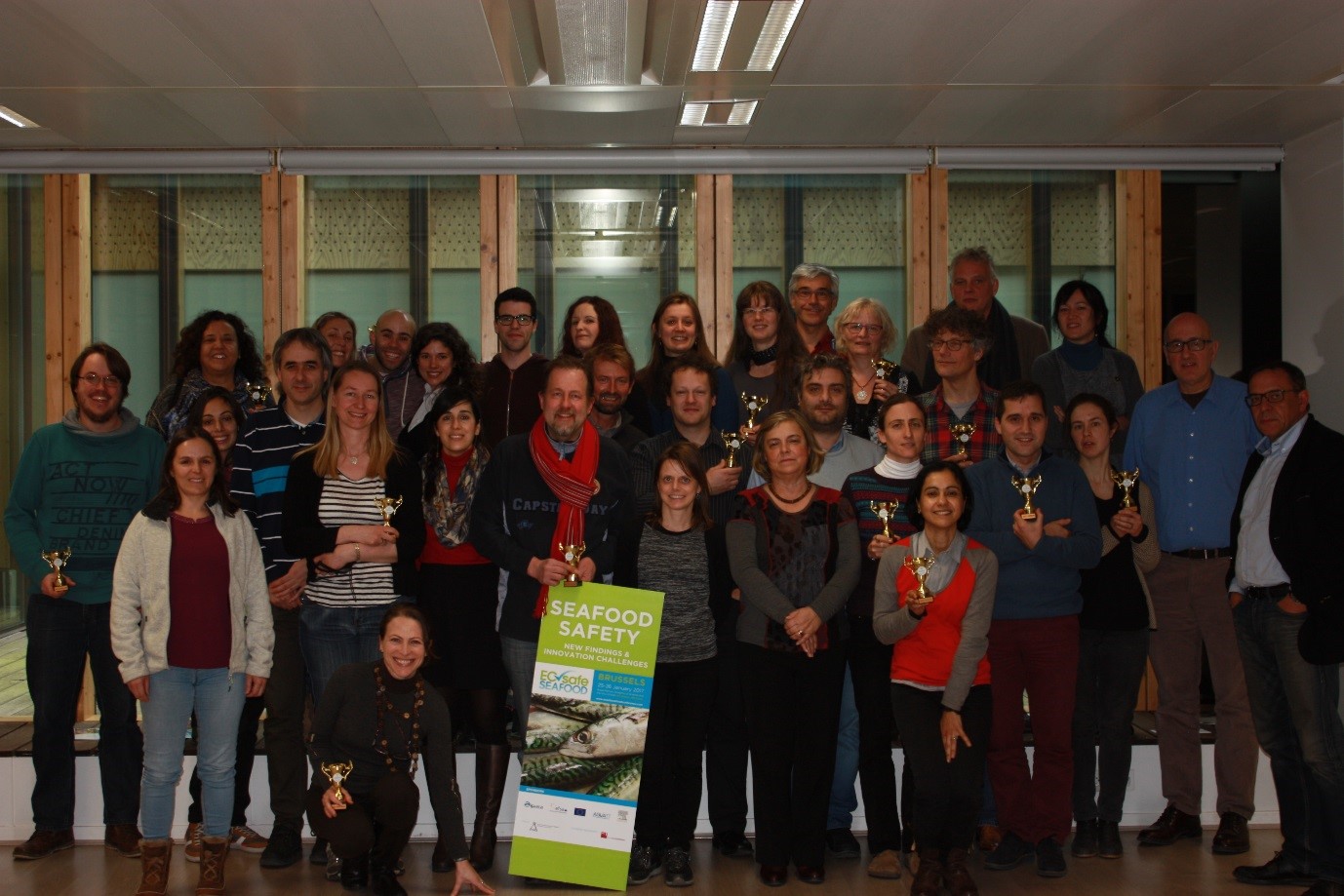 This unique event was held at the Royal Flemish Academy of Science and the Arts (KVAB), Brussels, Belgium and brought together 94 attendees from around the world. The latest developments in the evolving field of seafood safety were examined through a variety of activities both formal and informal. Moderated panel discussions and a plenary programme with keynote speakers shared time with a theatrical “Science Slam” and other informal networking opportunities.
A dedicated half-day International Stakeholder Event addressed national and international policy makers in the fields of food safety, environment and public health, food safety authorities, the seafood industry and consumer organisations. There were presentations and discussions of novel research results and applications followed by interactive round tables allowing researchers to engage in detailed conversations about important questions relevant to their line of work, including potential end users and practical applications, ideas for transfer activities, possible barriers to transfer and eventual impact.
ECsafeSEAFOOD project coordinator, Dr António Marques said: “The brainstorming session with seafood safety experts and stakeholders gave participants the opportunity to discuss the relevance of key ECsafeSEAFOOD results for the field of seafood safety. Each group provided strategies to ensure wide societal application of the outcomes. The session also served as a platform to strengthen the links between science, policy, industry regulators and industrial organisations.”
Among the important results for consumers are the development of FISHCHOICE, an interactive online tool that consumers can use to weigh up the benefits and risks associated with the seafood they eat, and a set of seafood safety guides for consumers, industry and policy makers, which are due to be published in March 2017.
Following the Stakeholder Event, a one-and-a-half-day Open Science Conference presented the latest scientific data on ECsafeSEAFOOD topics to a broad audience. Most attendees participated in both events, taking advantage of the excellent opportunity for industry and science stakeholders to exchange experiences and generate new ideas to drive forward research vital to keeping seafood demonstrably safe. Some key scientific results discussed include the development of new contaminant detection methods as well as insight into the occurrence of unregulated contaminants in seafood, the effect of cooking on contaminant levels and the effect of microplastics on contaminant levels in fish.
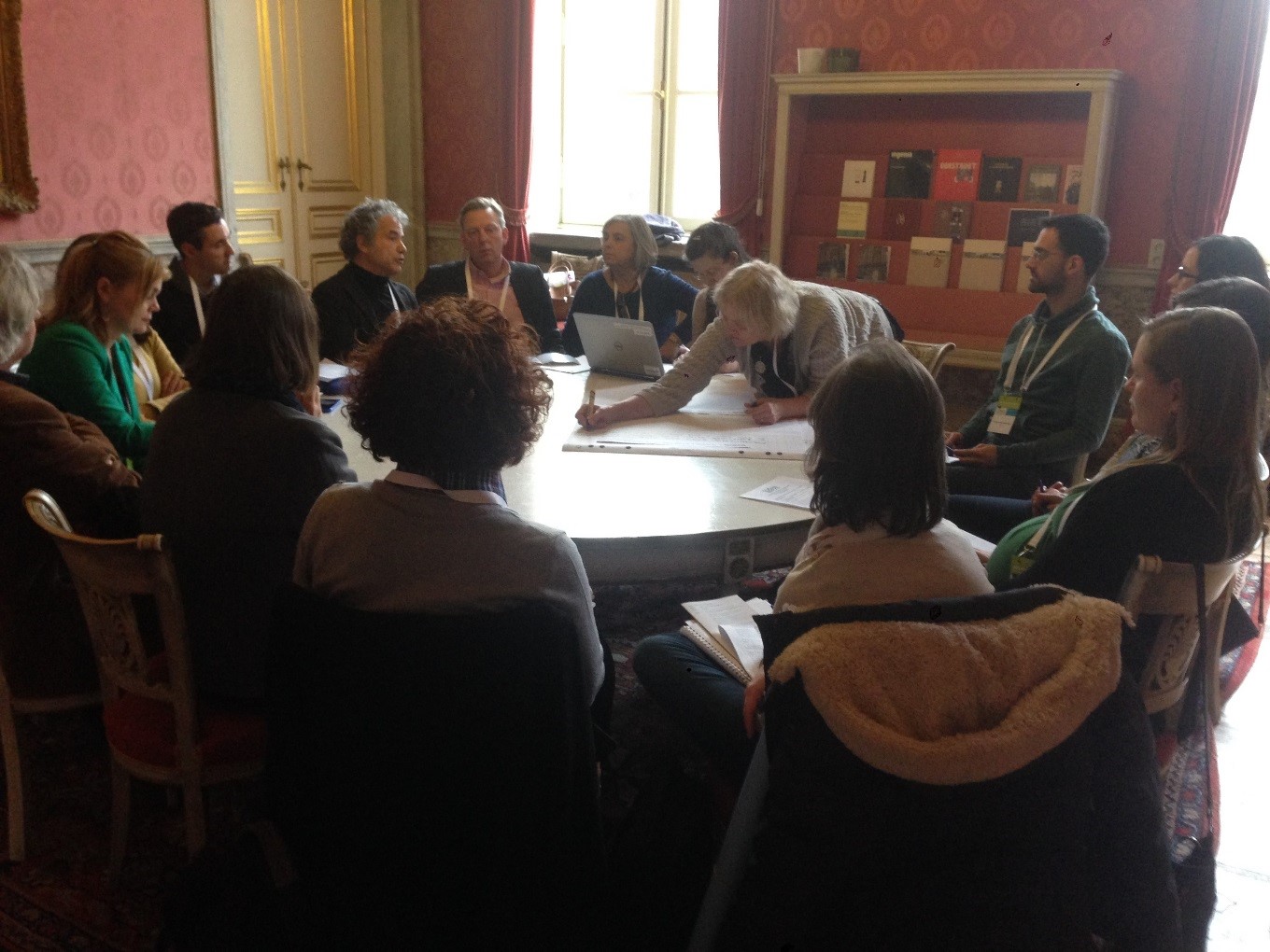 Dr Marques said: “The ECsafeSEAFOOD final conference was a huge success. All attendees actively engaged in and enjoyed the conference, with participant feedback deeming it an enriching event. This event provided a platform for research and industry representatives to diversify their cross-sectorial knowledge, strengthen their existing partnerships and build new opportunities.”
For more information about ECsafeSEAFOOD and its final conference, please visit: www.ecsafeseafood.eu, or contact Tanja Calis, email: tanja@aquatt.ie. For all the latest updates from the project please follow ECsafeSEAFOOD on Twitter (@ECsafeSEAFOOD) and like the project conference page on Facebook (www.facebook.com/ECsafeSEAFOODConference).
ECsafeSEAFOOD International Stakeholder Event participants during the Knowledge Transfer brainstorming session, Brussels, Belgium
New online tool allows consumers to assess the health benefits and risks of seafood
FishChoice, a new online tool to help consumers and professionals efficiently and effectively balance the benefits and risks of eating seafood, has been launched by the EU-funded ECsafeSEAFOOD project at www.fishchoice.eu.
Seafood plays an important role in a balanced diet. It is a nutrient-rich food that is a good source of protein, vitamins and minerals and contains a unique type of fat – namely omega-3 fatty acids, which have considerable health benefits. Like any other food type, seafood can also be a source of harmful contaminants with the potential to impact human health negatively.
The ECsafeSEAFOOD project ran from February 2013 until January 2017 and assessed food safety issues related to priority contaminants present in seafood as a result of environmental contamination. One of the most important objectives of the project was to assess the health risks associated with the intake of chemical contaminants, such as inorganic arsenic and methylmercury, through the consumption of seafood. In this framework, a new interactive tool called FishChoice was designed, developed and validated. FishChoice provides users with the means to minimise their exposure to chemical pollutants from eating seafood, whilst helping them ensure important nutrients, such as fatty acids, are still consumed.
FishChoice is a digital tool which assists users by taking both the benefits and risks into consideration when choosing seafood. Two versions of the tool have been designed, one for everyday users and one for professionals working in the field of nutrition and health. Both versions are freely available at the website www.fishchoice.eu. The tool allows the user to create a weekly menu by selecting among 24 of the most consumed seafood species in Europe. The benefits and risks for each choice are then calculated by comparison with threshold values. What makes this program particularly unique is the inclusion of specific information for pregnant women and nursing mothers, whose increased health risk from consuming certain species such as tuna, was incorporated into the system. FishChoice is currently available in five languages (English, Dutch, Norwegian, Portuguese and Spanish), and others will be added shortly.
FishChoice has been designed and developed by researchers of Universitat Rovira i Virgili (URV, Spain) and Ghent University (Belgium), under the coordination of the Portuguese Institute of Sea and Atmosphere (IPMA, Portugal).
Links: FishChoice: www.fishchoice.eu
ECsafeSEAFOOD FP7 project: www.ecsafeseafood.eu
Scientific publication: www.sciencedirect.com/science/article/pii/S0278691517300509
New Marine Science iBook “Harmful Algal Blooms” to be Launched to Boost Ocean Literacy in European Schools
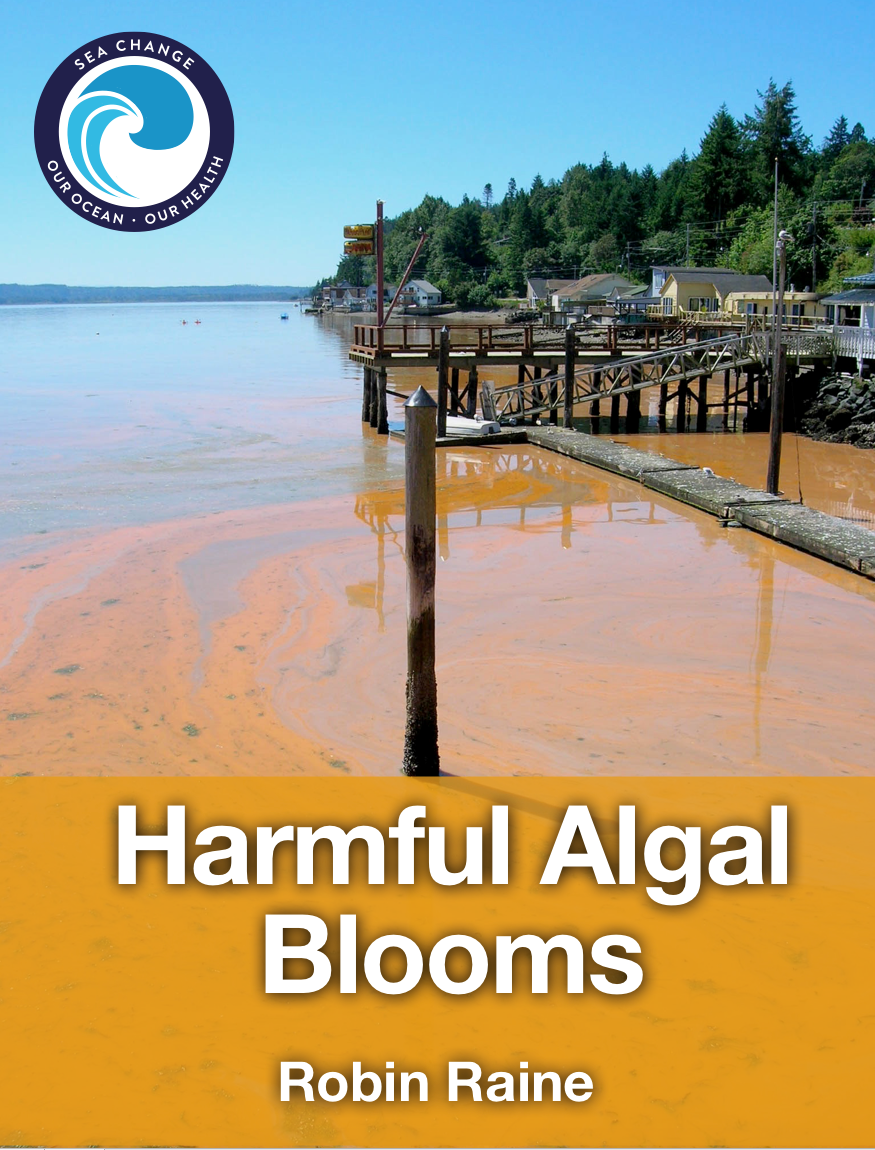 A marine science iBook entitled “Harmful Algal Blooms” has been developed as part of NUI Galway’s contribution to an EU-funded European research project Sea Change. The project aims to raise European citizens’ awareness of the ocean’s influence on us and our influence on the ocean, or “Ocean Literacy”.
The iBook will be launched by Professor Colin Brown, Director of the Ryan Institute for Environmental, Marine and Energy Research on Monday 13 March at the National University of Ireland, Galway.
Opportunities to increase awareness of the ocean are limited in the junior cycle science curriculum across Europe. Dr Christine Domegan, lead methodologist for Sea Change, Whitaker Institute, NUI Galway, explains: “To co-create Ocean Literacy we need collaboration, discussion, participation and engagement across multiple stakeholders in Europe; from policy makers, to educators, and from media to mariners, children and grandparents.”
This iBook is designed to infuse the engaging story of harmful algal blooms into teaching across the sciences. Harmful algal blooms, or HABs, occur when colonies of algae - simple plants that live in the sea and freshwater - grow out of control while producing toxins that can have harmful effects on fish, shellfish, marine mammals, birds and people.
During the launch, the author, Dr Robin Raine, from Earth and Ocean Sciences, NUI Galway, will speak about his experiences at the heart of the book. The audience will also be introduced to the teaching design used within the book, which aims to ensure the content can be taken up by science teachers and students to advance a “Sea Change” in Irish and European Ocean Literacy.
The great response from both teachers and students after piloting the iBook in Irish, Swedish, and Belgian schools is a step forward to introducing Ocean Literacy into more aspects of education. Co-editors Dr Veronica McCauley and Dr Kevin Davison of NUI Galway’s School of Education, believe: “Teachers are becoming more technology-savvy in the classroom and are finding innovative ways to teach the curriculum so that it encourages personal interest in the sciences.”
The importance of the ocean, and therefore Ocean Literacy, cannot be overestimated. The ocean defines and dominates everything about our planet. It is home to most of the life on Earth, regulates our weather and climate, provides much of our oxygen, and helps to feed the human population.
Dr Robin Raine, author and lecturer at NUI Galway, says: “This book will introduce students to important features of our ocean as well as harmful algal blooms. It will act as a resource for teachers to strengthen and promote science through the topic of marine science.”
To confirm your attendance at the launch, please register at: www.eventbrite.ie/e/launch-of-harmful-algal-blooms-ibook-tickets-32407091483.
For further information, contact Dr Veronica McCauley on veronica.mccauley@nuigalway.ie. Discover more about past, current and upcoming Sea Change resources and initiatives at: www.seachangeproject.eu, follow Sea Change on Twitter (@SeaChange_EU) or like us on Facebook (@SeaChangeProjectEU).
COMMON SENSE Resources for European Marine Monitoring
 The COMMON SENSE project has successfully finished after 40 months of in-depth research and continual development of marine sensors and systems. The EU-funded project started in November 2013 and ran until February 2017 with a focus on developing specific sensors in direct response to current marine monitoring challenges, and the requirement of EU Member States in meeting their Marine Strategy Framework Directive (MSFD) requirements and achieving Good Environmental Status (GES) of their marine territories.
The COMMON SENSE project was a great success, with significant progress made to improve marine data acquisition using sensors to contribute towards increasing the availability of standardised data on: eutrophication; concentrations of heavy metals; microplastic fraction within marine litter; underwater noise; and other parameters such as temperature, pH, pCO2 and pressure.
The progress achieved by the project partners is impressive, with the majority of the sensors moving from a technology readiness level (TRL) of 2-3 up to 6-7, with one sensor now at TRL 8 – the Mini Sea Sampling System. While commercialisation of these sensors is beyond the scope of the project as it has finished, interested stakeholders are welcomed, and encouraged to engage with COMMON SENSE partners to ensure the sensors are brought to market. In many cases, partners have committed to continuing the work in COMMON SENSE in order to do so.
To optimise the exploitation potential of the COMMON SENSE project’s generated knowledge, the partners incorporated an in-depth communication, dissemination and knowledge transfer strategy from the very beginning of the project. Several different resources are available to stakeholders, which will allow them to understand exactly what the knowledge is, and how it could be applicable to them. From an industrial point of view, sensor profiles were developed as technical briefs, outlining the technical specifications and highlights of each sensor. These are available to download from the COMMON SENSE website’s media section. Also, the project carried out a feasibility analysis and have outlined manufacturing procedures for each sensor, providing in-depth information on how the sensors can be reproduced and brought to market.
 The COMMON SENSE outreach in general was enthusiastically taken on board by all partners from an early stage, in recognition of the need to raise awareness of progress and results of the project on an ongoing basis. To this end, regular factsheets were developed, published and widely disseminated. As well as an introductory factsheet developed at the start of the project to introduce stakeholders to the COMMON SENSE project, its objectives, methodology and expected impacts, three other factsheets provided information on important aspects of the project, such as: how COMMON SENSE sensors will contribute to improving marine monitoring and marine data management including an infographic that shows the project development timeline alongside a timeline for MSFD implementation; introductory detail on each of the innovative sensors under development by COMMON SENSE including the description of how the sensors could work together on one platform through the smart sensor unit and common sensor platform whose goal was to collect data from multiple sensors; detail on the deployment and testing activities carried out by partners to ensure developed sensors were fit for purpose and to identify areas which required further modification. Significant effort was expended in these activities, with all sensors being tested a multiple of times at different locations and using different platforms.
A project video was also created, which quickly explains the project and its relevance to marine monitoring policies across Europe, using a mixture of real footage and animations. The video is available to view online at https://vimeo.com/201643243 or through the COMMON SENSE website.
The COMMON SENSE project closed with a final partner meeting and demonstration event in Barcelona at the end of January 2017. The Coordinator, Sergio Martinez of LEITAT, expressed his appreciation for the efforts of each partner and congratulated the consortium on their achievements, saying:
“Tomorrow has arrived, now at the project end the proposal vision has come true, our objectives have materialised and the results are widely visible; we looked at the requirements of next generation sensors, including measuring new pollutants and increasing performance and compared them to existing sensors, to develop cost-effective solutions, transferring acquired data to an interoperable web platform. We tested and deployed our marine sensors and systems with exciting and hopeful results. Some sensors are now advanced prototypes, others require further validation. A mission for COMMON SENSE partners now is to continue with the legacy of the project, to keep working on these innovative marine solutions, reach the market, and help society by contributing to the realisation and maintenance of good environmental status in all EU Member States”.
The results of the COMMON SENSE project can be used to increase knowledge of the marine environment and access to related data, allowing strategic decisions to be taken in marine protection and conservation. It will also help to support EU policies (MSFD / CFP) by providing multifunctional, innovative and cost-effective sensors that are easy to use across a range of platforms to detect reliable measurements on key parameters by means of methodological standards that interoperate with, existing or new, international observing services. All COMMON SENSE resources are available to download from the COMMON SENSE website, www.commonsenseproject.eu, or by contacting WP10 Leader Cliona Ní Cheallachain of AquaTT, or the project coordinator Sergio Martinez of Leitat (smartineznavas@leitat.org).
Exciting Ocean Outreach Activities Revealed in the Sea Change Project’s Third Newsletter
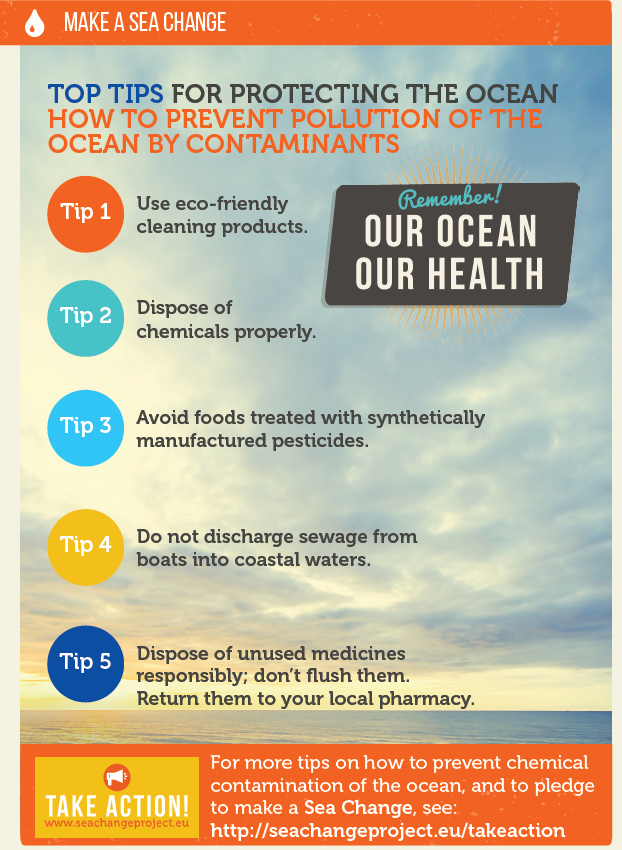 The third issue of the Sea Change project newsletter showcases a range of innovative activities taking place across Europe to boost European citizens’ “Ocean Literacy”, an understanding of the ocean’s influence on us and our influence on the ocean. The newsletter is now available to download from the project’s website: www.seachangeproject.eu.
Sea Change is a three-year EU Horizon 2020-funded project that is establishing a fundamental “Sea Change” in the way European citizens view their relationship with the ocean by increasing Ocean Literacy throughout society.
The third issue of the Sea Change project newsletter presents the exciting outreach events taking place across Europe to encourage people to become ocean literate. One such event is “Crab Watch”, a citizen science initiative where members of the public are challenged to make an inventory of beach crabs by carrying out standardised protocols. This initiative engages with the public by inviting them to share useful scientific information while also raising awareness of the impact of non-native species. The newsletter also includes articles on the Sea Change online course entitled “From ABC to ABSeas: Ocean Literacy for all”, which offers educators innovative ways to teach Ocean Literacy. The course is available, on the European Multiple MOOC Aggregator (EMMA) in the following languages: English, French, Spanish, Italian and Catalan. To access the course, see: https://platform.europeanmoocs.eu/course_from_abc_to_abseas_ocean_liter.
 Other stories include updates on recent contributions to ocean events, news from Sea Change’s sister Horizon 2020 project ResponSEAble, Ocean Literacy in the news; and key events for your Ocean Literacy calendar. A special feature on Sea Change’s Education and Lifelong Learning initiatives details how the project is empowering educators, students and educational communities to help address Ocean Literacy and advocate behaviour change for ocean health. Readers will also receive tips on how to prevent ocean pollution and are challenged to pledge to make a Sea Change at: http://seachangeproject.eu/takeaction.
Get the latest news on the Sea Change project by following us on Twitter at www.twitter.com/SeaChange_EU and liking us on Facebook at www.facebook.com/SeaChangeProjectEU.
EuroMarine 2017 Calls launched to support foresight activities and capacity building in marine sciences

Scientists from EuroMarine Member Organisations are invited to apply for the two EuroMarine 2017 Funding Calls, one for scientific and foresight activities and the other a programme for early career scientists to attend training courses. Member Organisations can be viewed at: www.euromarinenetwork.eu/documents/euromarine-2017-membership-list.
EuroMarine is a European marine research network that funds scientific, foresight and training activities, and fosters new services relevant to the marine research community in cooperation with other organisations and projects. With limited funding, EuroMarine has supported over 52 scientific, foresight and training activities involving more than 1,000 scientists and stakeholders to share, collaborate and collectively push boundaries within marine science in the past three years.
The eligible categories of activities that will be funded in the 2017 Call for Proposals are:
• Foresight Workshops ('horizon scanning'); and
• EuroMarine Working Groups addressing strategic services or issues.
Scientific proposals should address EuroMarine priorities, and should involve at least three 2017 Full Member Organisations of EuroMarine, from at least two different countries. The submission deadline is 31 May 2017. An overview of the call terms, as well as links to the full call text, a proposal template, terms and conditions of funding, a list of member organisations and other relevant documents can all be found on the call webpage: www.euromarinenetwork.eu/call2017_FWS_WG.
EuroMarine also considers supporting capacity building for young scientists a key priority. Therefore, EuroMarine has launched a new Young Scientist Fellowship Programme focused on financially supporting individual early career scientists from EuroMarine Member Organisations to participate in training courses. The application deadline for the Individual Fellowships is 2 May 2017. For further information please see: www.euromarinenetwork.eu/call2017_fellowships.
PerformFISH: A Major New Research Project Focused on a New Era of Consumer-Driven Development in Mediterranean Aquaculture

A new €7 million EC-funded research project titled PerformFISH officially launched in Volos, Greece, on 15-16 May 2017. PerformFISH will focus on developing consumer driven aquaculture production by integrating innovative approaches that can help ensure European sea bream and sea bass aquaculture businesses are sustainable and competitive.
The farming of sea bass and sea bream is an important sector in the Mediterranean, contributing significantly to wealth and job creation in rural and coastal areas. Sea bream and sea bass are by volume the third (36.4%) and fourth (28.15%) most farmed fish species in the EU, and their collective value (€1.04 Billion) surpasses that of salmon (€780 M), trout (€550 M) or mussel farming (€490 M) (SOURCE: FEAP.INFO). However, in recent years, there has been growing concern regarding the lack of growth and improvement in Mediterranean marine fish farming.
PerformFISH is coordinated by the University of Thessaly, Greece, and its consortium brings together 28 partners from 10 different countries, encompassing a wide range of technical expertise and know-how in the Mediter
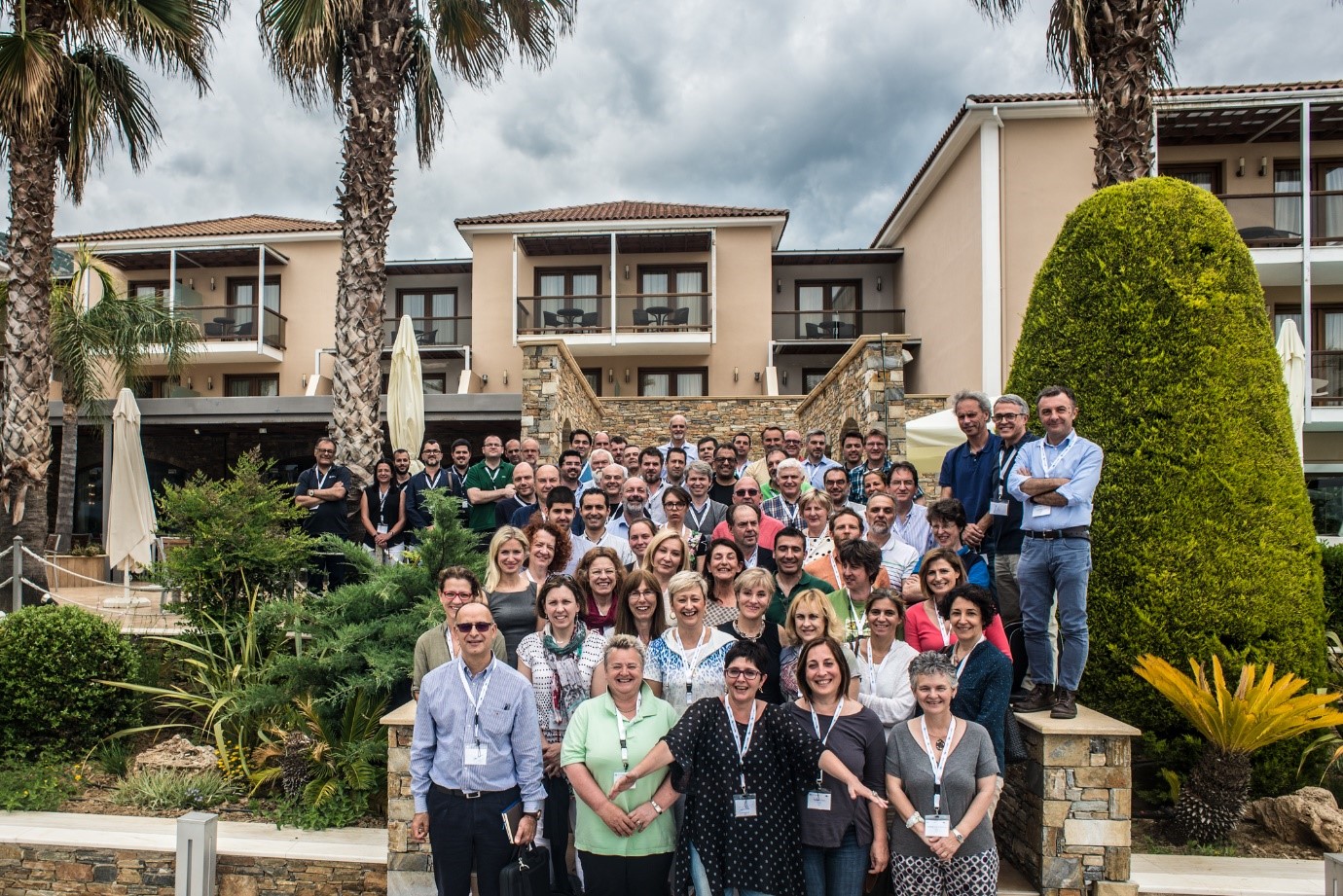
ranean aquaculture area.
PerformFISH has the direct support and endorsement of the industry, with producers’ associations from Greece, Spain, Italy, France and Croatia directly involved as partners in the project, focused on ensuring that the research addresses the needs of the sector and knowledge is transferred effectively to their members. Significantly, the associations through their membership represent 92.8% of all sea bream and sea bass production in the EU.
Dr Katerina Moutou, PerformFISH Coordinator, of the University of Thessally (Greece), said: “PerformFISH is an important and timely project for the sector as solutions are needed to tackle some of the underlying causes behind the current stagnation of the Mediterranean marine fish farming sector. We have brought together leading researchers and industry across Europe to co-design this innovative project to directly address the needs of the sector. This research-industry collaboration is truly unique and it is very exciting to see what we can achieve working together.”
Over the next five years, PerformFISH will work to ensure sustainable growth of the Mediterranean aquaculture industry, based on consumer perceptions and real market requirements. It aims to support fish farms to operate not only in ideal economic and environmental conditions, but also in a socially and culturally responsible manner.
The efforts of PerformFISH will be complemented by those of its sister project MedAID www.medaid-h2020.eu. Together, the two projects represent a €14 million investment by the EC in Mediterranean aquaculture research, further emphasising Europe’s commitment to support the sustainable development of this important food sector. Farming of finfish, shellfish and aquatic plants is one of the world's fastest growing food sectors and aquaculture already provides about half of all the fish we eat. In Europe, aquaculture accounts for about 20% of fish production and directly employs some 85,000 people. For more information, visit: http://ec.europa.eu/fisheries/inseparable/en/farmed-eu
The PerformFISH project website will be coming soon – keep an eye on www.performfish.eu!
For further information about PerformFISH, please contact the Project Manager - Georgia Ritou, performfish@gmail.com.

Crab Watchers Wanted: New Citizen Science Project to Monitor Crab Species
 How does finding a crab on the beach make you feel? Excited? Wary? Fascinated? By joining Crab Watch, a new citizen science project taking place across Europe, your search for these captivating creatures will have the added incentive of contributing to scientific research.
Crab Watch launches on 28 June 2017 and invites citizens across Europe to play a key role in the scientific process by gathering valuable data to enhance our knowledge of the changing distribution of native and non-native crabs. By establishing a network of Crab Watchers to record and report crab distribution, it is hoped that new arrivals will be detected early and appropriate environmental management action can then be taken quickly.
Crab Watch is an initiative of the EU-funded Sea Change project which aims to increase European citizens’ understanding of the ocean’s influence on us and our influence on the ocean, also known as “Ocean Literacy”. By getting people to become Crab Watchers, visit their coastline and interact with marine creatures in a meaningful way, Sea Change hopes to encourage people to think positively about the ocean and to become advocates for healthy seas and a healthy planet.
Hannah Milburn from the Marine Biological Association, coordinators of Crab Watch and Sea Change, said: “Crabs are interesting creatures to search for when you’re by the coast. You can find them in all marine and some freshwater habitats around Europe and they have great commercial and cultural significance in many countries. However, crabs are easily impacted by human activities, including warming seas, the introduction of invasive species and overexploitation. This makes them an ideal subject to help demonstrate how our ocean is changing and what the impacts are.”
You can find everything you need to become a Crab Watcher, including the Crab App (coming soon), on the Sea Change website: http://www.seachangeproject.eu/seachange-news-2/1718-crab-watch. Resources in a number of languages will be available in the coming weeks.


Deep in the Atlantic Ocean: high-tech sensors to gather long-term biogeochemical data

The crew of the Royal Research Ship Discovery, a scientific research vessel of the United Kingdom, recently deployed high-technology biogeochemical sensors onto existing ‘Overturning in the Subpolar North Atlantic Program’ (OSNAP) moorings in the Rockall Trough, a major deep-water area in the North Atlantic Ocean. By taking continuous measurements in this important yet remote location, the sensors will contribute much needed long-term biogeochemical data to further our understanding of the interactions occurring in our ocean.
The North Atlantic Subpolar Gyre, located in the North Atlantic subpolar region, is a large system of rotating ocean currents which forms a key component of the global climate system. In this region, the ocean warms the atmosphere (keeping northern Europe relatively mild) and atmospheric carbon dioxide is drawn into the deep ocean. The flow of energy and elements through the North Atlantic Ocean ultimately drives patterns of marine biodiversity at the ocean basin scale (www.ukosnap.org).
OSNAP is an international programme designed to provide a continuous record of physical ocean properties in the subpolar North Atlantic through an array situated on moorings which cross the Atlantic. The newly deployed equipment consists of sensors to additionally measure levels of nutrients, oxygen and pH in the Rockall Trough. A Remote Access Sampler (RAS) will simultaneously collect samples of seawater to validate and complement the automatically recorded data from the sensors.
As Professor Stuart Cunningham, from the Scottish Association for Marine Science (SAMS) explains, adding these new sensors to the existing infrastructure is an important step: “So far, only the physical parameters of ocean circulation data can be measured at the OSNAP array. Combining this data with the new biogeochemical measurements will, for the first time, give us a long time-series of changes of ocean currents, nutrient concentrations and more. This will be a big advance in our ability to understand the interactions of ocean physics with ocean ecosystems, particularly the cold-water coral systems of the Atlantic.”
This work was undertaken as part of the multidisciplinary EU-funded Horizon 2020 ATLAS project which aims to improve our understanding of the complexity of deep-sea ecosystems, and to predict future shifts and vulnerabilities of these ecosystems and their associated species. For more information on ATLAS, please visit: www.eu-atlas.org.
 The biogeochemical sensors that have been deployed are not new developments in themselves. However, as Prof Cunningham explains, “We are using them in a novel way. Combining biogeochemistry on this large physics array is ground breaking! By adding new observations of biogeochemical properties to existing large scale observing infrastructures we can make biogeochemical measurements at broader scales, matching the current physical observations. As a result, the possibilities and implications for understanding the critical processes occurring in our oceans are vast.”
Implementing key agreements to protect biodiversity and support adaptive ocean management requires improved knowledge on the Atlantic Ocean basin scale. ATLAS will contribute by enhancing the purpose-built trans-Atlantic array to deepen our understanding of the importance of ocean currents. Improved knowledge gained through the use of this unique basin scale infrastructure will help predicting ecosystem tipping points and understanding the link between ocean currents, species distribution and connectivity. This will, in turn, drive forward an ambitious new decision support tool for integrated Maritime Spatial Planning (MSP) of the Atlantic Ocean.
For more information on the sensors please contact: Prof Stuart Cunningham (Stuart.Cunningham@sams.ac.uk)
For more information on the ATLAS project, please visit: www.eu-atlas.org, follow @atlas_eu on Twitter or email Dr Claudia Junge (claudia@aquatt.ie).
Diving Deep to Explore New Frontiers of Collaboration and Innovation
Marine related research, policy and industry representatives came together to discuss effective North-South Atlantic Ocean collaboration during a session on “Trans North Atlantic Research and Prospects for South Atlantic Partnership”, which took place immediately before the high-level ministerial and scientific event “A New Era of Blue Enlightenment” on 12 July 2017 in Lisbon, Portugal.
The EU Horizon 2020 project ATLAS, along with sister projects SponGES, and MERCES, organised the session hosted by Prof Ricardo Serrão Santos, a Member of the European Parliament (MEP). The session reconfirmed commitment on international marine scientific research efforts, in both the North and South Atlantic. Presentations also noted efforts by regional fisheries management organisations to implement the United Nation’s General Assembly (UNGA) resolutions on managing high seas fisheries to protect and conserve deep-sea ecosystems and species.
ATLAS partner Prof David Johnson, Seascape Consultants, emphasised, “We need to present science messages in a language that decision-makers can understand and use, and take into account different spatial and time scales. Working with relevant industries helps to focus messaging for policy implementation.”
Participants of the session also discussed the need for more knowledge of deep-sea ecosystems and processes to better assess the potential and consequence of exploiting marine resources such as through deep-sea mining. Ensuring the conservation and sustainable use of the deep-sea in a changing climate will assist regulators in building resilience in these ecosystems.
The “Blue Enlightenment” event (13-14 July 2017) celebrated the launch of a South Atlantic Flagship Initiative between the European Union (EU), Brazil and South Africa. The highlight of the event was the signing of “The Belém Statement on Atlantic Research and Innovation Cooperation”, which aims to deepen scientific knowledge of marine ecosystems, specifically the interrelations between oceans and climate change, food and energy systems, as well as the dynamics of the Atlantic Ocean and its interconnected Circulation Systems from Antarctica to the Arctic.

The “trans North Atlantic Research and Prospects for South Atlantic Partnership” session speakers, (from left to right): Dr Joana Xavier (SponGES, University of Bergen, Norway), Dr Telmo Morato (MERCES, ATLAS, IMAR-UAz, Portugal), Prof Anthony Grehan (ATLAS, NUI Galway, Ireland), Prof Ricardo Serrão Santos (MEP), Mr Matt Gianni (ATLAS, Gianni Consultants, The Netherlands), Prof David Johnson (ATLAS, Seascape Consultants, United Kingdom)
ATLAS partner Matt Gianni, Gianni Consultancy, said, “Recognising the linkages between the North and South Atlantic, the strengthening of cooperation envisioned by the Belém Statement will help provide a better understanding of Atlantic wide dynamics and ecosystem processes. This will help to address challenges such as integrating basin-wide data with the understanding that any changes to ocean circulation patterns related to climate change in the South Atlantic will affect the North Atlantic and vice versa.”
These issues are also currently being considered at the fourth meeting of the Preparatory Committee for ocean biodiversity beyond national jurisdiction established by the General Assembly of the United Nations (UNGA), taking place in New York from 10-21 July 2017. This UN meeting aims to finalise recommendations for a legally binding instrument on the “conservation and sustainable use of marine biological diversity of areas beyond national jurisdiction (ABNJ)” under the United Nations Convention on the Law of the Sea (UNCLOS).
As a significant percentage of the North and South Atlantic is ABNJ, many of the efforts that were showcased in Lisbon can contribute to the knowledge base upon which regulation and management under the UNCLOS should be built. For example, recent work as part of ATLAS has shown that in 20-50 years most of the Area Based Management Tools (ABMTs), currently in place will be affected by climate change. More precise and detailed oceanographic data are needed to determine possible refugia and more research on adaptation and resilience is needed to predict ecosystem response times. Maritime spatial planning requires cooperation and coordination across multiple organisations and bodies and aims to achieve broad objectives and responses to cumulative impacts. Continued dialogue, cooperation and collaboration between projects like ATLAS, MERCES, SponGES and others, will greatly support this process.
For further information on the ATLAS project, please visit the ATLAS website here: www.eu-atlas.org.
AquaTT Job Vacancy - Apply Now for Scientific Project Assistant Role
We Are Looking for YOU!
Job Opening: Scientific Project Assistant
Are you a recent science graduate and looking for an entry-level project management role with great prospects? Are you an excellent communicator, well-organised, accurate, pro-active, diligent, dedicated and responsible? Do you have a can-do attitude? Then AquaTT is looking for you!
Position Title: Scientific Project Assistant
Type: Full-time six-month contract with potential for renewal. Position available immediately.
Location: Dublin city centre, Ireland
Application Deadline: 8 Sept 2017, 17.30 CET
Application Documents: A well-motivated application letter outlining why you are the perfect candidate and a CV addressing our essential criteria, including three references, should be addressed to David Murphy, AquaTT Manager and sent electronically to: jobs@aquatt.ie.

ABOUT AQUATT
With 25 years of experience, AquaTT has proven itself as an expert at managing European projects, with a strategic focus on knowledge management and transfer, dissemination and training. AquaTT operates extensively within the European scientific research arena and has demonstrated a track record in successfully pursuing, acquiring and managing a significant number of grants (across the FP7, H2020, Interreg and Lifelong Learning Programmes). This has enabled AquaTT to build a knowledge-based organisation with key networks among national and European stakeholders in the marine and other sectors.
AquaTT works with Europe’s top researchers for the entirety of each project’s life cycle, from project conception through to delivery, designing and carrying out projects that will have positive societal impact. AquaTT collaborates with over 250 institutions in more than 40 countries, operating in research domains such as Marine Science, Environment, Water, Health, Climate Change, Energy and Food. AquaTT’s policy has been to build an experienced and multidisciplinary team of experts from different backgrounds. Our team uses their collective expertise in scientific research, business, communications, training, teaching and industry to design and manage innovative activities tailored to the needs of each specific project.
The company has an inventive and collaborative nature, where employees are valued and inspired as well as rewarded for their ideas and contributions. AquaTT integrates and promotes strong values of trust, respect, transparency and fairness into the organisation’s practices. We believe that scientific research can enrich our lives and deliver a sustainable future for humanity. We use our skills to make a difference and help research benefit society.
DESCRIPTION OF POSITION
This is an entry level position with excellent prospects for the right candidate. Recent graduates will be considered for the role.
The Project Assistant (PA) will join our existing team and contribute to the management and administration of AquaTT’s current portfolio of EU-funded projects. AquaTT’s roles in projects typically fall under the umbrella of knowledge management activities including dissemination, communication, education, stakeholder engagement and knowledge management and transfer.
The main duties of the post include:
• To contribute to the successful and efficient management of a portfolio of EU-funded projects, delivering AquaTT’s contractual obligations on time. This includes generating high quality deliverables, on-time reporting, writing press releases and promotional materials, content management of project websites and other social media channels, presenting at conferences, contributing to technical activities, budget management and monitoring, event management (including effective meeting contributions), etc.
• To support efficient and effective dissemination and communication of the activities and results of the assigned projects;
• To contribute to the effective management of knowledge from the assigned projects, ensuring maximum uptake and impact by potential end-users, ultimately demonstrating value creation.
A description of AquaTT’s project portfolio is available on the company website (www.aquatt.ie).
REQUIRED SKILLS AND EXPERIENCE
AquaTT is looking for a pro-active, diligent and dedicated individual, who must have suitable skills to carry out the duties described above, including strong soft skills such as excellent communication and time management.
If offered the position, the candidate must be able to start by the beginning of October 2017.
Essential Criteria
• EEA work authorisation;
• Educated to degree level in a scientific domain;
• Excellent written and spoken English;
• Excellent interpersonal skills: ability to communicate clearly, courteously, and professionally to both scientific and other stakeholders;
• A highly organised and efficient approach to managing responsibilities and effectively prioritising and executing tasks in a fast-paced environment;
• Committed to delivering on allocated tasks, with a high level of attention to detail;
• Good ability to work in a team and in multicultural environments;
• Good ability to demonstrate initiative;
• Must be able to learn, understand, and apply new information;
• Sound working knowledge of MS Office systems.
Desired Criteria
• Project management qualification and/or experience;
• Event management experience;
• Experience in information management and communication through electronic platforms;
• Personal interest in and enthusiasm for playing a role in creating a culture change to facilitate the increased uptake of scientific knowledge leading towards a more sustainable future for humanity.
WORK CONDITIONS
• Overtime may be required to meet deadlines as part of the contract;
• National and international travel may be required;
• Training will be provided to supplement the successful candidate’s current skillset.
REMUNERATION
€25,534 gross / year (value of 6-month contract: €12,767 gross)
MORE INFORMATION
ParaFishControl Aquaculture Industry Forum: Industry and Academia Exchange Vital Knowledge on Fighting Parasitic Diseases
Aquaculture industry and research representatives participated in the first ParaFishControl Industry Forum on Tuesday 5 September in Belfast, Northern Ireland. The event was part of the 18th International Conference on Diseases of Fish and Shellfish, and aimed to explore how the European aquaculture sector could benefit from the latest research in the area. The event facilitated effective knowledge exchange on the latest developments in fighting parasitic disease affecting aquaculture, between academia, industrial companies and fish farmer associations. This is an important goal of the ParaFishControl project, an EU Horizon 2020-funded research project that aims to improve our understanding of fish-parasite interactions and develop innovative solutions and tools to prevent, control and mitigate harmful parasites which affect the main fish species farmed in Europe.
ParaFishControl Industry Forum leader Dr Panos Christofilogiannis from AQUARK remarked “We are excited to discuss ways to improve parasitic disease management and to quantify its economic impact to the sector. This serves as the first step to mobilise all stakeholders in a sector-wide effort to combat and manage fish parasitic diseases with novel approaches and solutions. We are confident that the ParaFishControl project knowledge outputs will contribute greatly, and the Industry Forum is the right platform to do so.”
Dr Hamish Rodger, Global Managing Director of the FishVet Group, estimated the high annual economic impact for a variety of parasitic diseases in different countries, like sea lice in Norway (448-640 million Euros) and Scotland (40-56 million Euros), amoebic gill disease in Scottish farms (600-900K Euros for a 2000 tonne site) and cotton moulds (Saprolegnia) in Scottish aquaculture (5.5 million Euros). Mr Niels Henriksen, Danish Aquaculture Association fish pathologist, provided insights on carp and trout aquaculture, and estimated the annual impact of parasitic diseases on European trout farming to be between 30 and 60 million Euros. The impact of parasitic diseases in Mediterranean mariculture was discussed by Mr Andreas Kyriakou, fish pathologist at SELONDA Group. All attendees agreed that a coordinated effort is required involving open communication between fish pathologists, fish farmer associations and scientists, to improve impact predictions and the use of a harmonised methodology to accurately assess the significant economic impact of parasites in aquaculture.
In the second session of the ParaFishControl Industry Forum, the latest research findings and future solutions resulting from the ParaFishControl project were presented and discussed, with a focus on their relevance to the aquaculture industry and the strategy to effectively transfer these results to applied solutions for the sector. Particularly exciting news included novel disease treatments which are planned to be ready for use in the near future, progress in the ongoing search for vaccination candidate genes and feed additives, and the expectations of further expert consultations and epidemiological investigations to be undertaken in 2018.
ParaFishControl Project Coordinator Dr Ariadna Sitjà-Bobadilla, of Consejo Superior de Investigaciones Científicas (CSIC), recognised the value of events such as the ParaFishControl Industry Forum, “which brings stakeholders from both science and industry together, highlighting the role of partnerships and collaborative approaches to instigate real and profound change. It is really exciting to witness evidence based science being recognised as being applicable by industry and subsequently being used in a real world setting with affirmative and measurable results”.
The open discussion was launched with a short presentation by Mr Andrea Fabris, FEAP Fish Health Committee, fish pathologist API, who highlighted the industry priorities on the management and impact of parasitic diseases and the interest for an effective transfer of the project results to industry, leading to concrete suggestions for future ParaFishControl activities. This discussion proved to be a thought-provoking session to round off what was a very exciting event!
To find out more about the recent research findings from ParaFishControl, please visit the project’s website: www.parafishcontrol.eu
Industry stakeholders and interested parties are invited to join the ParaFishControl LinkedIn group to follow the projects’ progress: www.linkedin.com/groups/8429051/profile

ParaFishControl partners and industry experts attending the ParaFishControl Industry Forum at the 18th International Conference on Diseases of Fish and Shellfish, front row, from left: Dr Birgit Oidtmann (Cefas, UK), Dr Ariadna Sitjà-Bobadilla (CSIC, ES), Prof James Bron (UoS, UK), Mr Niels Henriksen, DAA, DK); top row, from left: Dr Panos Christofilogiannis (AQUARK, GR), Mr Andreas Kyriakou (SELONDA, GR), Dr Hamish Rodger (FishVet, IE), Dr Simon Jones (DFO, CA), Dr Oswaldo Palenzuela (CSIC, ES), Dr Niels Lorenzen (DTU, DK) ©AquaTT
How can you “Sea Change” that occurs over 500 years? New Sea Change Resources Launched to Support a Healthier Ocean
 Many of the detrimental changes that are occurring in the ocean are out of sight, and therefore out of mind. To coincide with the upcoming ‘Our Ocean’ conference, a major global event on international ocean governance hosted by the European Union (EU) in Malta this year, the EU-funded Sea Change project is launching a number of original and inspiring resources that help foster a deeper understanding amongst European citizens of how their activities impact on ocean health.
Ocean health and human health are intrinsically linked, and by helping citizens to understand how their activities affect the ocean, Sea Change calls on all citizens to take responsible action to support a healthier ocean. Jan Seys of the Flanders Marine Institute (VLIZ), one of the work-package leaders of Sea Change, says “The ocean is crucial for our planet and is constantly in a state of change. When rather abrupt and human-induced changes are at stake, scientists and educators should feel responsible and share their knowledge as much as possible with the public. Only by informing and engaging citizens, can we build Ocean Literacy, make well-informed decisions and change behaviour for the sake of a healthy planet”.
Symptoms of anthropogenic change include rising sea temperatures, sea-level rise, changing acidity levels, plastic debris and melting ice-caps, as well as pressures facing marine biodiversity. A powerful new Sea Change infographic, developed by British Illustrator Glynn Gorick and VLIZ in collaboration with the Oceans Past Initiative and the Oceans Past Platform, shows recorded measurements of the dramatic changes the ocean has undergone since Ferdinand Magellan embarked on his voyage around the world 500 years ago (1519-1522). You can view the infographic on the Sea Change website: http://seachangeproject.eu/images/SEACHANGE/OurOceanOurHealth/500-yrs-high-res.jpg.
Although these changes are dramatic, we can still help to protect the ocean and all of the wonderful benefits it provides us with. As part of its ‘Our Ocean, Our Health’ campaign, Sea Change has also produced a short video series with useful tips on how we citizens can “Make a Small Change for Sea Change” through our daily activities in the bathroom, the kitchen, the supermarket, on the commute, in the office and when eating on the go. The videos can be watched on the Sea Change Vimeo account (https://vimeo.com/album/4588555) and are accompanied by a set of colourful infographic posters. These are available on the project website: http://seachangeproject.eu/ouroceanourhealth/ocean-literacy-resources. An earlier video introducing the ocean’s life-giving vitality, called “Our Ocean Our Oxygen” is also available to share.
Jan Seys, VLIZ says “history has demonstrated that with enough support, we can turn these negative evolutions around to support healthier oceans, by reducing human-induced pressures. It’s important that the scientific data that illustrate these dramatic changes in our planet’s life support systems are clearly communicated to the public so that they can take action.”
A number of other Sea Change resources have also been made available, including a new series of online workshops to focus on three major ocean and sea issues of societal importance in the future: ocean and human health, seabed mapping, and aquaculture. The course, called “A Sea Change for Ocean Literacy”, will run between 30 October and 17 November 2017, and is led by the College of CoExploration Limited in the UK, supported by the College of Exploration, USA and VLIZ, Belgium. To register for these free workshops, please visit: www.coexploration.org/seachange
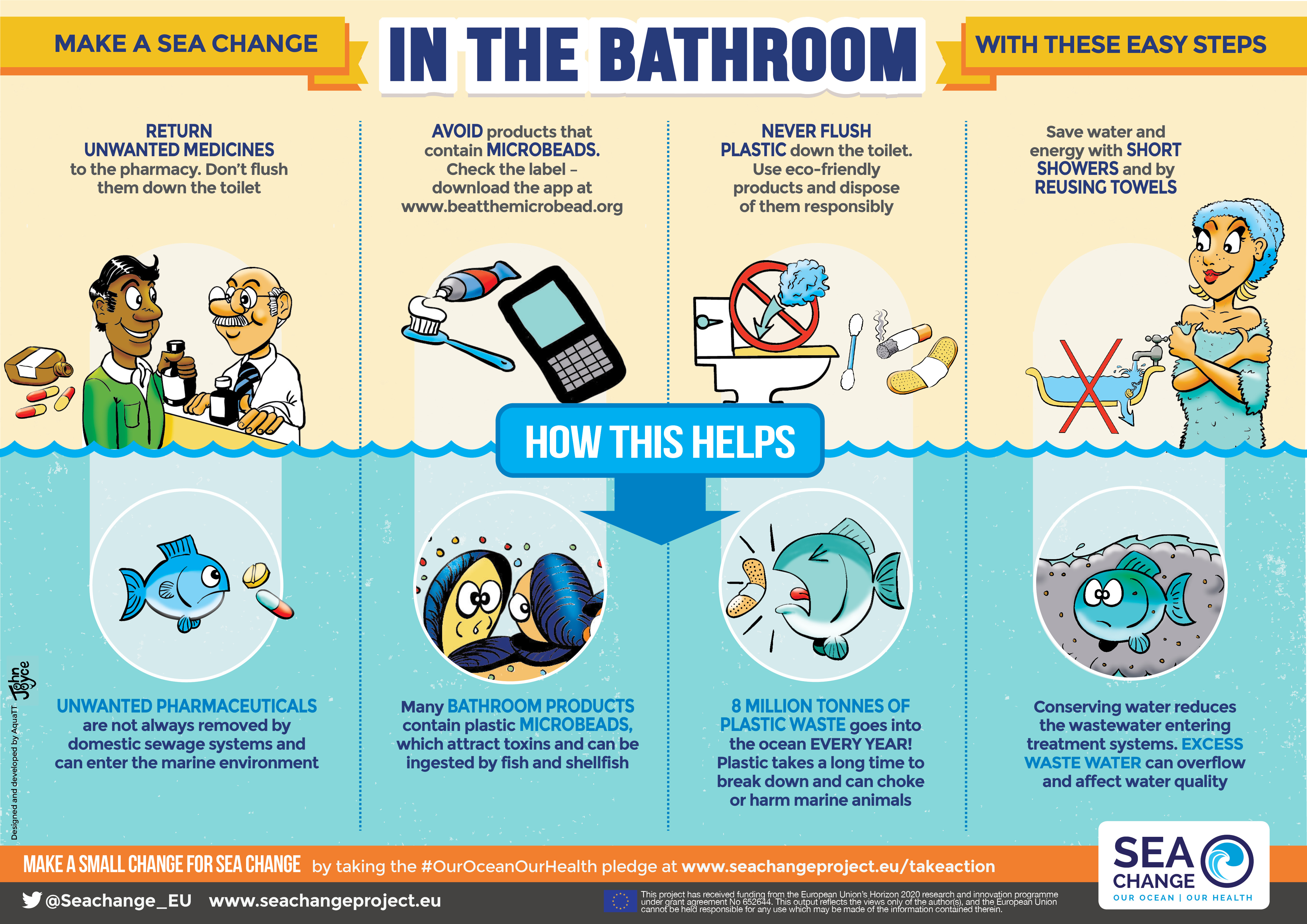
A variety of inspiring outreach and engagement activities aimed at improving Ocean Literacy across Europe are also featured in the fourth edition of the Sea Change Newsletter, which is now available to download from the media section on the project’s website: http://seachangeproject.eu/seachange-media-2/factsheet
All of the Sea Change resources have been developed to foster a deeper understanding amongst European citizens of how their activities impact on ocean health. They can be found at http://seachangeproject.eu/ouroceanourhealth/ocean-literacy-resources
Pledge to make a “Sea Change” in your daily behaviour today at http://seachangeproject.eu/ouroceanourhealth/take-action-checklist and share your commitment online using #OurOceanOurHealth
Get the latest news on the Sea Change campaign by following the project on Twitter at https://twitter.com/SeaChange_EU and liking it on Facebook at https://www.facebook.com/SeaChangeProjectEU.
From Research Innovation to Industry Application
Are you working in the European aquaculture industry, and would you like to hear about the
latest innovative research findings which can be applied to the aquaculture industry?
Would you like to contribute to the discussion on what industry expects from aquaculture research?
Curious to know how you can access top-class European aquaculture research infrastructures to carry out your applied research, fully funded by the European Commission?
Join us at the AQUAEXCEL2020 brokerage event to engage with aquaculture industry stakeholders and researchers!
Thursday 19 October 2017, 14:30-17:30
at Aquaculture Europe 2017
Tajan room, VALAMAR Resort, Dubrovnik (Croatia)
This event, organised by EATiP and AquaTT, will create a forum for engagement and exchange between researchers and potential industry beneficiaries of the research results generated from the AQUAEXCEL2020 project and its precursor, the AQUAEXCEL project.
REGISTRATION
You are invited to register in advance by emailing secretariat@eatip.eu with your name and contact details, but participants are also welcome to join on the day. For more information visit www.aquaexcel2020.eu or say hello at the AquaTT (no. 88/89) or EATiP (no. 67) booths at Aquaculture Europe 2017.
INvertebrateIT Project Launched to Facilitate Growth for Invertebrate Based Fish Feed

On the 6 and 7 June 2017, participants representing research, industry and SMEs from five countries converged in Porto, Portugal, to launch the INvertebrateIT project. INvertebrateIT is focused on developing innovative approaches for the aquaculture sector, particularly on the use of organic waste for the production of invertebrates as alternative ingredients in fish feed. Funded by the European Maritime and Fisheries Fund under the “Blue Labs – Innovative Solutions for Maritime Challenges” call, INvertebrateIT is one of three projects selected to develop joint roadmaps and bankable demonstration projects in the Atlantic and North Sea to coordinate further investments for innovation.
INvertebrateIT aims to help aquaculture operators mitigate their current dependence on costly, volatile, and often unsustainable ingredients in traditional fish feeds, to diversify their business and to contribute to a better management of valuable organic waste and/or new algal substrates for invertebrate production. This proposed integrated scheme builds on available technology in insect production and strategic policy for the aquaculture and waste sectors.
Insects are an economical, environmentally efficient, nutrient-rich feed that could reduce the need for wild caught fish feed or other plant-based protein feed additives in aquaculture. Only very recently the EU has given the green light for the use of insect-derived meal in fish farming, which is expected to boost circular economies. “Perhaps the most exciting part of the INvertebrateIT project is that we get to support innovation in an extraordinary growth sector. Creating a circular economy for fish feed (and other aquaculture products) by feeding fish with something they would eat in their natural environment, is a win-win for all involved” says Silvia Sarria, INvertebrateIT’s Project Coordinator and European Policies Division Lead at Innogate to Europe.
INvertebrateIT’s overarching objective is to bring influential actors together to define a Joint Roadmap and Investment Plan across the EU Atlantic Basin to promote and exploit the value chain around the production of invertebrates, such as insects, as ingredients for sustainable fish feeds, resulting in competitive aquaculture and integrated waste management. For this purpose, the INvertebrateIT partnership will invite all interested stakeholders to provide input into these processes, by means of an interactive webinar in November 2017.
INvertebrateIT plans to engage SMEs to support project development which will commercially exploit opportunities combining sustainable aquaculture, invertebrate production and smart waste management, contributing to the common macro-regional Research and Innovation Strategies for Smart Specialisation priorities, Blue Growth and the Circular Economy. To that end, INvertebrateIT will soon announce an Open Contest to encourage the development of exciting, innovative ideas around the integration of invertebrates into feed for aquaculture. Through the Open Contest, three promising projects or ideas will be selected for support from INvertebrateIT. Depending on needs, INvertebrateIT will identify potential investment, support up-scaling and transfer, and facilitate the development of suitable Public Private Partnerships. Full details and submission rules will be made available on the INvertebrateIT website shortly.
The INvertebrateIT website is live at www.invertebrateitproject.eu. To learn more about the INvertebrateIT project, to receive regular updates on its progress, or for specific questions, please contact the coordination team: Silvia Sarria / Luis Lozano (invertebrateit@innogatetoeurope.eu).
COLUMBUS “Achieving Impact from Marine Research” Conference to Navigate Towards Horizons of Impact

The COLUMBUS project is hosting its 2nd International Blue Society Knowledge Transfer Conference, “Achieving Impact from Marine Research” on 7 November 2017 at the Crowne Plaza Hotel, Brussels, Belgium. Free to register, this conference is intended to be an international forum to bring together actors interested in sharing best practice and learning about initiatives and sectoral progress in Knowledge Transfer.
Through a wide array of innovative and insightful presentations and talks, attendees will be provided with the opportunity to collaboratively explore the barriers, challenges, and possible solutions to achieving the impact potential of marine and maritime research, at all stages of the funding cycle. Register at: https://www.eventbrite.ie/e/columbus-annual-conference-2017-achieving-impact-from-marine-research-tickets-37756590980
During this event, COLUMBUS will celebrate people and projects who are exemplar in achieving research impact through targeted knowledge transfer, by awarding the very first “Blue Society Award for Impactful Knowledge Transfer”. The award is currently open for submissions, with the winner to be announced at the event. The winning entry will receive a ticket to attend the world’s leading business and self-empowerment summit, the prestigious Pendulum Summit in Dublin, on 10-11 January 2018.
“We want to highlight those who are making marine research count. This award will not only acknowledge their efforts but the prize will give them the opportunity to mingle with some of the world’s leading inspirational minds. To incentivise impact creation we need to show organisations that there is reward in transferring research outside of the academic community”, said Cliona Ní Cheallacháin, COLUMBUS Project Manager, based at AquaTT, Dublin, Ireland.
“Whilst there are those who are successfully achieving impact from their research, we recognise that it is not always easy and that capacity in Knowledge Transfer needs to be built. With this in mind, we have organised an afternoon of training on the COLUMBUS Knowledge Transfer methodology before the event for those that hold supporting roles for research. We need to see a culture change in the way we use research findings, but also in how research is funded”, Cliona Ní Cheallacháin concluded.
This one-day training course targeting funding agencies, evaluators, national contact points and decision makers who are invested in achieving greater impact from the research that they support, will take place from 2pm until 6pm on Monday 6 November at the Crown Plaza Hotel. Registration is free but places are limited, and will be allocated on a first-come, first-served basis.
To register for the conference and/or training course, or to nominate a person or project for the COLUMBUS Blue Society award, please visit the conference page: www.columbusproject.eu/columbus-annual-conferences

Making Science Count for Sustainable Aquaculture
The first AQUAEXCEL2020 industry brokerage event “FROM RESEARCH INNOVATION TO INDUSTRY APPLICATION” brought together researchers and aquaculture industry representatives during the Aquaculture Europe 2017 conference in Dubrovnik, Croatia, on 19 October 2017. This forum for engagement and exchange was hosted by the European Aquaculture Technology and Innovation Platform (EATiP) and AquaTT, both partners in AQUAEXCEL2020, an EU-funded Research Infrastructure project focusing on excellence in European fish research.
AQUAEXCEL2020 project coordinator, Dr Marc Vandeputte (Institut National de la Recherche Agronomique INRA, France), reflected on the event which was “a fantastic opportunity to discuss some of the important research achievements of the project as well as its precursor, the EU FP7-funded AQUAEXCEL project, and share those knowledge outputs with their end-users, the aquaculture industry stakeholders. Assuring effective and constructive contact between research and industry is a key component of AQUAEXCEL2020, to facilitate real uptake of the research innovations by the aquaculture industry”.
Central to the brokerage event were pitches of three knowledge outputs of high potential for the European aquaculture industry. The outputs were previously selected by the AQUAEXCEL2020 Industry and Research Advisory Panel (IRAP) which comprises high-level professionals from the aquaculture industry and research sectors. These outputs resulted from projects conducted within the AQUAEXCEL2020 Transnational Access (TNA) programme so far. The TNA programme funds access to 39 aquaculture research facilities across Europe, offering researchers the possibility to undertake experimental trials on commercially important aquaculture fish species and system types.
Dr Laura Gasco (University of Turin, Italy) presented her research findings and industry solutions for substituting juvenile sea bass diets with insect mealworms to reduce the need for costly, volatile and unsustainable fish meal and oil. Dr Jaume Pérez-Sánchez (Institute of Aquaculture Torre de la Sal (IATS-CSIC), Spain) introduced a novel, comprehensive toolset that helps with the understanding and assessment of potential benefits of adding feed additives to plant-based diets for aquaculture fish. Both innovations could eventually support a more sustainable and competitive aquaculture sector.
Dr Petr Císař (University of South Bohemia, Czech Republic) showcased “3DFISH”, an innovative infrared reflection system for use as a suitable real-time 3D fish monitoring and measuring technique. 3DFISH enables non-invasive monitoring of fish behaviour and welfare indicators in real-time which allows for an efficient and cost-effective detection of behavioural abnormalities. Its users can, for example, detect potential problems in aquaculture facilities such as poor water quality and early disease signs earlier than in conventional systems, which will help reduce financial losses.
In addition to these high potential knowledge outputs, research and innovation leaders within AQUAEXCEL2020 presented their newest findings together with some tasters of further expected outputs. In the next three years research will continue on, amongst others, fishlines, virtual laboratories, and experimental fish management. The project also offers services such as new training courses based on the latest results and the online European aquaculture facility directory.
It is imperative that aquaculture research considers the actual and future needs of the industry and Mr Kjell Maroni of the Norwegian Seafood Research Fund (Norway) presented some perspectives from the industry. Mr Maroni, an AQUAEXCEL2020 IRAP industry expert and previous President of the European Aquaculture Society (EAS) said that “this is a very participative concept and it is the place where not only researchers can pitch their ideas to industry, but industry people can in return present their knowledge and technology needs”.
The closing industry panel, moderated by Mr Courtney Hough (EATiP) and chaired by Mr Kjell Maroni and Dr Marc Vandeputte, discussed some of those needs, including the need for technological improvements, vaccines and genetics for better biological production, societal acceptance of aquaculture to allow for sustainable growth, better communication of research based results, and the promotion of “aquaculture open days” throughout Europe.
Supporting research innovation to industry application is key to AQUAEXCEL2020, and involves maintaining active communication, engagement and exchange of ideas between researchers and aquaculture industry stakeholders.A number of similar industry brokerage events will be held in the next three years, presenting more high-potential industry-relevant outputs. To find out more about the recent research findings from AQUAEXCEL2020 and their applicability to industry, please visit the project’s website: www.aquaexcel2020.eu

AQUAEXCEL2020 partners, IRAP industry experts, TNA knowledge OUTPUTS presenters and two of the participants at the AQUAEXCEL2020 brokerage event at Aquaculture Europe 2017 in Dubrovnik (Croatia), from left: Mr Erturul Gündoğdu (Nesne Elektronik), Mr Courtney Hough (EATiP), Dr Jaume Pérez-Sánchez (CSIC), Hilal T. Gündoğdu (Nesne Elektronik), Dr Åsa Espmark (Nofima), Dr Petr Císař (University of South Bohemia), Dr Marc Vandeputte (INRA), Ms Catherine Pons (EATiP), Mr Arnault Chaperon (Caviar Pirinea), Mr Kjell Maroni (FHF), Dr László Varadi (Hungarian Aquaculture Association), Dr Laura Gasco (University of Turin), Dr Fernando Torrent (Universidad Politécnica de Madrid), Ms Pavlina Pavlidou (Selonda SA), Ms Marieke Reuver (AquaTT). ©AquaTT
Dive into an evening of seaweed cuisine to celebrate the value of the ocean in our lives
On 28 November 2017, celebrity chef Joe Shannon (TV3) will host an evening of seaweed cuisine in Belmullet, Co. Mayo, which is open to the public. The educational seaweed workshop follows a filmmaking workshop for local Transition Year students earlier in the day, which will be led by renowned film-maker Risteard Ó Domhnaill (‘The Atlantic’).
These workshops form part of an ongoing educational program around the remarkable health benefits of seaweed, held in conjunction with the ERASMUS project 'Feed the world 2050'. The upcoming event, which is supported by the European Sea Change project, will promote inter-generational knowledge exchange by bringing together seaweed harvesters, students, and the public, to raise awareness about the historical use of edible seaweeds for medicinal purposes and as a famine food in Ireland, alongside the more recent recognition of seaweed as a ‘super-food’.
During the film workshop, Risteard Ó Domhnaill will equip the students from Our Lady’s Secondary School, Belmullet, with a variety of the latest filming and editing techniques. The budding film-makers and young ocean champions will use these new skills to produce personal and engaging short films about the exciting dietary uses of plankton and algae as alternative protein sources. The students will be encouraged to engage with the local community, using both video and sound to capture their attitudes to the breadth of potential seaweed products, and highlighting the relevance of the ocean to us all.
Risteard Ó Domhnaill is keen to involve younger generations to share our heritage, "I am very excited to be part of this initiative that highlights the richness and potential of the natural environment on our Atlantic coast, and to work with young people to help them realise the massive opportunities that nature can provide here in Erris".
Members of the public are invited to join the evening cooking demonstration, which will explore the health benefits of sustainably produced seaweed, and of course the growing world of delicious seaweed cuisine! The audience will discover how to get the best out of local, sustainably-sourced seaweed using Joe Shannon’s very own tasty, unique recipes. The students will take their skills from the film production room to the kitchen, creating their own seaweed dishes to compete for the top prize in ‘The Cook Off’.
Chef Joe Shannon from the Radisson Blu Hotel and Spa in Sligo, an avid supporter of seaweed and all things locally produced, is looking forward to sharing this passion with those present, “I am so proud to be a part of such an auspicious event, which will showcase seaweed as one of the finest treasures that this island of ours has”.
New and experienced seaweed harvesters, local politicians, community groups, marine scientists and members of the community are invited to attend the cooking demonstration and share their knowledge. The event will improve Ocean Literacy, connecting us with the ocean and its impact on our daily lives. These activities will be broadcast to a much wider audience in an educational film about seaweed.
Hosted by ‘Magician Mairtín the Mentalist’, the evening promises to be an exciting dive into our ocean world and one of its invaluable resources. Organised by Social Scientist Ann Ruddy, Redrose Developments, in conjunction with the European Sea Change project and supported by the ERASMUS project 'Feed the world 2050', the event is part-funded by Mayo County Council, Bord Iascaigh Mhara, and local Mayo Counsellor Theresa Whelan, with prizes sponsored by Galway Aquarium. Both workshops will take place in Aras Inis Gluaire, Belmullet.
Further details about the event can be found at: https://www.facebook.com/events/155189841662767/ and https://www.facebook.com/wildatlanticseagarden
For more information on Ocean Literacy, visit the Sea Change Project’s website: www.seachangeproject.eu
Prestigious European Marine Biological Stations Share Resources for Advanced Research Capacity in “ASSEMBLE Plus”

Over 50 participants representing 32 organisations and 14 countries converged in Paris, France, from 19 - 20 October 2017, for the kick-off meeting of the ASSEMBLE Plus project. A Horizon 2020 Research and Innovation Action, the project represents the second phase of the European Union’s FP7 research infrastructure initiative, ASSEMBLE.
Under the leadership of the European Marine Biological Resource Centre (EMBRC-ERIC; www.embrc.eu), ASSEMBLE Plus will activate important research resources and provide scientists from academia, industry and policy with a quality-assured programme of access to the marine biology and ecology research infrastructure. This programme includes direct access and virtual access to marine biological stations offering: a wide variety of marine ecosystems; unique marine biological resources; state-of-the-art experimental and analytical facilities with integrated workflows; historical observation data; and, advanced training opportunities. In addition to the above access mechanisms, Joint Research Activities involving all partners will aim to develop innovative research technologies and/or methodologies. Furthermore, a coherent series of Networking Activities will strengthen the culture of cooperation within and beyond the consortium partnership, providing a benchmark for practices of service provision, disseminating interoperable protocols, engaging with novel user communities, and sharing insights into sustainable business strategies.
The sum of the actions envisaged in ASSEMBLE Plus will increase the number of users of marine biological stations and shape their business strategy perspective, ultimately improving their long-term sustainability perspectives.
The kick-off meeting allowed the partners to better understand these significant objectives at a micro and macro level, and how they can contribute to each task. Work package leaders hosted working groups to plan for and initiate the project’s activities, discuss the access operating systems, and, design the external communications and dissemination strategy. The meeting was a success, with the partnership eager to begin work immediately.
The ASSEMBLE Plus website will be coming soon at www.assembleplus.eu. If you would like to know more about the ASSEMBLE Plus project or to receive regular updates on its progress, please contact the Project Manager, A. Stécy Jombert [email: alice.jombert@upmc.fr, tel: +33 (0) 1 44 27 71 53]

The ASSEMBLE Plus partners at the kick-off meeting at the Université Pierre and Marie Curie, Paris, France from 19 - 20 October 2017.
Innovative Solutions for Nutritious, Safe and Sustainable Seafood in Europe

SEAFOODTOMORROW is a new, €7m European Union Horizon 2020-funded project that aims to develop innovative sustainable solutions for improving the safety and dietary properties of seafood in Europe. Addressing the challenge to meet the growing market need for safe and sustainable seafood, the project will generate new knowledge to develop commercial solutions for improving the socio-economic and environmental sustainability of the European seafood production and processing industry.
It is projected that by 2050, population and economic growth will result in a doubling of demand for food globally. One of the main challenges this century is ensuring food production and consumption is socially, economically and environmentally sustainable. Seafood is one of the most important food commodities consumed in Europe as it is an important source of animal protein and is naturally rich with valuable nutrients for a healthy diet. It is therefore vital to develop new, environmentally friendly and transparent seafood production and processing methods that will underpin seafood security in-line with market demands.
The three-year SEAFOODTOMORROW project brings together 35 partners from across Europe with the most up-to-date technological development and market-oriented expertise to meet these challenges. The project was recently launched at the Instituto Português do Mar e da Atmosfera (IPMA) headquarters in Lisbon (Portugal), with all partners meeting for the kick-off event from 21-23 November 2017. Project co-ordinator, António Marques IPMA, said: "The SEAFOODTOMORROW kick-off meeting gathered the key players from all partner institutions for the first time. The intense discussions and unanimous decisions made at the meeting are clear evidence of the proactivity of the consortium. All partners are driven towards a common ambitious goal: ensuring the success of validated, eco-innovative, sustainable solutions that improve safety and dietary properties of seafood, to be developed in the project. Now it is time to move forward and keep this collaborative and proactive spirit alive."
With a strong focus on innovation, SEAFOODTOMORROW works directly with recognised industry experts and innovation institutions with proven track records. The project has put knowledge management structures in place that ensure the project’s innovative solutions will be transferred to relevant end users in the seafood production and processing sectors. Using this comprehensive approach, SEAFOODTOMORROW offers a strong and transdisciplinary partnership that is addressing food security challenges by finding innovative solutions for seafood and associated environmental issues. The kick-off meeting was an overall success, with the partnership keen to build on the firm foundations set in Lisbon.
The SEAFOODTOMORROW website will be coming soon at www.seafoodtomorrow.eu. If you would like to know more about the SEAFOODTOMORROW project or to receive regular updates on its progress, please follow us on Twitter (@SEAFOOD_TMRW), or contact the project Communication Officer, Emer Cooney (email: emer@aquatt.ie or Tel: 00353 1 644 9008).

Members from the SEAFOODTOMORROW consortium at the project kick-off meeting at the IPMA Headquarters in Lisbon.
All-aboard for the Final COLUMBUS Conference – Registration Now Open
The COLUMBUS project is pleased to announce that the final COLUMBUS International Blue Society Knowledge Transfer Conference will be held in Brussels on 24 January 2018 (10am-5pm). Partners, collaborators and interested parties are invited to join to discover and celebrate the COLUMBUS Knowledge Transfer methodology and its activities. This event, titled “Making Marine and Maritime Science Count”, will provide an opportunity to explore COLUMBUS’ Knowledge Transfer activities and products, and stimulate discussions on the barriers, challenges and potential solutions to optimise the research system and achieve measurable impact.
Registration for the 3rd International Blue Society Knowledge Transfer Conference opened on 18 December 2017. Places are limited, so secure your place now at: https://columbus-3rd-annual-conference.eventbrite.ie
Representing the European Commission’s most substantial investment in Knowledge Transfer to date, COLUMBUS intends to capitalise on the EC’s much larger expenditure on marine and maritime research by ensuring accessibility and uptake of research Knowledge Outputs by end users, policy, industry, science and wider society.
The conference will be divided into interactive sessions, including presentation of the COLUMBUS Knowledge Transfer Methodology and its many applications, illustrated with a selection of case studies of transfer activity. Invited speakers and panellists will explore Knowledge Transfer to examine good practice. This will be followed by a facilitated discussion around the barriers and challenges to achieving impact in the research system to identify tangible solutions and actions required.
Outstanding examples of impactful Knowledge Transfer will also be celebrated through the Blue Society Knowledge Transfer award. This award will highlight best practice examples of successful Knowledge Transfer, specifically those resulting in impactful uptake by end-users contributing to Blue Growth and the implementation of marine and maritime policies in harmony with the principles of Blue Society. To nominate a person, project or initiative for this award, please go to: https://www.esurveyspro.com/s/403156/COLUMBUS
Participants are also invited to join our external capacity training on “Creating Impact by Knowledge Transfer for the Research Community”. Taking place on 23 January 2018 (1pm-6pm), this training course will introduce the COLUMBUS Knowledge Transfer methodology and provide recommendations on how to ensure that projects are impactful from the design phase and throughout a project’s lifetime. Registration is open now at: https://columbus-training-course-for-researchers.eventbrite.ie
For specific information on the COLUMBUS project, please contact the COLUMBUS Project Manager Cliona Ní Cheallacháin (cliona@aquatt.ie), or visit the project website (www.columbusproject.eu).

Highly Anticipated Columbus Final Conference Delivers – Making Marine and Maritime Research Count

On 24 January 2018, more than 70 participants met in Brussels, Belgium, for the COLUMBUS project’s third and final Annual Blue Society Knowledge Transfer Conference – a project funded by the European Commission’s Horizon 2020 programme. The COLUMBUS conference, entitled “Making Marine and Maritime Science Count”, provided a forum to collaboratively explore the barriers, challenges and possible solutions to increasing the impact potential of marine and maritime research. Based on feedback from last year, the conference was designed to be an interactive panel-based forum, providing a refreshing change to traditional conference formats. Overall, the conference was very successful, producing interesting debates and vigorous discussions around the concept of Knowledge Transfer.
The conference was opened by David Murphy of AquaTT, the COLUMBUS Strategic and Operational Leader. Surprise guest Ricardo Serrão Santos (MEP) – a long-time supporter and member of the COLUMBUS External Advisory Board – gave the first welcome address, expressing that “it is always good to be in a room with like-minded people interested in the seas.” During this address, Serrão Santos emphasised the need for relevant decisions to be made “from [the] best scientific evidence,” adding, however, that such evidence “can be hard to identify.” The COLUMBUS European Commission policy officer, Marco Weydert, also welcomed the participants and discussed the European Commission’s move towards “reviewing portfolios of projects rather than focusing only on their outputs individually.” Interestingly, this method mirrors COLUMBUS’s approach to gathering knowledge from many sources to identify those that respond to knowledge gaps and needs.
The day commenced with an overview of the project’s achievements through a panel discussion. Facilitated by Alistair Lane of the European Aquaculture Society (EAS), partners involved in the COLUMBUS Knowledge Transfer journey shared their experiences, insights and reflections. Following this, a second panel of industry representatives were invited to explore synergies, commonalities and differences in their approaches to value creation from research investments.
In the afternoon, the results of a flash survey of the COLUMBUS network were presented and discussed. The attendees enjoyed talking about the challenges and barriers involved in three key stages of the research lifecycle: pre-project, project implementation and post-project. Finally, a panel comprised of experts from the policy-facing research management sector discussed what strategic actions need to be taken to further optimise the research system and ultimately increase the impact of marine and maritime research.
A major objective of COLUMBUS was to show the effectiveness of the COLUMBUS Knowledge Transfer Methodology and that demonstrable impact was achieved during the project. A compilation of COLUMBUS Knowledge Transfer stories was provided to all those in attendance, along with 48 examples made available for download. The stories illustrate how the COLUMBUS Knowledge Transfer Methodology was implemented and how corresponding impacts were achieved by different COLUMBUS Competence Nodes. Since Knowledge Transfer is, in some cases, still ongoing, the published stories are still in a draft format. More than 50 stories will be finalised and uploaded to the COLUMBUS website at the end of the project (28 February 2018). To view the current compilation of stories, please visit the project website: www.columbusproject.eu/project-results
COLUMBUS ran three other important events shortly before and after the conference. On 23 January 2018, External Capacity Building Training, entitled “Creating impact by knowledge transfer for the research community”, was provided to 12 participants. The event covered an introduction to the robust and validated COLUMBUS Knowledge Transfer Methodology, as well as considerations for research teams and organisations to support the growing impact of funded research projects. On the same day, a “Maritime Sensing Technologies” workshop was held, bringing together maritime technology developers, implementers, and funders. The aim of the workshop was to address challenges facing companies seeking to advance Technology Readiness Levels during the initial funding for research and development.
On 25 January 2018, at the end of the conference, COLUMBUS partners met for their seventh (and final) Partner Meeting. The meeting celebrated the major achievements of the project so far, as well as discussions of plans to close out the project itself, which finishes at the end of February 2018.
Due to the success of the project, COLUMBUS aims to ensure a strong legacy. It will concentrate on defining recommendations and guidelines for how Knowledge Transfer could be incorporated into funded research as a key output of the project. For specific information on the COLUMBUS project, contact the COLUMBUS Project Manager, Cliona Ní Cheallacháin (cliona@aquatt.ie), or visit the project website: www.columbusproject.eu.
Devotes Project Wins COLUMBUS Blue Society Knowledge Transfer Award
Over 70 COLUMBUS partners, stakeholders and Knowledge Transfer professionals came together to celebrate impact and value creation at COLUMBUS project’s third and final Annual Blue Society Knowledge Transfer Conference, “Making Marine and Maritime Science Count”, in Brussels, Belgium, on 24 January 2018. This also gave rise to the opportunity to present the COLUMBUS Blue Society award for impactful Knowledge Transfer, designed to acknowledge marine and maritime Responsible Research and Innovation (RRI) champions and highlight best practice examples of successful Knowledge Transfer.
The Blue Society vision strives to link Blue Growth and Citizens. Philippe Vallette, Director General of Nausicaa, Centre National de la Mer, who presented the Blue Society vision recalled the participants that ”the Ocean offers us tremendous opportunities for new resources, innovative experiences and positive long term solutions... It means developing new ocean related activities, initiatives and actions based on sustainability, well-being and equity”. The Blue Society really considers the entire ocean as the common heritage and collective responsibility of all nations on the planet.
In this respect, Philippe emphasized on the Blue Society vision as a “concept integrating systematically economy, environment, society, and culture in order to improve geographical and time equity and foster good ocean governance”. Promoting marine and maritime research and innovation, and any project’s added value, to relevant audiences through a close collaboration between researchers, the public, entrepreneurs and decision-makers is one of the pillars of the Blue Society. COLUMBUS is naturally aligned with the Blue Society vision and its today dedicated award aims to promote a culture change in individual researchers’ behaviour as well as stimulate engagement with Blue Growth beneficiaries.
The call for nominations ran from 3 October 2017 to 19 January 2018. Five projects from the fifty applications were shortlisted by a select evaluation committee of members from the COLUMBUS Management Team. The nominations were scored against the following criteria: Innovative: developing new concepts, processes, tools, methodologies and/or technology; Tailored: targeting specific audiences; Integrated: accessing the entire research project lifecycle; Impactful: creating measurable uptake and application; Leadership and Community Empowerment: inspiring change; Responsible: complying with the RRI principles; and, Legacy: achieving impact beyond the project lifetime.
Four of those short-listed have been granted merit for their activities:
- Nuno Mendonça: for the Figueira da Foz Business Incubator (www.ieff.pt), due to its efforts to accelerate business within the marine and maritime sector.
- Leopoldo Cavalteri Gerhardinger: for the Painel Mar (doi: 10.13140/RG.2.2.16119.01449), the Brazilian Future Earth Panel, due to its efforts to act as a multisectoral collaborative platform on the interface of knowledge and decision-making processes, aiming at the qualification of policies for the sustainable use and health of the oceans.
- Justine Delettre: for the Mr. Goodfish programme (www.mrgoodfish.com), due to its efforts to raise awareness of sustainable consumption of seafood products by the general public and industry professionals.
- Gabriele Sacchettini: for the OpenTEA (www.opentea.eu), due to its efforts to develop a new on-line training tool relating to the real-time monitoring of sea contaminants using the outputs of the SEA-on-a-CHIP project.
As the award was intended to specifically highlight those projects that resulted in impactful application of knowledge by end-users contributing to Blue Growth and the implementation of marine and maritime policies such as the Marine Strategy Framework Directive (MSFD) in harmony with the principle of Blue Society, the winner was clear. Philippe Vallette, the Director General of Nausicaá, presented the award to Ángel Borja, the Project Coordinator of the DEVOTES project (www.devotes-project.eu).
The DEVOTES project was funded by the European Commission under the Seventh Framework Programme to develop innovative tools to understand marine biodiversity and assess Good Environmental Status, the qualitative description of the state of the seas that the MSFD requires its Member States to achieve or maintain by the year 2020. Over the course of the project and beyond, Borja and his partners have pro-actively promoted their findings and combined numerous Knowledge Outputs into one user-friendly tool, as well as identifying applications in new sectors and developing capacity of its use, resulting in broad, measurable impact on marine policy.
“I am very grateful that our activity had been recognised”, said Borja. “COLUMBUS is a great initiative and awards like this will help incentivise researchers and their organisations to ensure that their research gets used by those who need it”.
Borja will present the DEVOTES project at the COLUMBUS Parliamentary Event, ‘Accelerating Blue Growth through Marine and Maritime Knowledge Transfer’ on 22 February 2018 in Brussels, Belgium (www.columbusproject.eu/2015-05-13-10-11-46/events-all). During this event, COLUMBUS will present its lessons learned and will underline the advantages of a more proactive approach for Knowledge Transfer, supported by the appropriate resources throughout the process from funding.
For specific information on the COLUMBUS project, visit the project website: www.columbusproject.eu, or contact the COLUMBUS Project Manager, Cliona Ní Cheallacháin (cliona@aquatt.ie).

Image caption: Ángel Borja, Project Coordinator of DEVOTES and winner of the COLUMBUS Blue Society award for impactful Knowledge Transfer
Ninth AQUAEXCEL2020 Call for Access Now Open: Fully EC-Funded Access to Top-Class Aquaculture Research Infrastructures Across Europe
The ninth AQUAEXCEL2020 (AQUAculture infrastructures for EXCELlence in European fish research towards 2020) Call for Access is now open, with a deadline of 15 March 2018.
On a regular basis the AQUAEXCEL2020 project invites proposals from European research groups for scientific research that utilises the facilities of any of the participating aquaculture research infrastructures. The AQUAEXCEL2020 project unites major aquaculture experimental facilities who have the capacity to undertake experimental trials on a selection of commercially important aquaculture fish species and system types. These installations are made available to the research community for Transnational Access (TNA) with the support of the European Union’s Horizon 2020 Research and Innovation Programme.
Transnational Access involves a research group in one country collaborating with one or more AQUAEXCEL2020 Infrastructures that are located in a different country to the applicant, and which offer facilities and expertise not available in their own country.
The available facilities cover the entire range of aquaculture production systems (cage, pond, recirculation, flowthrough, hatchery and disease challenge); environments (freshwater, marine and cold, temperate and warm water); production scales (small, medium and large industrial); fish species (salmonids, cold and warm water marine fish, freshwater fish and artemia); and fields of expertise (nutrition, physiology, health and welfare, genetics, engineering and monitoring and management technologies).
Interested researchers can propose projects that involve visits of one or two people to the chosen research infrastructure for a period of up to three months. Access to the research infrastructures and associated travel and subsistence expenses will be covered by AQUAEXCEL2020. The establishment of new transnational collaborations is strongly encouraged, as well as the participation of SMEs.
For more information on Transnational Access and how to apply please visit: www.aquaexcel2020.eu.
Launch of pilot systems using electrodialysis to produce safe drinking water underway

The demand for cost-effective desalinated water is increasing with the growing population and the need for safe drinking water, driving continuous innovation in the sector. REvivED water, a pilot project led by FUJIFILM Manufacturing Europe B.V., is focusing on the potential of electrodialysis for desalination applications, both as stand-alone systems and in combination with established desalination technologies.
Electrodialysis can be added as a pre-desalination step to existing Reverse Osmosis systems, increasing their water recovery; more drinking water will be produced from the same amount of seawater with lower energy consumption and at affordable costs. The REvivED water consortium has recently welcomed Trunz Water Systems AG, a Swiss water treatment company with distribution channels across Europe, Asia, Africa, Latin America and the Pacific. Trunz Water will build and operate a system in Spain that demonstrates the benefits of combining electrodialysis with Reverse Osmosis for sea water desalination. The test system is expected to be operational by the end of 2018.
The REvivED water project is also developing small scale stand-alone systems for rural areas powered by solar energy. The main target is off-grid applications in developing countries, where brackish water can be converted into safe drinking water. The first such system is under construction and will be tested from May 2018 onwards in Somaliland, Africa, demonstrating the role of electrodialysis in the provision of quality drinking water for the world’s growing population.

REvivED water test site for a brackish water desalination system in Somaliland, Africa
For a summary of the REvivED water project please watch our video: https://www.youtube.com/watch?v=NYJMf_gj6b0&t=3s
You can follow the progress of the REvivED water project on its website (www.revivedwater.eu) and on the LinkedIn group ‘Electrodialysis Applications’ (www.linkedin.com/groups/8596116).
Download the full press release here.
SEAFOODTOMORROW Survey Now Open

SEAFOODTOMORROW is a new, H2020-funded European project that aims to develop innovative, sustainable solutions for improving the safety and dietary value of seafood in Europe. In addressing the challenges to meet a growing market need for safe and sustainable seafood, the project will generate new knowledge to develop commercially viable, eco-innovative solutions for improving the socio-economic and environmental sustainability of European seafood production and the processing industry.
One aspect of the project’s work will be to develop an e-learning tool to support the improvement of professional skills and competencies of those working in the seafood sector, and or those who are training to enter the Blue Economy.
This e-learning tool will be designed to suit the educational needs of the industry based on the needs that are identified as being of highest importance. To identify these needs and support the development of the tool, a questionnaire has been designed and made available in twelve different European languages to invite input from seafood industry producers and professionals across Europe.
If you work in the seafood sector, please complete the survey in your preferred language before 19th April 2018. Your input would be greatly appreciated.
English https://it.surveymonkey.com/r/KNMQYWX
French https://it.surveymonkey.com/r/KTWDSQG
Spanish https://it.surveymonkey.com/r/KNDCR8P
Norwegian https://it.surveymonkey.com/r/KXQ5JLP
Dutch https://it.surveymonkey.com/r/KXZ9QQH
German https://it.surveymonkey.com/r/KXFZ5RR
Portuguese https://it.surveymonkey.com/r/KMPKVYM
Italian https://it.surveymonkey.com/r/KMW97JR
Greek https://it.surveymonkey.com/r/KRF7VY6
Czech https://it.surveymonkey.com/r/KNB2367
Turkish https://it.surveymonkey.com/r/KX9V8Y5
Polish https://it.surveymonkey.com/r/KTBVGMV
INvertebrateIT Open Contest: Discover the Winning Invertebrate-Based Solutions for European Aquaculture at the INvertebrateIT AQUA 2018 Brokerage Event
The INvertebrateIT project aims to help aquaculture operators mitigate their current dependence on costly, volatile, and often unsustainable fish feeds, to diversify their business and to contribute to a better management of valuable organic waste and/or new algal substrates for invertebrate production. In November 2017, INvertebrateIT announced its Open Contest to find and support projects and companies across the EU Atlantic Basin with the most innovative solutions for invertebrate production for sustainable fish feeds, competitive aquaculture and integrated waste management.
Whilst many of the eleven high-quality proposals received were found to be investment-ready, three projects stood out to the international jury of four renowned experts, who valued their readiness and potential impact:
- EntoGreen (www.entogreen.com), led by Ingredient Odyssey in Portugal, aims to create up to 60 jobs by recycling up to 1000 tons a month of organic waste from maize agriculture by using it to feed insects and subsequently producing high quality proteins and oils for aquafeeds.
- Project IPATAC, led by InnovaFeed (http://innovafeed.com) in France, whom are commercialising the first insect-fed (black soldier fly) farmed fish in Europe, aims to engage with consumers and investors to fulfil their plans to expand into new regions and species.
- Project MUSFLOUR, led by Mariscos Punta Sinás (www.puntasinas.com) in Spain, focuses on marine invertebrates and aims to revalorise large quantities of available scraps coming from mussel aquaculture and processing for fish farm feed.
These three projects will now benefit from an INvertebrateIT-led capacity-building process to accelerate and expand their market potential, aiming to implement them into public-private partnerships in EU Atlantic regions. Discussions have been held with each project to identify the support needs that the INvertebrateIT partnership can address, starting by promotion at the Blue Invest event in Brussels (17 May 2018; https://blue-invest-2018.b2match.io/).

The black soldier fly (Hermetia illucens) by Brett Hondow
The INvertebrateIT project is also setting up a match-making platform for stakeholders at its project stall and will organise a focused brokerage event at AQUA 2018 in Montpellier, France (25-29 August 2018; www.was.org/meetings/default.aspx?code=Aqua18). Attendees will get the opportunity to hear a pitch from the three winning projects, as well as receive information about other investment-ready projects that have been identified by the INvertebrateIT consortium. Managers and entrepreneurs in the fields of aquaculture, invertebrate production, regional planning and investment for Blue Growth are all welcome to participate.
To learn more, register for the matchmaking platform or take part in the brokerage event, please contact the INvertebrateIT Project Coordinator, Silvia Sarris Sánchez (info@invertebrateitproject.eu). For further information on the INvertebrateIT project, please visit the project website: www.invertebrateitproject.eu.
MATES to Close Gap Between Skills Demand and Supply in the Maritime Sector

While it is evident that skills are a pathway to employability in the maritime sector, there is still a great divide between industry requirements and provisions made by existing education and training systems.
With this in mind, a new European Commission (EC) Erasmus+ funded project, MATES, aims at tackling the ensuing skill shortages in the maritime sectors of offshore renewable energy and shipbuilding, and in doing so, will contribute to a more resilient labour market.
The labour market in the maritime sector has several current and future challenges to withstand; not only the digitalisation of industrial processes, but also geopolitical and socioeconomic changes on a global scale and the rising demand for more sustainable practices amongst others. Both the offshore renewable energy and shipbuilding sectors are strongly linked and require new capacities to succeed in this increasingly digital, green and knowledge driven landscape.
As an EC ‘Sector Skills Alliance’ Blueprint project, MATES, intends to deliver sector-specific solutions using an industry-led framework. It will develop a skills strategy that addresses the main drivers of change to the offshore renewable energy and shipbuilding industries and, as part of that strategy, will pilot 11 case studies to test newly-developed MATES’ concepts on digital skills, green skills, mobility, innovation management, curricula development and ocean literacy.
Blueprint projects are part of the EC’s ‘A New Skills Agenda for Europe’ launched in 2016. Their purpose is to tackle skills gaps with regard to occupational profiles in a specific sector by identifying the demand (through existing or emerging labour market needs) and by enhancing the supply side (through the responsiveness of education and training systems).
MATES is coordinated by Centro Tecnológico del Mar - Fundación CETMAR in Spain, and brings together 17 partners from eight European countries, encompassing a wide range of expertise. At the recent kick-off meeting (7 and 8 February 2018 in Brussels, Belgium) Lucia Fraga, MATES Coordinator at Fundacion CETMAR, said, “MATES is an important and timely project for the offshore renewable energy and shipbuilding sectors. We have brought together a strong team with a multidisciplinary background with experts from industry and academia. Everyone involved is to eager to tackle the challenges to safeguard the wellbeing of maritime communities and the overall competitiveness of the industry.”
Over the coming months, MATES will work with key industry stakeholders at regional workshops to start the identification of baseline information which will feed other activities in the project. Outcomes will be posted on the MATES project website, available soon at www.projectmates.eu
For further information about MATES please contact the Project Coordinator, Lucia Fraga (mates@cetmar.org) or the Communications Officer, Olivia Daly (olivia@aquatt.ie).

Participants of the MATES consortium at the project’s kick off meeting in February 2018, Brussels, Belgium
Notes for Editors
The MATES project will run from 2018-2021 with an overall budget of €4 million. “MATES - Maritime Alliance for fostering the European Blue economy through a Marine Technology Skilling Strategy” is funded by the European Commission’s Erasmus+ funding programme.
MATES is coordinated by the Centro Tecnológico del Mar - Fundación CETMAR. The main objectives of Fundación CETMAR is to promote cooperation among institutions, research centers and the maritime and fishery sectors, encourage the involvement of dependent sectors of the sea in research and development, and promote the efficiency of all activities related to the use and exploitation of the marine environment. More information is available at www.cetmar.org. AquaTT is the project dissemination partner, www.aquatt.ie.
Tenth AQUAEXCEL2020 Call for Access Now Open: Fully EC-Funded Access to Top-Class Aquaculture Research Infrastructures Across Europe

Press release: April 2018
The tenth AQUAEXCEL2020 (AQUAculture infrastructures for EXCELlence in European fish research towards 2020) Call for Access is now open, with a deadline of 14 May 2018.
On a regular basis the AQUAEXCEL2020 project invites proposals from European research groups for scientific research that utilises the facilities of any of the participating aquaculture research infrastructures. The AQUAEXCEL2020 project unites major aquaculture experimental facilities who have the capacity to undertake experimental trials on a selection of commercially important aquaculture fish species and system types. These installations are made available to the research community for Transnational Access (TNA) with the support of the European Union’s Horizon 2020 Research and Innovation Programme.
Transnational Access involves a research group in one country collaborating with one or more AQUAEXCEL2020 Infrastructures that are located in a different country to the applicant, and which offer facilities and expertise not available in their own country.
The available facilities cover the entire range of aquaculture production systems (cage, pond, recirculation, flowthrough, hatchery and disease challenge); environments (freshwater, marine and cold, temperate and warm water); production scales (small, medium and large industrial); fish species (salmonids, cold and warm water marine fish, freshwater fish and artemia); and fields of expertise (nutrition, physiology, health and welfare, genetics, engineering and monitoring and management technologies).
Interested researchers can propose projects that involve visits of one or two people to the chosen research infrastructure for a period of up to three months. Access to the research infrastructures and associated travel and subsistence expenses will be covered by AQUAEXCEL2020. The establishment of new transnational collaborations is strongly encouraged, as well as the participation of SMEs.
For more information on Transnational Access and how to apply please visit: www.aquaexcel2020.eu.
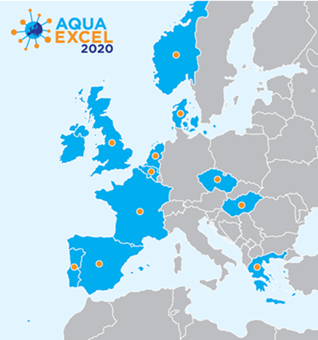
39 Aquaculture Research Infrastructures located in 11 countries across Europe are available for access through the AQUAEXCEL2020 calls
Atlantic Ocean circulation is weakening; are our deep-sea ecosystems at threat?
After the recent snow in Western Europe brought on by the ‘Beast from the East’, many of us are asking ourselves if such unusual weather events will become more common. One of the possible factors influencing global climate changes is changes in ocean circulation; and the Atlantic Ocean circulation system that helps keep Western and Northern Europe warm is weaker today than it has been for over a thousand years, according to new research carried out within the framework of the EU-funded ATLAS project. Published in Nature, the study reports a marked weakening of Atlantic circulation over the past 150 years and it is likely that this trend will continue.
This circulation system, also known as the Atlantic Meridional Overturning Circulation (AMOC), plays an essential role in regulating Earth’s climate through its redistribution of heat – regulating water patterns like the Gulf Stream. The AMOC is also important for carrying nutrients, oxygen and the larvae of marine organisms between different regions of the ocean, and controls the ocean’s ability to absorb and store carbon.

The Ocean Conveyor. A global system of currents, often called the “ocean conveyor”, carries warm surface waters from the tropics northward. At high latitudes, the waters cool, releasing heat to the atmosphere. The colder (and denser) waters sink and flow southward in the deep ocean. Credit: Jack Cook, Woods Hole Oceanographic Institution (WHOI).
The new study, conducted by ATLAS partners University College London (UCL, UK) and the Department of Fisheries and Oceans Canada, provides the first comprehensive ocean-based records to place recent changes in the AMOC in context of centennial climate change. By examining the size of sediment grains deposited by deep-sea currents, where larger grains imply stronger currents and vice versa, scientists have reconstructed past circulation patterns. The abundance of marine organisms that prefer warm and cold water was then measured in different sediment layers to work out changing near-surface temperatures.
According to lead author Dr David Thornalley (UCL, UK), the new findings hint at a gap in current global climate models, “North Atlantic circulation is much more variable than previously thought, and it is important to figure out why previous models underestimate the AMOC decreases we have observed”.
The apparent sensitivity of the AMOC revealed by this study has important implications for our understanding of future changes in the deep sea and to our climate. One important impact could be on marine ecosystems, the focus of research being undertaken by the ATLAS project. “We think that the AMOC has helped creatures, like deep-sea corals, to rapidly colonise new areas in the past, and so one worry is that a weaker AMOC might mean that populations become less connected and less resilient,” explains ATLAS researcher Dr Peter Spooner (UCL, UK).

Deep sea ecosystem Credit: J Murray Roberts, University of Edinburgh (UEDIN).
Murray Roberts who coordinates the ATLAS project at the University of Edinburgh (Scotland, UK) explains, “One of our biggest challenges in ATLAS is trying to work out what predicted changes in these currents will do to deep Atlantic ecosystems, and to provide advice to policy makers so we can manage human activities in deep ecosystems.”
The deep sea supports a wealth of biodiversity in both fauna and flora, including some important commercial fisheries. Changes in the AMOC have the potential to substantially alter the positions and depths of ocean currents, upon which corals and sponges depend for food. The AMOC also flushes much of the deep Atlantic with oxygenated water and so a weaker flow may reduce the availability of oxygen for deep ecosystems. A weakening of the AMOC can also result in temperature increases or decreases of several degrees centigrade, affecting some high-value fisheries as well as abundances of plankton, fish, sea birds and whales.
As for our weather, the AMOC is crucial to the world’s climate, and an abrupt slowdown could trigger various disruptions globally, such as sudden rising sea levels, changes in the position of major rainfall and arid climate zones, and increased storminess across western Europe.
“We are just starting to understand how the AMOC is tied into a whole range of ecosystem effects and climatology implications,” says Dr Spooner. “Our new research helps set the context for studying modern systems.”
The full article will be published in Nature on Thursday 12 April 2018 (reference: David J.R. Thornalley, Delia W. Oppo, et al. ‘Anomalously weak Labrador Sea convection and Atlantic overturning during the past 150 years’. https://doi.org/10.1038/s41586-018-0007-4).
For more information on the study please contact:
Dr David Thornalley (d.thornalley@ucl.ac.uk) or Dr Peter Spooner (p.spooner@ucl.ac.uk)
Maritime Experts Invited to Identify Education and Training Needs
MATES, a four-year European Union funded Erasmus+ project coordinated by the Spanish foundation CETMAR, has recently kicked off its series of maritime-focused workshops in Athens. The Ocean Literacy themed workshop took place on 26 April and was coordinated by Indigo Med. The MATES project consortium is now pleased to announce a further four workshops will take place across Europe. The workshops will focus on how the evolution of the maritime sector is being influenced by technological advancements and labour market needs, in particular the need for new skills and new ways of delivering training and education.
The aim is to bring maritime experts together to create a forum for dynamic discussion, to help identify future activities required to meet these needs in the short, medium and long term. The upcoming workshops include:
- An ocean of new professional opportunities for a competitive economy for the Sea of the Azores, 4 May, Casa Manuel de Arriaga, Horta, Azores, Portugal. Workshop contact: maria.LP.Martin@azores.gov.pt
- Future skills needs and gaps in Green Technologies for the Shipbuilding and Offshore Renewable energy sectors, 9 May, Rotterdam, Netherlands. Workshop contact: george.smyrnakis@ncl.ac.uk
- Technological Trends in the Shipbuilding and Offshore Energies. Analysis and Implementation Strategies, 21 May, Vigo, Spain. Workshop contact: pablo.fidalgo@asime.es
- Identification and analysis of skills gaps in the offshore energy sector, 17 May, DoubleTree by Hilton, Aberdeen City Centre, Scotland. Workshop contact: jennifer.fox@aquatera.co.uk
Industry experts in various fields will be invited to speak and the workshops will provide opportunities for networking. The MATES consortium welcomes professionals from a range of backgrounds to attend the workshops; in particular from the offshore renewable energy and shipbuilding sectors, education and training, scientific community, and representatives from companies and public administration. Further information can be obtained from the various workshop contacts.
The outcomes of the workshops will feed into to a long-term strategy which will be developed by MATES, which aims at tackling the skill shortages in the maritime sectors of offshore renewable energy and shipbuilding, and in doing so, contributing to a more resilient labour market. Further information on the project and activities will be available soon at: www.projectmates.eu.
INvertebrateIT regroups as disruptive, sustainable, aquaculture feed projects respond to call

The INvertebrateIT partners are eager to continue their work promoting and commercialising innovative and sustainable solutions for aquaculture feeds after a successful midway meeting in Dublin, Ireland on 12-13 April 2018.
The collective progress was reviewed at the meeting. One important output, the INvertebrateIT Strategic Joint Vision and Roadmap (including an Investment Plan) is soon to be launched and will cover the value chain of the production of invertebrates, such as insects, for sustainable fish feeds, competitive aquaculture and integrated waste management.
Also discussed was the project’s next steps which will focus on developing industrial opportunities using invertebrates for feeds for value added waste management, aquaculture diversification and other innovative value chains. The consortium strategized on how to mobilise and coordinate vital investment for the three bankable projects recently selected by open contest (IPATAC, EntoGreen and MUSFLOUR) – where the projects’ identified needs are being mapped against expertise to create a plan for action in order to develop these opportunities further. In addition to assisting these projects, the consortium intends to deliver results also to the whole sector by increasing awareness and visibility for sustainable and competitive aquaculture. Planned actions include bringing closer together the different sub-sectors to produce valuable animal proteins (including insects and marine invertebrates) and the proper valorisation of unused resources; and, the publication of society- and policy-facing infographics on the topic.
Over the next twelve months, the INvertebrateIT project partners will work with the three selected projects, providing them with focused resources, tailored capacity-building and access to investment support services. While the original objective was to boost the investment readiness level of the winning projects to pre-commercial level, the quality and status of the three chosen projects was more advanced than expected, with one already launched to market. The consortium has already planned how to address this challenge and has developed a revised strategy to ensure that the correct support is provided and that INvertebrateIT exceeds expectations.
The consortium also remains open to supporting new innovative initiatives on the issues, in the framework of providing information on different funding tools identified at both European, national and regional levels of the partner countries.
Luis Lozano from Innogate-to-Europe and the project’s co-manager is pleased with INvertebrateIT’s progress so far:
“We are one year in and our progress has been good. Working in a disruptive sector, our consortium has brought together a colourful collection of individuals that you often don’t find in a European project: industry clusters from maritime aquaculture sectors; aquaculture farmers and insect breeders; visionary entrepreneurs; veterinarians; public administrators; science communicators; and innovation specialists. It’s exciting seeing so many people come together with different backgrounds and ideas to explore this new niche market”.
For more information on INvertebrateIT and the three winning projects, please visit: www.invertebrateitproject.eu
Transatlantic Cooperation: European and Canadian Marine Stakeholders Discuss Sustaining Ocean Ecosystems

New research results emerging from the EU-funded Horizon 2020 project ATLAS were presented to the Canadian government on 11 May 2018, with the hope that the science-based recommendations will be implemented in future policy-making for sustainable oceans.
Billions of people worldwide rely on the oceans and seas for both food and jobs. In Europe alone, the Marine and Maritime sectors represent roughly 5.4 million jobs and generate a gross added value of almost €500 billion a year. The great potential for innovation and growth of the “blue” economy is recognised by the European Commission’s long-term “Blue Growth” strategy to support sustainable growth, and this meeting proved to be a major step in bringing scientific results to those who draft policies to protect this valuable resource.
The ATLAS consortium, together with the Department of Fisheries and Oceans Canada (DFO), hosted a Science–Policy meeting in Ottawa, Canada. Illustrating the power of transatlantic cooperation between Europe, Canada and the USA through the ‘Galway Declaration’, this important meeting paved the way for future transatlantic collaborative initiatives and frameworks in ocean research. Representatives from both consortia reviewed emerging scientific results to inform Marine Spatial Planning, Blue Growth scenarios and the implications of climate change for deep-sea ecosystems. ATLAS policy lead, Prof David Johnson (Seascape Consultants Ltd., UK) commented on the importance of these efforts: “Environmental change is forcing us to reconsider our approach to managing ocean areas. In Canada we have brought together experts to help identify research results from ATLAS which can be used to inform future governance.”
Discussions continued at the ATLAS symposium on North Atlantic Ecologically or Biologically Significant Areas, Vulnerable Marine Ecosystems and High Seas Marine Protected Areas in a changing ocean, which was held on 12 May. The symposium attracted 50 participants and discussions focused on identifying areas of Blue Growth in the North Atlantic, and adaptive tools to manage these areas.
ATLAS policy lead, Prof David Johnson experiencing ‘life on board a research vessel’ through a VR head set (Credit: David Johnson).
These events preceded the 4th World Conference on Marine Biodiversity (WCMB) in Montréal. Running from 13–16 May, WCMB is the major focal assembly to share research outcomes, management and policy issues, and discussions on the role of biodiversity in sustaining ocean ecosystems. ATLAS and its sister H2020 projects SponGES and MERCES, had a session on ‘Ocean Basin Scale Research’ running throughout the week and hosted a booth for visitors. Local teachers and students from the area were invited to come and learn more about the deep sea using an innovative 360 Virtual Reality (VR) head set. The eager students were able to experience life on board a research vessel, witnessing all the interesting work that is done on board without getting their feet wet!
The weeks’ events were a significant milestone in ATLAS’ mission to develop a scientific knowledge base that can inform the development of appropriate international policies to ensure deep-sea Atlantic resources are managed effectively. Prof J Murray Roberts, the ATLAS Coordinator at the University of Edinburgh (Scotland, UK) explains “The ATLAS project is intensively studying the best ways society can understand how these remote ecosystems work, and then develop long-lasting management plans to ensure they’re still in good health for future generations.”
ATLAS and DFO representatives at the Science–Policy meeting in Ottawa, Canada (Credit: David Johnson).
For more information on the ATLAS project, please visit www.eu-atlas.org, follow @eu_atlas on Twitter or contact Prof J Murray Roberts (Murray.Roberts@ed.ac.uk).
For communication and press queries, please contact Dr Annette Wilson, ATLAS Project Officer, AquaTT (annette@aquatt.ie).
Register Now for EURASTiP Workshop ‘Ensuring Aquaculture Education Meets the Needs of the Aquaculture Sector’

UPDATE: Registration deadline extended to 29 June 2018
The EURASTiP consortium invites stakeholders in aquaculture to take part in a free workshop on 25 August 2018 in Montpellier, France, to determine if current aquaculture education offerings meet the requirements of an increasingly specialised and globalised sector. The development of aquaculture has quickly gathered pace, and education must keep up with emerging trends and technologies to ensure aquaculture employees are fully equipped with the necessary skills to meet the growing demand for seafood globally.
With the majority of Europe’s imported seafood coming from Southeast Asia, both regions have a shared interest in collaborating to ensure aquaculture education is kept to a high standard. The EU-funded EURASTiP project brings together aquaculture partners from both Europe and Southeast Asia and aims to create and strengthen international cooperation on sustainable aquaculture between these two regions. Aquaculture education is recognised by EURASTIP as a vital component of this global collaboration. This will be the focus of the workshop, which will precede AQUA2018, one of the most prominent events on the aquaculture calendar.
The deadline for workshop registration is 29 June 2018. To apply, please email Marieke Reuver at Marieke@aquatt.ie. Full details of the information to include in the application, as well as full details on workshop conditions, can be found here https://bit.ly/2tcnSVT.
Please note that in order for your registration application to be considered, the data processing consent form must also be completed and attached to the registration email.
For further information on the EURASTiP project, see: www.eurastip.eu.
Extraordinary Discovery in the mid-Atlantic Ocean
An international team of scientists have discovered a new hydrothermal field near the Gigante Seamount in the Azores, a rare finding they are very excited about. The team, including scientists from the EU Horizon 2020-funded project ATLAS, have been surveying the largely untouched seas of the Azores, an archipelago in the mid-Atlantic which harbours some of the most important deep-sea ecosystems in the Atlantic Ocean. Researchers from the University of the Azores (IMAR–UAz) are leading Remote Operated Vehicle (ROV) operations in the “Blue Azores” expedition organised by the Oceano Azul Foundation, in cooperation with the Waitt Foundation and National Geographic PRISTINE SEAS, and in partnership with the Regional Government of the Azores.
Telmo Morato, ATLAS principal investigator at IMAR–UAz, who is leading the expedition’s ROV dives commented “this is just fantastic!”. The newly discovered site, located on Gigante Seamount at 570 m depth and approximately 100 km from Faial island, is remarkable given its accessibility compared to other hydrothermal vent systems. This relative ease of access could present a unique opportunity for scientists to discover more about these areas of high biological and mineral richness, which are like an oasis hidden in the deep ocean. Hydrothermal fields are poorly understood so far, mainly due to most vent fields discovered to date being difficult to access, but they are important for their relative high biological productivity in the deep ocean, often hosting complex communities.
The discovery was made using the Portuguese ROV “Luso”, which is capable of diving to a depth of a staggering 6,000 m. Luso makes it possible to map deep-sea benthic communities inhabiting hydrothermal fields, such as this one, as well as seamounts in the region. The newly discovered hydrothermal vents have built up distinctive chimneys on the seafloor through which warm waters rich in carbon dioxide are discharging. The team at sea have seen evidence that bacteria are growing in great numbers around these vents and are likely to support a specialised food chain. These chemosynthetic organisms don’t need light to make their food and can support diverse ecosystems in the dark depths of the deep Atlantic.
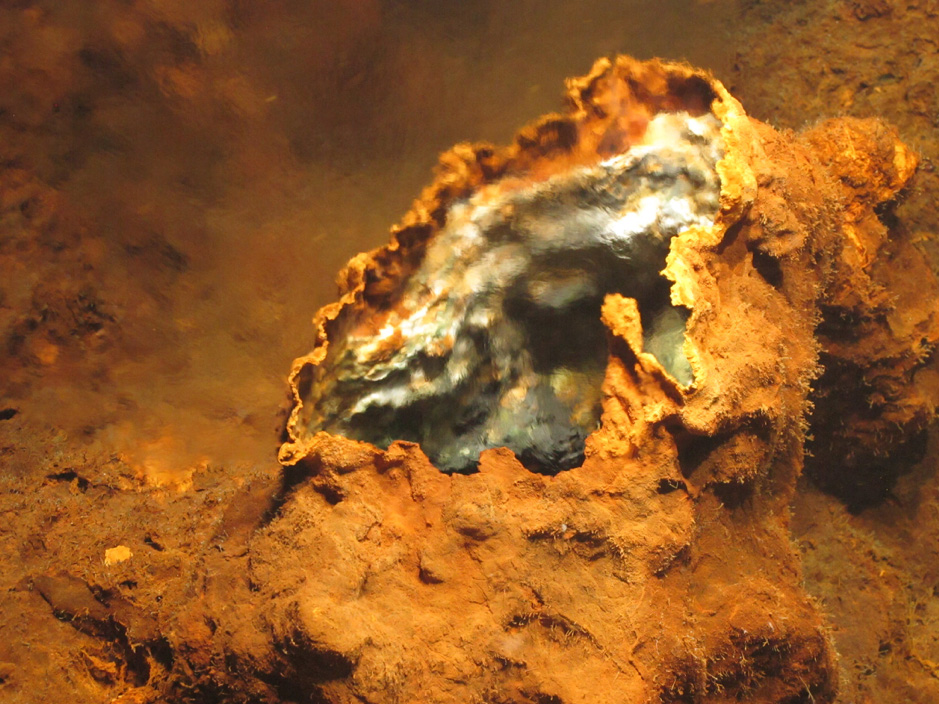
The scientists on this expedition have also deployed baited cameras around the seamounts to attract pelagic fish and dived the Luso late at night to capture migration patterns, allowing us to better understand the biodiversity of the region. The valuable information provided by these dives will aid the sustainable management of deep-sea ecosystems and maintain the wealth of services the ocean provides us.
Currently, only 3% of the ocean is protected, and the ATLAS team onboard are gathering vital information to understand whether these vent ecosystems meet the criteria of being Vulnerable Marine Ecosystems (VMEs) as agreed by the United Nations Food & Agriculture Organisation.
This unexpected discovery is a huge step forward for deep-sea exploration and the better understanding of these largely untouched ecosystems. Professor Murray Roberts, ATLAS Project coordinator at the University of Edinburgh, said ‘This just shows how little we know about the deep sea, the largest ecosystem on our planet. Hydrothermal vents not only form oases of life in the deep ocean, but research over the last 20 years has shown the minerals they release also have important consequences for life throughout the ocean. As plans to mine deep sea minerals are developed around the world it’s absolutely essential we understand these relationships to protect the oceans and the support functions they provide to all life on Earth.’
For more information and to follow the expedition, please see https://www.oceanoazulfoundation.org/logbook/, follow @OceanoAzuIF on twitter or oceanoazulfoundation on Instagram.
Register now for matchmaking opportunities in invertebrate-based solutions at AQUA2018
INvertebrateIT partners are happy to announce a thematic matchmaking and brokerage event for invertebrate-based solutions at the joint World and European Aquaculture Societies conference, AQUA2018, in Montpellier, France. The brokerage event will take place on Tuesday 28 August 2018 from 08:00 until 13:30.
The event is for aquaculture and feed companies, researchers, investors and any other parties interested in the use of land and marine invertebrates for feeds, special ingredients and other services across the aquaculture industry. It should prove particularly interesting for SMEs, investors, public managers in Blue Growth-dependent coastal regions, university spin-offs, aquaculture farms, hatcheries and feed-producers. The invite is also open to more diverse and cross-cutting audiences such as journalists, educators and individuals from biotechnology, waste management and public aquaria. You can register by visiting: https://invertebrateit-brokerage-event.b2match.io/page-3571.
INvertebrateIT is based on the premise that sustainable and competitive solutions for aquaculture feeds are urgently needed. Invertebrates not only help meet the increasing demand for (and rising cost of) proteins and oils, but they also contribute towards resource efficiency and diversification, as well as a wide range of new applications and environmental services.
During the brokerage event, the winners of the recent INvertebrateIT open contest will pitch their projects, offering innovative solutions for invertebrate production for sustainable fish feeds, competitive aquaculture and integrated waste management, hoping to set up strategic Public-Private Partnerships to drive these promising solutions to market. Afterwards, attendees will have an opportunity to network or they can set up meetings to explore potential collaborations and business opportunities using the event’s matchmaking tool (accessed at registration). This tool allows individuals to identify and connect directly with complementary stakeholders from across the industry and set up face-to-face meetings in the lead up to the event.
Eleventh AQUAEXCEL2020 Call for Access Now Open: Fully EC-Funded Access to Top-Class Aquaculture Research Infrastructures Across Europe
The eleventh AQUAEXCEL2020 (AQUAculture infrastructures for EXCELlence in European fish research towards 2020) Call for Access is now open, with a deadline of 10 August 2018.
On a regular basis the AQUAEXCEL2020 project invites proposals, from European research groups, for scientific research that utilises the facilities of any of the participating aquaculture research infrastructures. The AQUAEXCEL2020 project unites major aquaculture experimental facilities that have the capacity to undertake experimental trials on a selection of commercially important aquaculture fish species and system types. These installations are made available to the research community for Transnational Access (TNA) with the support of the European Union’s Horizon 2020 Research and Innovation Programme.
TNA involves a research group in one country collaborating with one or more AQUAEXCEL2020 infrastructures that are located in a different country to the applicant, and which offer facilities and expertise not available in their own country.
The available facilities cover the entire range of aquaculture production systems (cage, pond, recirculation, flowthrough, hatchery and disease challenge); environments (freshwater, marine and cold, temperate and warm water); production scales (small, medium and large industrial); fish species (salmonids, cold and warm water marine fish, freshwater fish and artemia); and fields of expertise (nutrition, physiology, health and welfare, genetics, engineering and monitoring and management technologies).
Interested researchers can propose projects that involve visits of one or two people to the chosen research infrastructure for a period of up to three months. Access to the research infrastructures and associated travel and subsistence expenses will be covered by AQUAEXCEL2020. The establishment of new transnational collaborations is strongly encouraged, as well as the participation of SMEs.
For more information on Transnational Access and how to apply please visit: www.aquaexcel2020.eu/transnational-access/call-access.
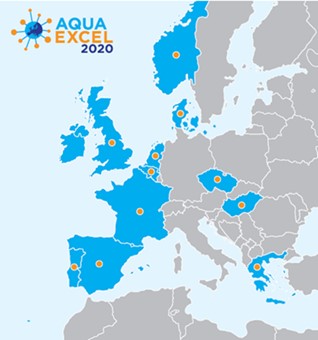
ASSEMBLE Plus opens new call for research access to its marine stations

ASSEMBLE Plus is pleased to announce its second call for access to many of Europe’s key marine biological stations. The available funding will provide researchers with effective and convenient access to some of the EU’s most cutting-edge research infrastructures, ensuring continued advances in knowledge and technology. These research infrastructures include biological resources, facilities and data, which will benefit scientists from academia, industry and policy.
In December 2017, ASSEMBLE Plus launched its first call for transnational access, awarding 50 access grants to researchers. In this new call, applications can be submitted at any time. Successful applicants will have physical and/or remote access to over 30 marine installations including on-site or remote access to ecosystems, biological resources, technology platforms, experimental facilities and e-infrastructure.
ASSEMBLE Plus will cover the costs of a maximum of two persons per project to gain access to labs, core facilities and standard disposables, for a maximum of 30 days. In addition, ASSEMBLE Plus covers the costs of the visit (travel, accommodation and subsistence) within certain limits and, in addition, can cover the costs of shipping biological material to the visitor’s home institute.
Application submissions will open on 29 August 2018 and be open until October 2020. Applications will be evaluated in six rounds, with the next collection date being 28 September 2018. Successful applicants will be informed within six weeks of the collection date. For more information on the timeline of call rounds, visit http://www.assembleplus.eu/access/site-and-remote-access/project-calls.
For more information on the call, eligibility criteria and the selection process, please visit http://www.assembleplus.eu/access/transnational-access or contact the Access Officer at access@embrc.eu.
Winner of the 2018 Lindsay Laird Award Announced
On 28th August 2018 the 11th anniversary of the Lindsay Laird Award was celebrated in Montpellier, France during the AQUA 2018 conference.
This year’s winner, Irene Brandts (Universitat Autònoma de Barcelona, Spain) received an iPad Mini, books from the 5M publishing company, Springer and Wiley Blackwell from judge and presenter Ms M.Eleftheriou (AQUALEX Multimedia Consortium, co-sponsor of the award alongside AquaTT).
The winning poster was entitled ‘Do Differences in Coping Styles Influence Stress Response after Vaccination in Gilthead Sea Bream?’ Student winners of the award for innovation in aquaculture have so far come from a wide array of countries, including Belgium, Spain, Portugal, the Czech Republic, Germany and Brazil.
This historic university city, a close neighbour of Palavas-les-Flots, which has been long known as an important location for French aquaculture, was very suitable as a venue for the EAS 42nd International Conference. It also proved to be a particularly fitting location for the Lindsay Laird Award. Dr Laird not only translated G.Barnabe’s seminal 2-volume work on Aquaculture from French into English (1990), but also paid several visits to the city while working on the AQUALEX glossary.
More information on the award and on Lindsay Laird herself can be found at www.aquatt.ie, www.aqualex.org and in Wikipedia.
Understanding Sustainable Marine Biorefineries with GENIALG at Sea Tech Week 2018
Press Release: October 2018
A one-day session on “Sustainable biorefinery for marine resources”, led by Station Biologique de Roscoff (CNRS) and OLMIX, partners of the GENIALG H2020 project, as well as CBB Capbiotek, will take place on Thursday 11 September as part of Sea Tech Week. It will be the opportunity to discover pioneering companies and projects implementing the concept of large-scale integrated biorefineries in the EU. International academic and industrial experts will describe advances on the process of cracking the biomass and developing a wide diversity of products. This conference will address scientific discoveries and industrial developments in the value chains for seaweed biorefineries but also for other biomass in the blue biotechnology sector.
Now in its 11th year, Sea Tech Week will take place in Brest, France from 8 to 12 October 2018. The event gathers thousands of participants, researchers, industrialists and decision-makers, and provides a unique opportunity to develop business relationships and scientific collaborations. This year, the main theme is marine bioresources, covering a broad range of discussions from resource characterisation and production to economic development. The objective being to highlight the latest technologies on offer in these different fields of application.
The pioneering EU Horizon 2020-funded GENIALG project is expected to boost the Blue Economy in Europe by increasing the sustainable production and exploitation of seaweed and its vital derivatives for its growing market. Until now, seaweed has been underexploited in Europe; production levels currently lag behind the increasing demand for seaweed biomass in novel applications. With improved cultivation and refining techniques, capture of seaweed compounds can be scaled up to a commercial level. With an investment of 12 million euro, GENIALG will cultivate two high-biomass yielding species of the brown seaweed Saccharina latissimi (also known as Sugar Kelp)and the green seaweed Ulva Rigida (often called Sea Lettuce) and refine their resulting products to produce valuable sources of diverse bioactive compounds, with enormous potential for use in a wide range of exciting products such as pharmaceuticals, nutraceuticals, biofuels and even as a human “superfood”.
To learn more about the GENIALG Project, visit our website here or follow us on Twitter @GENIALG_EU.
Click here for the morning programme, and here for the afternoon programme.
For more information on Sea Tech Week, and to register, click here.
Twelfth AQUAEXCEL2020 Call for Access Now Open: Fully EC-Funded Access to Top-Class Aquaculture Research Infrastructures Across Europe

The Twelfth AQUAEXCEL2020 (AQUAculture infrastructures for EXCELlence in European fish research towards 2020) Call for Access is now open, with a deadline of 16 November 2018.
On a regular basis the AQUAEXCEL2020 project invites proposals from European research groups for scientific research that utilises the facilities of any of the participating aquaculture research infrastructures. The AQUAEXCEL2020 project unites major aquaculture experimental facilities who have the capacity to undertake experimental trials on a selection of commercially important aquaculture fish species and system types. These installations are made available to the research community for Transnational Access (TNA) with the support of the European Union’s Horizon 2020 Research and Innovation Programme.
Transnational Access involves a research group in one country collaborating with one or more AQUAEXCEL2020 infrastructures that are located in a different country to the applicant, and which offer facilities and expertise not available in their own country.
The available facilities cover the entire range of aquaculture production systems (cage, pond, recirculation, flowthrough, hatchery and disease challenge); environments (freshwater, marine and cold, temperate and warm water); production scales (small, medium and large industrial); fish species (salmonids, cold and warm water marine fish, freshwater fish and artemia); and fields of expertise (nutrition, physiology, health and welfare, genetics, engineering and monitoring and management technologies).
Interested researchers can propose projects that involve visits of one or two people to the chosen research infrastructure for a period of up to three months. Access to the research infrastructures and associated travel and subsistence expenses will be covered by AQUAEXCEL2020. The establishment of new transnational collaborations is strongly encouraged, as well as the participation of SMEs.
For more information on Transnational Access and how to apply please visit: www.aquaexcel2020.eu.

39 Aquaculture Research Infrastructures located in 11 countries across Europe are available for access through the AQUAEXCEL2020 calls
ASSEMBLE Plus successfully connects marine biologists via access programme

The ASSEMBLE Plus consortium rounded off a successful first year of operations at their 2nd General Assembly in Galway, Ireland, this October. Researchers have been provided with access to many of Europe’s top marine biological facilities. Plans were presented to introduce access to virtual facilities later in the project.
At the 2nd General Assembly, partners reported that the first and second calls have received over 100 applications for access to over 20 marine stations from both EU and non-EU countries. In the first call, applications had a success rate of 73% to be granted.
“Working alongside EMBRC, we are well-established, so this year we have already seen great progress. We are most excited about engaging more strongly with user communities and bridging the gap to industry by promoting the access programme more widely,” said Davide Di Cioccio, ASSEMBLE Plus Access Officer.
While ASSEMBLE Plus project partners continue to improve accessibility to data, samples, training and equipment for marine researchers, the next call for access will be open shortly, in January 2019.
For more information on ASSEMBLE Plus and its activities, please visit: www.assembleplus.eu.

More Articles ...
- Sustainable European food systems using microorganisms – the SIMBA Project
- ASSEMBLE Plus opens its third call for transnational access to its marine biological research stations
- European Chefs Battle it Out in Design for Sustainable Seafood Dishes
- New research to protect human and environmental health focuses on improved testing for Endocrine Disrupting Chemicals
- EU Researchers and Underwater Tech Experts Discuss New Technologies and Treaties for Preserving Deep-Sea Ecosystems
- New project launched to boost European marine and coastal economies by maximising research impact - EMPORIA4KT
- Skills strategy workshop for the shipbuilding and offshore renewable energy sectors
- New funding call provides researchers with free access to marine biological stations
- EWEAS - Newly launched project aims to increase water and energy efficiency in aquaculture farms through online training programme
- Are you interested in carrying out research at a marine biological station this winter or during the spring of 2020?
- 2019 winner of Lindsay Laird award announced
- ASSEMBLE Plus celebrates its successful access programme, and launches a sixth call
- International Bootcamp to Boost Innovation in the Atlantic Area
- Microbiome Applications in the Food System and Nano Life Sciences: New Learnings at the NANO-DAY IV Conference
- Gain access to over 30 marine stations for free!
- Seventeenth AQUAEXCEL2020 Call for Access Now Open: Fully EC-Funded Access to Top-Class Aquaculture Research Infrastructures Across Europe
- New tool raises awareness of the impact of fish farming practices on parasite presence
- New treatment tackles costly parasitic disease for freshwater farmed and ornamental fish
- Final opportunity for industry and academic researchers to benefit from free access to over 30 marine biological stations and infrastructures
- New climate model projects major impacts on coral and commercially important fish habitats in the deep Atlantic due to climate change
- World Water Day 2020: Desalination technologies provide safe and sustainable drinking water
- Atlantic Ocean Adventures at Home with Free Education Resources from EU ATLAS Project
- Recent changes in Atlantic Ocean circulation patterns have caused dramatic shifts in marine populations
- Post-lockdown free access to over 30 marine biological stations and infrastructures
- Co-creating Sustainable Change in Ireland: Workshop Registration
- ATLAS Project compendium of results now available for download
- Call for Blue Economy Early Stage Technologies
- AquaTT seeking Communications Project Officer for immediate start
- New standardisation of cryopreservation protocols for marine organisms
- Mentoring and training opportunity for early-career Blue Economy researchers
- Ocean acidification puts deep-sea coral reefs at risk of collapse
- ASSEMBLE Plus: Final call for funded access to marine infrastructures
- The REvivED water project's legacy for future desalination
- Save-the-date for the online ASSEMBLE Plus Conference
- Creating Sustainable Behaviour Change: Online workshop
- Richard Fitzgerald Award 2020
- Building Sustainable Change for Europe
- EU Horizon 2020 project, TechOceanS launched to revolutionise ocean observations and measurements
- Network of artificial reefs provides valuable data for monitoring ocean ecosystems
- Call for abstracts now open for Aquaculture Europe 2020
- FishChoice: a tool to assess the benefits, risks and sustainability of seafood consumption
- Studies find that higher temperatures have an adverse effect on mussels
- New Aquaculture Tool Developed to Estimate Fish Density with Echo-Sounders
- ERINN Innovation: Working towards a more sustainable society
- SEAFOODTOMORROW project results help to secure a sustainable future for the seafood industry
- EWEAS Launch of free e-learning platform to help aquaculture professionals improve the efficiency and sustainability of their facilities
- Launch of Free E-Learning Course on Sustainable Seaweed Farming Practices
- Richard Fitzgerald Award 2021
- EU-Funded EMPORIA4KT Project Trains Researchers on Mapping Routes to Impact for Early Stage Blue Economy Technologies
- EU-Funded TechOceanS Project Developing New Microsensors for Environmental Ocean Monitoring
- GENIALG Project Results Help to Boost the European Seaweed Sector
- Discovery of new marine worm species as part of ASSEMBLE Plus
- MATES wins Atlantic Project “Blue Skills and Ocean Literacy” Award
- Ninth call announced for free research access to European marine research facilities
- Job Vacancy: Financial Accountant
- EMPORIA4KT event celebrates project highlights and showcases Blue Technology Transfer Programme
- More chemicals, fewer words: exposure to chemical mixtures during pregnancy alters brain development
- New Policy Brief: Towards safer chemicals recommendations for reliable test methods to identify endocrine disruptors
- EMPORIA4KT awarded project extension to further develop blue economy knowledge transfer training tools
- Apply now for free access to nano-surface and membrane up-scaling and test facilities
- New approaches for aquaculture and mollusc research as study shows cryopreserved mussel larvae can survive and develop to adult mussels
- Ocean Sampling Day – Data now available!
- EMBRC to continue the work of ASSEMBLE Plus: Stimulating European excellence in marine biology and ecology research.
- Book-keeper/Accounts Assistant
- Richard Fitzgerald Award 2023
- EMPORIA4KT applies its knowledge transfer training methodology to the Canaries’ Blue Economy
- Richard Fitzgerald Award 2024